

6 Key Signs You're House Poor and Don't Even Realize It
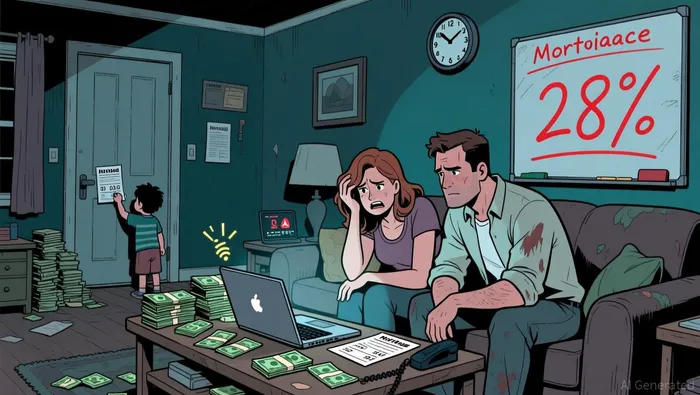
When you're shopping for a home, lenders have a simple math test they use to decide if you can afford it. It's called the 28/36 rule, and it's a basic affordability benchmark. In plain terms, it says you should spend no more than 28 percent of your gross monthly income on housing costs, and no more than 36 percent on all of your debt combined. Housing costs include your mortgage payment, property taxes, insurance, and sometimes homeowners association fees-what lenders call PITI. The 28% figure is known as the front-end ratio, while the 36% is the back-end ratio, or your debt-to-income (DTI) ratio.
This is a rule of thumb, not a law. Lenders use it as a guideline to ensure you don't overextend yourself, and they are legally required to assess your ability to repay a loan. While many will allow a DTI of up to 45% on conventional loans, the 28/36 rule is the standard starting point for a safe financial path.
So, what does it mean to be house poor? It's a condition where you're spending so much of your income on housing costs that there's not much left for anything else. You might have a big house, a paid-off mortgage, or even significant home equity, but your monthly cash flow is so tight that you struggle to cover emergencies, save for retirement, or even afford groceries without stress. It's about the drain on your daily life, not just the asset on paper.
A common threshold for being "cost-burdened" is spending over 30% of your income on housing. That's just a few percentage points above the 28% safety margin built into the rule. If you're spending that much, you're already in the danger zone. The 28/36 rule is your financial speed limit. Staying within it leaves room in your budget for life's surprises and your future goals. Exceeding it is a clear warning sign that your home is consuming too much of your financial life.
Sign #1: Your Mortgage Payment is a Constant Worry
The most immediate sign of being house poor is the emotional toll of living paycheck to paycheck on your housing costs. It's that low-grade hum of anxiety every month when the mortgage statement arrives. You're not just paying a bill; you're constantly checking your bank balance, wondering if you'll have enough to cover it without dipping into something else.
A clear red flag is when you have to dip into your savings account to cover the full monthly payment. That's not a savings account; it's a cash cushion meant for true emergencies. Using it for a regular mortgage payment means you lack a true safety net. You're not just stretched thin-you're operating without a financial buffer, which is a recipe for stress and vulnerability.
This worry isn't just a feeling; it's backed by data. Earlier this year, more than 37% of homeowners with an active mortgage were spending above their means on housing costs. That's a significant portion of the market, indicating this is a widespread problem. When a majority of your income is tied up in housing, there's no room for error. A car repair, a medical bill, or even a sudden utility spike can push you into a crisis because your budget is already maxed out.
The bottom line is that constant worry over your mortgage payment is a sign of financial strain and a lack of a safety net. It means your home is consuming your cash flow, leaving you exposed to any unexpected expense. You might have a house, but you don't have the financial freedom that comes with it.
Sign #2: The Hidden Costs Are Breaking the Budget
When you think about your monthly housing bill, what's the first thing that comes to mind? For many, it's the principal and interest payment-the core of the mortgage. But that's just the tip of the iceberg. The true cost of owning a home is captured by the acronym PITI: principal, interest, taxes, and insurance. These four components make up your total housing cost, and it's the sum that lenders use to calculate your affordability.
People often only budget for the principal and interest, but property taxes and homeowners insurance are significant and rising expenses that can push them over the 28% threshold. In reality, you're not just paying for the loan; you're also paying for the government's share of the property and the protection for the asset itself. These costs are not optional-they are mandatory parts of the ownership package.
The data shows these hidden costs are indeed breaking budgets. For homeowners with a mortgage, the median monthly cost in 2024 was $2,035, a 3.8% increase from the year before. That's an extra $75 a month, on average, just for the same house. This rise is driven by higher mortgage costs and, notably, insurance fees. In some high-risk areas, insurance premiums have skyrocketed, adding a major shock to the monthly bill.
The bottom line is that the total housing burden is often much higher than people realize. If you only budget for the principal and interest, you're leaving yourself exposed. When taxes and insurance are added, the total PITI can easily consume more of your income than you planned. This is how someone can have a "paid-off" mortgage on paper but still be house poor because the ongoing costs of ownership are so high. It's a classic case of underestimating the full price of the home.
Sign #3: You Have No Room for Life Goals
The math of being house poor isn't just about the monthly panic over a mortgage statement. It's about the future. It's about the life you can't afford to live because your home is consuming your cash flow before you can save for it.
A key sign is the inability to contribute to a retirement fund or save for other major goals. When your housing costs are already eating up 30% or more of your income, there's simply no room left in the budget for the future. You might have a big house, but you don't have the financial freedom to build a nest egg, fund a child's education, or save for a dream vacation. This lack of budget space for future goals is a direct consequence of the high housing cost burden.
This problem is especially acute for retirees and older homeowners. Even if the mortgage is paid off, rising property taxes and insurance premiums can still push them into the danger zone. As one analysis notes, even if your mortgage is paid off, rising insurance premiums and property taxes can still push you into the danger zone. If your Social Security COLA is swallowed entirely by a hike in your property tax bill, your home is eroding your purchasing power and making it harder to afford basic needs, let alone retirement savings.
The bottom line is that being house poor means your home is draining your wealth. You might have significant equity on paper, but you have very little discretionary cash. This leaves you unable to reach major financial goals or meet day-to-day needs, turning the dream of homeownership into a financial burden that limits your life.
Sign #4: Your Home is a Liability, Not an Asset
The common wisdom says a home is the best investment you can make. It's a wealth-building tool, a place to raise a family, and a retirement nest egg. But that's only true if the math works in your favor. For many, especially those on fixed incomes, the home they once thought was an asset has become a liability-a costly drain on their cash flow.
The problem is that the burden doesn't disappear when the mortgage is paid off. In fact, it can intensify. Even if your mortgage is paid off, rising insurance premiums and property taxes can still push you into the danger zone. These are not optional extras; they are mandatory, recurring bills that can climb faster than your income. When your Social Security cost-of-living adjustment is swallowed entirely by a tax hike, your home is actively eroding your purchasing power.
This isn't just a problem for first-time buyers. It's a growing crisis for retirees and older adults. According to the Joint Center for Housing Studies at Harvard, 43% of older homeowners with mortgages are now considered "cost-burdened," meaning they spend more than 30% of their income on housing. That statistic is a stark wake-up call. It shows that the financial strain of homeownership is hitting a demographic with typically fixed incomes, where every dollar counts.
The bottom line is that a home is only an asset if it leaves you with cash in the register. When your housing costs consume 30% or more of your income, you are funneling money into a single, illiquid asset at the expense of your daily quality of life and future security. You might have high equity on paper, but if that wealth is trapped in the walls of your house, it's not doing you any good. In that case, your home is less a financial foundation and more a financial burden.
Sign #5: You're Trapped in a High-Cost Area
The problem of being house poor isn't always about personal budgeting mistakes. Sometimes, it's about where you live. Market forces in certain areas can push housing costs so high that even a careful budget can't keep up, making the 28/36 rule feel like a distant fantasy.
The numbers are stark. In states like California, New Jersey, and Hawaii, the median monthly cost for a homeowner with a mortgage is well over $2,700. California leads the pack at $3,001, followed by New Jersey at $2,797. These figures are more than 30% above the national median for all homeowners, which was $2,035 in 2024. If you're living in one of these high-cost areas, your housing costs are already a massive chunk of your income before you even consider taxes or insurance.
The root of this problem is a severe shortage of homes. A prolonged slowdown in housing supply has made it increasingly difficult to afford a home, accelerating the trend. According to Goldman Sachs Research, the U.S. is short by at least 3-4 million homes beyond normal construction. This gap between supply and demand is the engine driving prices and payments upward. When there aren't enough homes to go around, buyers compete, pushing costs higher relative to income.
This supply crunch is fueled by restrictive land use regulations that limit how and where homes can be built. The result is a market where costs are dictated more by scarcity than by affordability. For someone in a high-cost area, the math simply doesn't work. Even if you strictly follow the 28/36 rule, the baseline costs in places like California or New Jersey are so elevated that hitting those thresholds is nearly impossible. You're not just paying for a house; you're paying a premium for location in a market where supply can't keep up.
The bottom line is that being house poor can be a function of geography. When market forces in a specific area push costs beyond what the standard affordability rules can handle, you're trapped. Your home isn't a financial mistake; it's a victim of a broken system where demand consistently outstrips supply.
Taking Control: Your Action Plan
The signs of being house poor are clear, but the good news is that you can take practical steps to regain control of your finances. This isn't about giving up on homeownership; it's about ensuring your home serves you, rather than draining you. Here's a concrete action plan to improve your cash flow and financial stability.
First, look at your current situation. If your housing costs are consuming more than 28% of your gross income, you are already in the danger zone. The 28/36 rule is more than a lender's guideline-it's a personal budgeting tool. Use it to calculate your true housing budget and see where you stand. This simple math is your starting point for any correction.
If you're facing a high monthly cost burden, consider tangible options to improve your cash flow. For many, downsizing to a smaller, less expensive home is the most direct solution. It reduces your principal and interest payment, lowers property taxes and insurance, and shrinks maintenance costs. Alternatively, if you have extra space, renting out a room or basement can generate a meaningful cash flow to offset your mortgage and taxes. For those with the flexibility, relocating to a lower-cost area can dramatically improve your affordability, freeing up cash for savings and life goals. These are not retreats; they are strategic moves to align your housing expense with your financial reality.
At the same time, focus on strengthening your financial foundation. If you have other debts, prioritize paying them down. Reducing your overall debt load will lower your back-end ratio and improve your financial breathing room. Also, take time to see if your income can grow. Whether through a career move, side hustle, or simply waiting for a raise, increasing your gross monthly income is a powerful way to make homeownership more tenable. The goal is to create a buffer where your housing costs are a manageable portion of a larger income pie.
The bottom line is that being house poor is a condition you can change. It requires honest self-assessment and deliberate action. By using the 28/36 rule as your personal financial compass, exploring options to reduce your housing cost burden, and working to grow your income, you can transform your home from a financial liability back into the asset it was meant to be. You don't have to stay trapped.







Comentarios
Aún no hay comentarios