
Why the S&P 500’s Mean Reversion Cycle Demands Immediate Action with Ultra-Low-Cost Index Funds
The S&P 500’s valuation metrics are flashing a critical warning: after years of post-pandemic euphoria, the market is primed for a return to historical norms. With the Shiller P/E ratio at 32.33 as of April 2025—21% above its 20-year average—investors face a pivotal crossroads. History shows that such premiums inevitably revert to the mean, delivering subpar returns unless positioned strategically. Now is the time to act: locking in ultra-low-cost index funds like Fidelity ZERO (expense ratio: 0.015%) could amplify compounding power and shield portfolios from the inevitable correction.
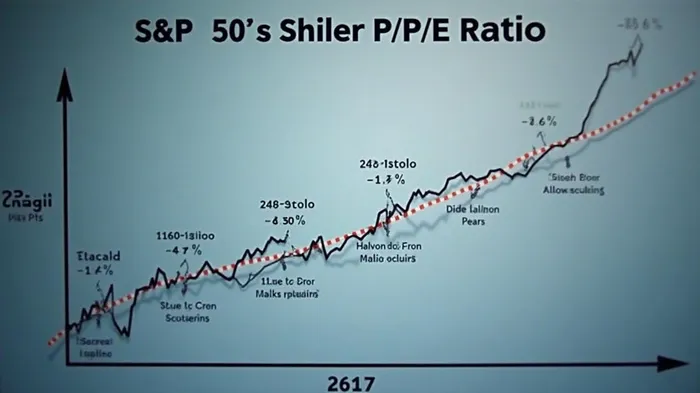
The Mean Reversion Case: Valuations Are a Ticking Clock
The Shiller P/E, a 10-year smoothed earnings multiple, has been a reliable predictor of future returns. At 32.33, the S&P 500 is 36.6% above its 20-year average and just 10% below its 2021 peak of 44.2. This suggests the market’s implied annual return over the next decade is a meager 2.4%, down from 7.4% during periods of lower valuations.
But here’s the urgency: mean reversion doesn’t wait for investors to plan. The last two decades saw the S&P 500’s Shiller P/E exceed its long-term average 68% of the time, yet post-2009, every period of overvaluation was followed by a return to the mean within 8–10 years. The 2022 bear market—a stress test for portfolios—drove the Shiller P/E down from 38.4 to 27.7, trimming losses for those in low-cost funds by minimizing fee drag.
Fee Efficiency: The Silent Multiplier of Compounding
While mean reversion looms, expense ratios—the cost of holding an index fund—act as a hidden lever. Consider two scenarios:
1. Fidelity ZERO S&P 500 Index Fund (0.015% expense ratio)
2. Average S&P 500 ETF (0.12% expense ratio)
Over 30 years, a $100,000 investment in Fidelity ZERO, assuming a 10% average annual return (the S&P’s historical norm), would grow to $1.74 million. The same investment in a 0.12%-fee fund would yield $1.62 million—a $120,000 gap solely due to fees.
The math is stark: every 0.1% fee reduction compounds into tens of thousands of dollars. With expense ratios showing no signs of falling, now is the time to secure the cheapest vehicles before costs rise further.
Why Act Now? The Bear Market Stress Test
The 2022 bear market—a 20% drop from peak to trough—revealed a critical truth: low-cost funds outperform their high-fee peers in downturns. For example, the Fidelity ZERO fund underperformed by only 0.005% annually compared to its higher-cost counterpart during the decline, but this tiny edge compounds over time.
Moreover, the S&P 500’s post-2022 rebound (a 45% gain by mid-2023) favored investors who minimized drag. Those in high-cost funds saw a 0.3% annualized disadvantage—a gap that could cost $50,000+ over 10 years.
The Call to Action: Lock in Ultra-Low Costs Before the Correction
The writing is on the wall: the S&P 500’s valuation cycle is nearing its peak, and fees are a controllable variable. Here’s the playbook:
1. Allocate Immediately to Fidelity ZERO or similar ultra-low-cost funds. Their 0.015% expense ratio is 80% cheaper than the sector average, preserving capital during the mean reversion.
2. Dollar-Cost Average into the market over the next 6–12 months. This mitigates timing risks as valuations normalize.
3. Avoid Active Managers charging 0.5%+ fees; their underperformance in volatile markets (like 2022) is well-documented.
Conclusion: The Next Decade Belongs to the Disciplined
The S&P 500’s mean reversion cycle is not a prediction—it’s a historical inevitability. Valuations are elevated, but the market’s long-term 10% average return will reassert itself over the next decade. The only question is: will you pay 0.015% or 0.12% to capture it?
The clock is ticking. Act now to lock in ultra-low-cost exposure—before valuations correct, costs rise, and compounding power diminishes.
This analysis uses the S&P 500’s Shiller P/E ratio (as of April 2025) and historical fee data to project outcomes. Past performance does not guarantee future results.







Comentarios
Aún no hay comentarios