
S&P 500's Record Push: A Tactical Mispricing on 'Goldilocks' Jobs?
The December jobs report delivered a classic, conflicting signal that traders had to parse. On one hand, nonfarm payrolls rose a seasonally adjusted 50,000 for the month, missing the consensus forecast of around 70,000. That number, which also followed a downward revision to November's figure, signaled a clear cooling in labor demand. On the other hand, the unemployment rate fell to 4.4%, beating the 4.5% forecast. This created a "muddy view" of the labor market, with companies hiring less but households reporting more employment.
This specific mix fueled the "Goldilocks" interpretation. It was not hot enough to force the Federal Reserve to hike rates, which was the immediate concern. Yet, it was cool enough to delay the next cut, which traders had initially priced in. The market's reaction was a direct reflection of this tactical mispricing. While the S&P 500 and other indexes rose on Friday, the move was driven by the cooling headline, not the unemployment beat. The key was that the unemployment improvement was enough to get traders to ratchet back expectations for a cut at the Fed's next meeting, which is scheduled for later this month. According to data from CME GroupCME--, the forecast for a cut at that meeting fell to just a 5% chance, down from 11% a day before. Yet, traders still largely expect the Fed to cut rates at least twice this year. The catalyst, therefore, was the report's ability to freeze the Fed's path in the near term, creating a temporary mispricing where the market's optimism about future cuts was abruptly tempered.
Market Mechanics: From Data to Record Highs
The market's immediate reaction was a textbook case of focusing on the headline over the details. The S&P 500 gained roughly 0.6% on Friday, with the index flirting with record closing highs. The Dow and Nasdaq also posted solid gains. Traders zeroed in on the unemployment rate improvement, which was enough to delay near-term rate cuts. This created a "wait-and-see" environment, as investors also awaited a potential Supreme Court ruling on tariffs, which limited volatility.
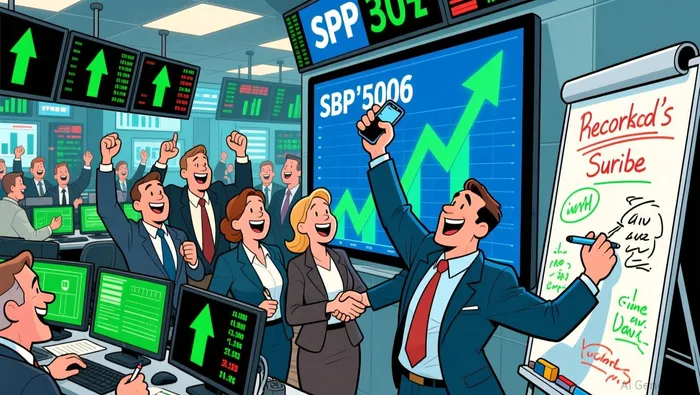
The bottom line is that the market's reaction suggests a "Goldilocks" interpretation is prevailing. The cooling headline from the jobs report was enough to get traders to ratchet back expectations for a cut at the Fed's next meeting, which is scheduled for later this month. According to data from CME Group, the forecast for a cut at that meeting fell to just a 5% chance, down from 11% a day before. Yet, traders still largely expect the Fed to cut rates at least twice this year. This setup justifies current equity valuations by freezing the Fed's path in the near term, creating a temporary mispricing where optimism about future cuts is abruptly tempered.
The Trade Setup
The clear bet here is that the "Goldilocks" thesis holds. The market is pricing in a delayed but still-inevitable path of rate cuts, with the S&P 500's record push reflecting that optimism. The immediate catalyst is the Federal Reserve's policy meeting in late January, where the forecast for a cut at that gathering-currently at just a 5% chance-will be re-evaluated. If the Fed's guidance remains patient, the setup supports equities.
The risk is that the "no-hire, no-fire" data becomes a self-fulfilling prophecy. The slowdown is already evident: the full-year 2025 payroll average of 49,000 a month represents a sharp drop from 168,000 in 2024. If this cooling accelerates into a sharper slowdown in growth and corporate earnings, it could force the Fed's hand sooner than expected, triggering a re-rating lower in risk assets.
The stop-loss for this trade is triggered by a break in the "cool but resilient" narrative. That means seeing a sustained rise in the unemployment rate above 4.5% or a significant drop in payrolls that signals a labor market deterioration beyond a "low-hire, low-fire" state. In that scenario, the market's wait-and-see stance would collapse, and the path for rate cuts would likely accelerate, pressuring valuations. For now, the 5% cut probability is the key level to watch.
Catalysts & What to Watch
The market's current setup hinges on a few immediate catalysts that will test the "Goldilocks" thesis. The first is the Supreme Court's ruling on tariffs, which could arrive imminently. As Wells Fargo's chief equity strategist noted, companies are in a wait-and-see mode before they start restocking. A ruling that upholds the tariffs could disrupt trade flows and delay a manufacturing cycle kickstart, adding a layer of uncertainty to the economic outlook. Conversely, a ruling that clears the way for tariff reductions could provide a near-term boost to corporate investment and supply chains, supporting the growth narrative.
Second, watch for any revisions to the full-year 2025 payroll average. The current figure of 49,000 a month is a sharp drop from 168,000 in 2024, signaling a sustained slowdown. If future data confirms this trend is accelerating, it would undermine the "cool but resilient" labor market story. Any significant downward revision to the full-year average would be a red flag, suggesting the cooling is more structural than cyclical and could force a re-evaluation of the Fed's patient stance.
Finally, monitor two key levels. The S&P 500's all-time high resistance is the immediate technical target. The index has been flirting with records, and a decisive break above it would confirm the bullish interpretation of the jobs data. The more critical level, however, is the 5% probability of a Fed cut at its next meeting. This figure is the market's current gauge of near-term policy patience. A move above 10% would signal renewed expectations for a cut, likely pressuring Treasury yields and supporting equities. A move below 5% would suggest the Fed is truly on hold, which could eventually pressure valuations if growth weakens further. These are the actionable levels that will determine whether the current mispricing is temporary or the start of a new trend.





Comentarios
Aún no hay comentarios