
S&P 500 Rally at Crossroads: Navigating FOMO-Driven Momentum and Technical Risks
The S&P 500® has surged to within striking distance of 6,300—a critical threshold flagged by Bank of AmericaBAC-- (BofA) as a potential “sell signal” that could trigger a sharp correction. With the index at 6,022.24 on June 19, 2025, investors face a pivotal question: Is this rally a sustainable growth story or a FOMO-fueled bubble primed to pop? This article dissects the technicals, sentiment, and risks driving the market—and offers strategies to capitalize on short-term momentum while mitigating downside exposure.
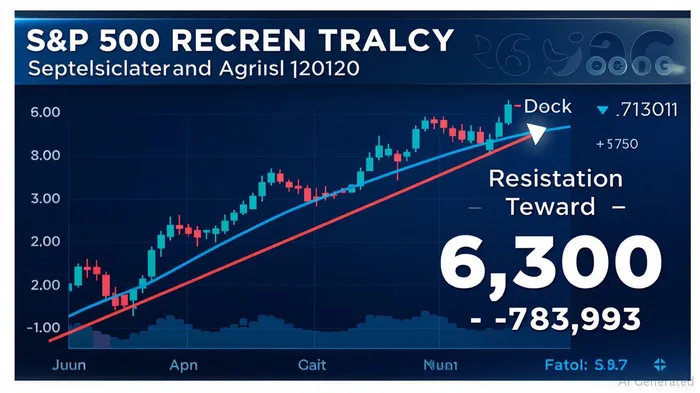
The Technical Sell Signal: Why 6,300 Matters
BofA's strategists have long warned that a close above 6,300 would confirm an overbought market, signaling a potential 6% correction akin to the 2013 sell-off. Current metrics reinforce this risk:
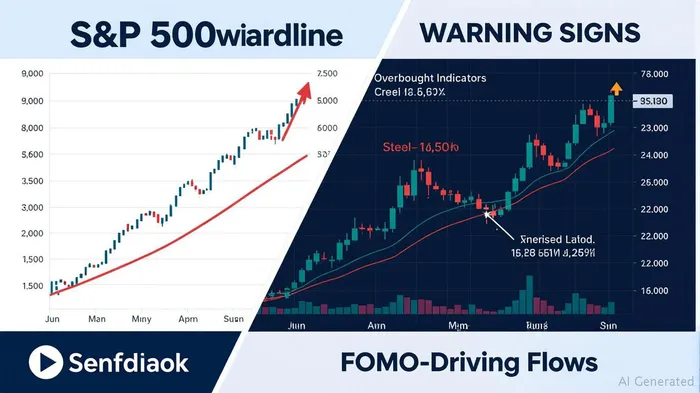
- Overbought Indicators: The S&P 500's trailing P/E ratio sits at 26x, far above its historical average of 20x. Even after adjusting for structural shifts, the forward P/E is a 35% premium to long-term norms.
- Fund Flow Extremes: Equity inflows have hit 0.9% of fund assets over four weeks—near the 1% threshold that BofA identifies as a contrarian “sell” signal. Meanwhile, $24.8 billion fled U.S. equities in May, with capital flowing into bonds and gold instead.
- Bull & Bear Indicator: BofA's proprietary gauge stands at 7.9, perilously close to the 8.0 threshold that historically triggered corrections.
FOMO-Driven Momentum: The Tesla and NVIDIA Play
The rally isn't broad—it's fueled by pockets of extreme speculation. TeslaTSLA-- (TSLA) and NVIDIANVDA-- (NVDA) exemplify this:
- Tesla's $370 Calls: Massive June 2025 call option activity—volume exceeding open interest by a 22.89 ratio—hints at institutional bullishness. This FOMO reflects hopes of U.S.-China trade de-escalation, which could unlock Tesla's China EV market dominance.
- NVIDIA's Gamma Walls: NVIDIA's stock has surged over 50% year-to-date, driven by AI hype and partnerships like the Saudi Arabia HUMAIN deal. Options gamma walls at $160 and $200 suggest short-term resistance, but a breakout could push targets to $250—a 70% upside from June levels.
Bubble Risks: Fiscal Stimulus and Sentiment Extremes
The market's resilience defies traditional logic, fueled by $3.4 trillion in fiscal stimulus and irrational exuberance. Key red flags:
- Sentiment Divergence: Retail investors hold 48% cash, near decade lows, while institutions retreat. This “mug's game” dynamic—retail buyers chasing overvalued assets as pros exit—mirrors 2000 and 2007 peaks.
- Valuation Extremes: The S&P 500's price-to-sales ratio hit 3.2x, a level last seen in 2000. Meanwhile, 84% of global equities trade above key moving averages, a sign of overextended optimism.
Contrarian Playbook: Where to Deploy Capital
BofA's analysis suggests international equities, quality U.S. stocks, and defensive assets offer better risk-adjusted returns:
1. Global Opportunities:
- Vanguard Total International Stock (VXUS): A 12.78% CAGR since 2020 and $2 billion EM inflows make it a hedge against dollar weakness.
- iShares MSCI Emerging Markets (EEM): Emerging markets benefit as the USD's reserve share dips to 58%.
- U.S. Value Plays:
- Chubb (CB): A 12x P/E and stable underwriting profits in insurance.
CrowdStrike (CRWD) and T-Mobile US (TMUS): AI/5G tailwinds and strong fundamentals justify selective exposure.
Defensive Ballast:
- Gold (GLD): Central banks bought $75 billion annually of gold in 2025, a safe-haven bid as volatility looms.
- Consumer Staples (USMV): The iShares Minimum Volatility ETF offers low volatility amid sector rotation.
Risk Management: Volatility Plays and Protective Strategies
Investors must balance momentum with caution. Here's how to navigate the risk/reward trade-off:
- Short Volatility via SVXY: The ProShares Short VIX (SVXY) can profit from post-triple-witching volatility collapses. Allocate 2–3% of capital, but monitor compounding risks.
- Bull Put Spreads on SPY: For example, selling the June $575 put and buying the $560 put yields a $4.25 net credit. This limits downside risk to $375 per spread if SPY stays above $575.
- Hedging with Options: Pair long equity positions with collars (e.g., long stock + short call + long put) to protect against corrections.
Conclusion: Time to Take Profits—or Ride the Momentum?
The S&P 500's ascent to near 6,300 is a testament to FOMO and fiscal stimulus, but the risks of a correction grow daily. For bulls, sector rotation into undervalued tech and quality names remains viable. For bears, short volatility, bearish puts, or cash positions can hedge against a BofA-style sell-off.
Investors should:
1. Take profits in overbought areas like Tesla and NVIDIA.
2. Rebalance into international equities and defensive assets.
3. Use options strategies to limit downside while staying exposed to short-term momentum.
The market's next move hinges on whether fiscal stimulus can offset slowing growth—or if BofA's sell signal finally triggers a reckoning. Stay vigilant, and let the data guide your bets.





Comentarios
Aún no hay comentarios