
S&P 500 Performance and Investor Behavior During Government Shutdowns: A Resilient Market Amid Political Uncertainty
The U.S. government shutdown has long been a flashpoint for political gridlock, yet financial markets have historically demonstrated remarkable resilience. For investors, understanding how the S&P 500 and broader portfolios respond to such disruptions is critical for navigating uncertainty. By analyzing historical patterns, sector-specific vulnerabilities, and hedging strategies, we can distill actionable insights for today's market environment.
Historical S&P 500 Performance: Resilience Prevails
Government shutdowns, while disruptive to public services, have rarely translated into sustained market declines. During the 34-day shutdown of 2018–2019-the longest in history-the S&P 500 posted a 1.74% return in December 2018 and surged 5.83% in January 2019, according to YCharts. This rebound underscored investor focus on macroeconomic fundamentals, such as corporate earnings and Federal Reserve policy, over short-term political noise, as noted by MFS. Similarly, the 2013 shutdown, which lasted 16 days, saw the index rise 3.1% during the period, according to SSGA, defying expectations of volatility.
These outcomes highlight the S&P 500's forward-looking nature. As CNBC notes, "markets often price in uncertainty ahead of time, allowing them to recover quickly once political impasses resolve." Even during the 1995–1996 shutdowns, the index's average gains during shutdown periods suggest that broader economic momentum often outweighs temporary fiscal standoffs.
Investor Behavior: Risk-Off Responses and Safe-Haven Flows
When shutdowns occur, investor behavior typically shifts toward risk mitigation. Historical data shows a surge in demand for U.S. Treasury securities, which act as a safe-haven asset during periods of uncertainty, as CNBC reports. For example, Treasury yields dropped by an average of 0.59% during past shutdowns, reflecting increased demand, according to MFS. Conversely, the U.S. dollar often weakens initially, as international investors question the stability of fiscal policy, as noted by IG.
Sector-specific impacts vary. Companies reliant on government contracts-such as defense firms CACI and Booz Allen Hamilton-often face immediate selling pressure due to payment delays, according to YCharts. However, these effects are typically short-lived, with rebounds occurring once funding is restored. Defensive sectors like healthcare and utilities, on the other hand, tend to outperform during shutdowns, as investors prioritize stability, YCharts reports.
Hedging Strategies: Diversification and Sector Rotation
To mitigate shutdown-related risks, investors historically employ diversification and sector rotation. Increasing allocations to defensive sectors and Treasury securities is a common tactic, per CNBC. For instance, during the 2025 shutdown, the S&P 500 initially rose 0.34%, with healthcare and utilities leading gains, according to YCharts. This underscores the importance of maintaining a balanced portfolio that can weather political volatility.
Another key strategy involves hedging against data gaps. During shutdowns, critical economic indicators like employment and inflation data are delayed, complicating Federal Reserve decision-making, CNBC explains. Investors often turn to alternative metrics, such as ADP payrolls, to gauge economic health, CNBC notes. Additionally, maintaining liquidity and avoiding overexposure to government-dependent sectors can reduce vulnerability to cash flow disruptions, IG advises.
Sector-Specific Impacts and Long-Term Considerations
While shutdowns create short-term turbulence, their long-term economic impact is minimal. Historical GDP losses of 0.1–0.2% per week are typically reversed once operations resume, according to MFS. However, sectors like healthcare face unique challenges during shutdowns driven by policy debates-such as the 2025 dispute over ACA tax credits, SSGA observes. Investors must weigh these sector-specific risks against broader market resilience.
Crucially, historical data shows that the S&P 500 is higher 86% of the time twelve months after a shutdown ends, YCharts finds. This reinforces the value of a long-term perspective, even as short-term volatility persists.
Conclusion: Balancing Caution and Confidence
Government shutdowns remain a test of political will, but their impact on financial markets is often overstated. The S&P 500's historical resilience, coupled with effective hedging strategies, provides a roadmap for investors to navigate uncertainty. By prioritizing diversification, sector rotation, and liquidity, portfolios can remain resilient while capitalizing on the market's tendency to recover swiftly. As the 2025 shutdown demonstrates, even in times of political turmoil, the market's forward-looking nature ensures that long-term fundamentals ultimately prevail.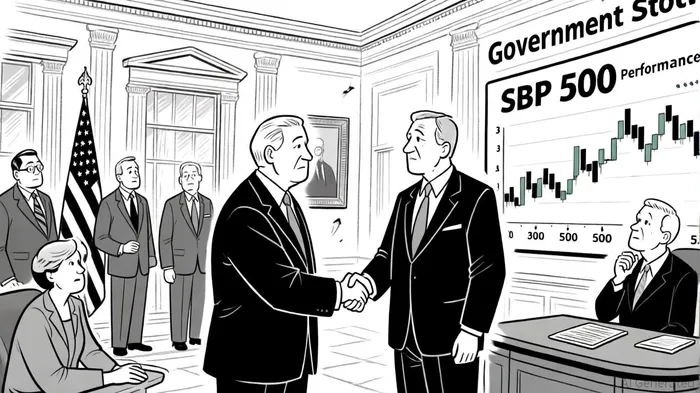







Comentarios
Aún no hay comentarios