
Boletín de AInvest
Titulares diarios de acciones y criptomonedas, gratis en tu bandeja de entrada
The S&P 500's journey toward 7,000-a psychological milestone-hinges on a delicate interplay of Federal Reserve policy, sector-specific dynamics, and the looming shadow of Donald Trump's influence on monetary leadership. As the Fed prepares for its December 9–10 meeting, investors are recalibrating portfolios to navigate a landscape defined by rate-cut momentum, shifting sector rotations, and the political calculus of a potential Trump-appointed Fed chair.
The Federal Reserve's December 2025 decision to cut rates by 25 basis points-bringing the target range to 3.50%–3.75%-
, signaling a pivot toward easing amid a cooling labor market and inflationary pressures. While the Fed's policy statement emphasized a "hawkish" tone, underscoring the need for "careful assessment of incoming data," , reflecting internal divisions.Analysts note that the Fed's path forward is constrained by both economic data and political headwinds.
at 2.8% in September 2025, while the labor market's softening-evidenced by a rising unemployment rate-has forced the Fed to balance growth support against inflation risks. The updated Summary of Economic Projections (SEP) now anticipates one rate cut in 2026 and another in 2027, . However, , with a 87% chance of a December 2025 reduction. This divergence between data-driven caution and market expectations sets the stage for volatility.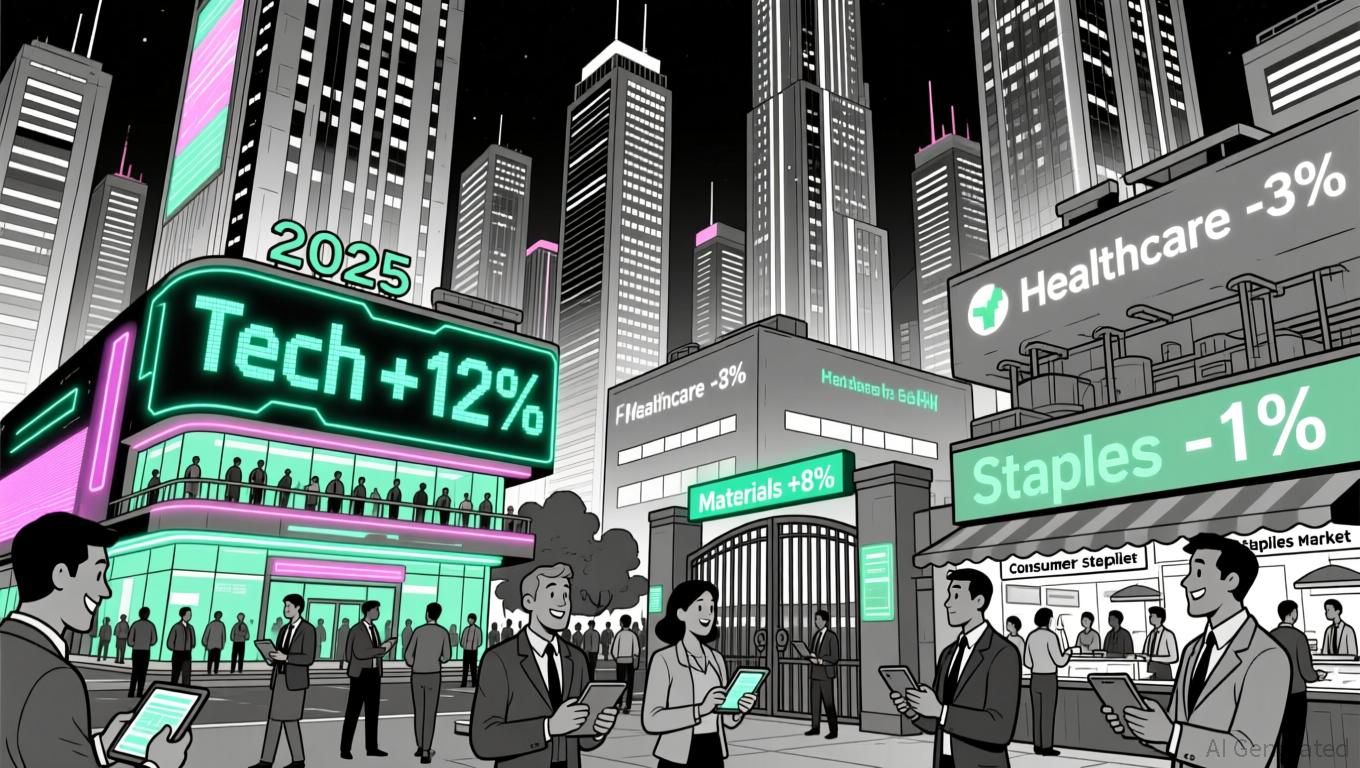
This rotation is further amplified by Trump's fiscal policies. Despite his aggressive tariffs triggering a market selloff in April 2025,
and the "One Big Beautiful Bill Act," which injected fiscal stimulus into corporate earnings. However, among Fed officials like Lisa Cook, who warn of a potential correction.The most consequential wildcard in this equation is Trump's influence on the Fed's leadership. With Jerome Powell's term expiring in May 2026,
, signaling a dovish tilt. This has already sparked dissent within the FOMC, , where Stephen Miran (aligned with Trump) advocated for a 50-basis-point cut, while Austan Goolsbee and Jeffrey Schmid favored holding rates steady.Trump's push for a rate-cut-friendly chair introduces a layer of politicization to monetary policy.
over long-term inflation control, risking a "stagflationary" scenario if tariffs reignite price pressures. Capital Economics, for example, , cautioning that aggressive easing could undermine the Fed's credibility.For investors, the path to 7,000 requires a nuanced approach. Here are three key strategies:
Sector Rotation Toward Rate-Sensitive Plays: Prioritize sectors poised to benefit from lower rates, such as real estate, consumer discretionary, and utilities.
, where borrowing costs decline and cash flows are discounted at lower rates.Hedge Against Policy Volatility: Given the uncertainty around Trump's Fed chair and potential rate-cut overshooting, investors should diversify into alternative assets like gold and securitized credit.
can also mitigate risks from yield fluctuations.Monitor Labor Market and Inflation Data: The Fed's next moves will hinge on the labor market's trajectory.
, as it did to its highest level since 2021 in November 2025, additional cuts are likely. Conversely, a rebound in inflation could force the Fed to backtrack, creating headwinds for equities.The S&P 500's ascent to 7,000 is far from guaranteed. While rate-cut momentum and sector rotations provide tailwinds, the interplay of Trump's Fed chair ambitions, inflationary risks, and stretched valuations introduces significant volatility. Investors must remain agile, balancing optimism about AI-driven growth with caution about policy-driven market corrections. As the Fed's December meeting approaches, the key question is whether the central bank can maintain its independence-or if Trump's influence will force a more aggressive dovish pivot.

Titulares diarios de acciones y criptomonedas, gratis en tu bandeja de entrada







Comentarios
Aún no hay comentarios