
Why the S&P 500 May Get a New Member Soon
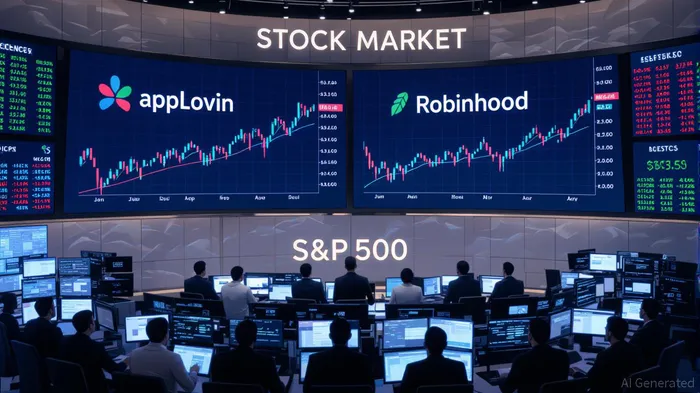
The S&P 500, the barometer of U.S. equities, is poised for another round of reconstitution in the coming months. As the index committee weighs its next moves, the spotlight has turned to a handful of high-potential candidates—companies that have not only met the technical criteria for inclusion but also demonstrated the financial strength and market influence to justify their elevation. For investors, the stakes are clear: a new entrant to the S&P 500 can trigger a surge in liquidity, visibility, and demand from passive funds, creating both opportunities and risks.
The Candidates: Financial Strength and Sector Balance
The most prominent names in the running include AppLovin (APP), Robinhood (HOOD), and Interactive Brokers (IBKR). Each has navigated a path to meet the S&P 500's stringent requirements: a market capitalization above $22.7 billion, positive earnings in the current and past four quarters, and sufficient liquidity.
- AppLovin, the digital advertising and mobile marketing giant, has surged to a market cap of $130 billion, up from $88 billion in early 2025. Despite skepticism from short sellers earlier in the year, the company's revenue growth and profitability have stabilized, making it a compelling candidate.
- Robinhood, the commission-free trading platform, has rebounded with a market cap of $92 billion. Its recent five-day rally of 19% underscores investor optimism, particularly as the company's user base and transaction volumes continue to expand.
- Interactive Brokers (IBKR), a mid-cap stalwart in the financial sector, has a market cap of $87 billion and a Forward P/E ratio of 32.06, significantly higher than the industry average. Analysts view it as a potential replacement for underperforming S&P 500 members like Paramount GlobalPARA-- (now Skydance Media), which faces a smaller float-adjusted market cap post-merger.
The S&P 500's composition is also a factor. The index has long been skewed toward technology and consumer discretionary sectors, with financials and industrials underrepresented. Adding a company like Robinhood (Financials) or Interactive BrokersIBKR-- (Financials) could help rebalance the index, while AppLovinAPP-- (Communication Services) would address gaps in the digital advertising space.
Market Impact: Short-Term Gains, Long-Term Uncertainties
Historically, S&P 500 inclusion has delivered immediate tailwinds. Tesla's 60% surge in 2020 and Coinbase's 24% jump in 2025 are case studies in the power of index inclusion to drive demand. However, the long-term story is less certain. WorkdayWDAY--, for instance, saw a 9% pop after joining the index but later fell 19% amid macroeconomic headwinds.
For the current crop of candidates, the short-term benefits are clear. If AppLovin or Robinhood is added, the $2 trillion in assets managed by S&P 500-tracking ETFs (e.g., SPY, IVV, VOO) will need to buy shares, creating a liquidity boost. This dynamic is already evident in recent additions like The Trade DeskTTD-- and Block Inc., which saw increased trading volumes and price stability post-inclusion.
Yet, the long-term success of these companies hinges on fundamentals. AppLovin's ability to sustain its ad-tech dominance, Robinhood's resilience in a regulatory environment, and Interactive Brokers' capacity to scale its institutional services will determine whether their inclusion translates into lasting value.
Investor Implications: Positioning for the Unknown
For investors, the key is to balance the potential windfall of index inclusion with a critical eye on the companies' underlying strengths. Here's how to approach the opportunity:
- Short-Term Play: Consider adding exposure to these candidates ahead of a potential inclusion announcement, but with a stop-loss to mitigate volatility. The recent rally in Robinhood's stock, for example, reflects market anticipation, but overbought conditions could lead to a pullback.
- Long-Term Strategy: Focus on companies with durable competitive advantages. AppLovin's ad-tech ecosystem and Robinhood's user base are assets worth monitoring, but investors should also assess their balance sheets and cash flow generation.
- Sector Rotation: The S&P 500's push for sector balance could favor financials and industrials. Interactive Brokers, with its global trading infrastructure, is a prime example of a mid-cap stock that could benefit from this trend.
The Bigger Picture: A Dynamic Index in a Shifting Market
The S&P 500's reconstitution is not just a technical exercise—it's a reflection of the U.S. economy's evolving landscape. As artificial intelligence, fintech, and digital advertising reshape industries, the index must adapt to remain representative. The inclusion of companies like AppLovin and Robinhood signals a shift toward recognizing the economic power of the digital age.
However, the process is not without risks. The recent exclusion of companies like Hess and Discover Financial Services highlights the committee's willingness to prioritize sector balance over raw size. Investors must remain vigilant, understanding that inclusion is a starting line, not a finish.
In the end, the S&P 500's next member will be more than a name on a list—it will be a barometer of where the market is headed. For those willing to navigate the noise and focus on substance, the coming months could offer a rare chance to align with the next wave of innovation.





Comentarios
Aún no hay comentarios