
The $500 Billion Tech Infrastructure Funding Wave: High-Impact Opportunities in AI-Ready Data Centers and Cloud Providers
The global AI infrastructure landscape in 2025 is being reshaped by a historic wave of capital inflows, policy tailwinds, and technological urgency. With Big Tech and governments collectively pouring over $500 billion into AI-ready data centers and cloud infrastructure, investors are facing a pivotal inflection point. This analysis unpacks the forces driving this boom, identifies high-impact opportunities, and evaluates the risks and rewards of capitalizing on this transformative sector.
The Scale of Investment and Market Momentum
The pace of AI infrastructure spending has outstripped even the most optimistic projections. According to a Techblog report, Big Tech companies are projected to invest between $364 billion and $400 billion in AI data centers and cloud infrastructure in 2025 alone, a staggering leap from $9.5 billion in early 2020. CitigroupC-- analysts have further raised their 2026 forecast to $490 billion in hyperscaler capital expenditures, up from $420 billion, as detailed in a TechCrunch report.
Key projects are already reshaping the industry. OpenAI's "Stargate" initiative, a $500 billion joint venture with OracleORCL-- and SoftBank, exemplifies the scale of ambition. Oracle, for instance, has secured a $300 billion cloud services deal with OpenAI, set to begin in 2027, according to Openopedia coverage. Meanwhile, global AI spending is expected to reach $1.5 trillion in 2025, with a Gartner projection to jump to $2 trillion in 2026. These figures underscore a sector where demand is outpacing supply, creating fertile ground for infrastructure providers and cloud service developers.
Policy Tailwinds and Government Incentives
The U.S. government has emerged as a critical catalyst. Executive Order 14215, issued in September 2025, streamlines public-private partnerships (P3s) for AI data centers by fast-tracking permitting and offering financial incentives for projects exceeding $500 million in private investment. The National Science Foundation (NSF) has allocated $2.05 billion for AI R&D in 2025, with $494 million directly earmarked for AI research, as reported by Openopedia.
However, the regulatory environment remains fragmented. While the Trump administration's "Executive Order for Removing Barriers to American Leadership in AI" prioritizes deregulation (as noted in the Gartner projection), states like Texas, New York, and California have introduced their own AI governance frameworks. For example, Texas's TRAIGA law prohibits AI systems designed to incite self-harm, as reported in an InsideGlobalTech update, while California's AI Transparency Act mandates content disclosures for providers operating in the state. This patchwork of regulations creates both challenges and opportunities for companies that can navigate compliance while leveraging federal incentives.
Infrastructure Challenges and Regional Opportunities
Despite the surge in funding, infrastructure development faces headwinds. A labor shortage in construction and manufacturing could delay projects, with the National Association of Manufacturers estimating a 1.9 million worker shortfall by 2033 (reported in the Gartner projection). Environmental and zoning constraints have also derailed projects, such as a halted development in Virginia and a withdrawn AWS project in Arizona due to water scarcity (noted in the InsideGlobalTech update).
Yet, these challenges are being offset by strategic regional investments. Texas, New Mexico, and Pennsylvania have emerged as AI data center hubs, leveraging favorable energy costs, zoning laws, and utility infrastructure. Crusoe Energy's Goodnight AI Campus and STACK Infrastructure's DFW02 site are emblematic of this trend (described in the InsideGlobalTech update). Investors with exposure to these regions-through real estate, energy, or construction firms-stand to benefit from the sector's geographic concentration.
Global Expansion and Diversification
The AI infrastructure boom is not confined to the U.S. China, Canada, and France are aggressively expanding their AI data center capacity, as highlighted in the 2025 AI Index Report and summarized in the Gartner projection. This global competition is driving demand for cross-border infrastructure providers and cloud services that can scale internationally. For instance, Nvidia's $100 billion commitment to OpenAI's GPU-powered data centers reflects the need for global supply chains and partnerships (reported in the TechCrunch report).
Sustainability and Workforce Pressures
As AI infrastructure expands, sustainability and workforce pressures are becoming critical factors. A 2025 report by Flexential found that 79% of organizations face increased demand to enhance infrastructure sustainability, often at higher costs (reported in the TechCrunch report). Similarly, 44% of IT leaders cite infrastructure constraints as a barrier to scaling AI projects, while only 14% feel confident in their AI talent pools (also noted in the TechCrunch report). Investors should prioritize companies addressing these pain points, such as firms developing energy-efficient hardware or offering AI workforce training programs.
Conclusion: Strategic Investment Opportunities
The $500 billion AI infrastructure funding wave presents a unique window for investors to capitalize on high-impact opportunities. Key areas to consider include:
1. Cloud Infrastructure Providers: Companies like Oracle and MicrosoftMSFT--, which are securing long-term contracts with AI developers, are well-positioned to benefit from sustained demand.
2. Regional Infrastructure Developers: Firms with exposure to Texas, New Mexico, and Pennsylvania-where data center projects are accelerating-offer geographic diversification and growth potential.
3. Sustainability and Workforce Solutions: Providers of energy-efficient hardware, renewable energy integration, and AI workforce training programs are likely to see increased demand as sustainability and talent gaps widen.
While risks such as regulatory fragmentation and labor shortages persist, the sector's momentum is undeniable. For investors willing to navigate these complexities, the AI infrastructure boom represents a defining opportunity of the decade.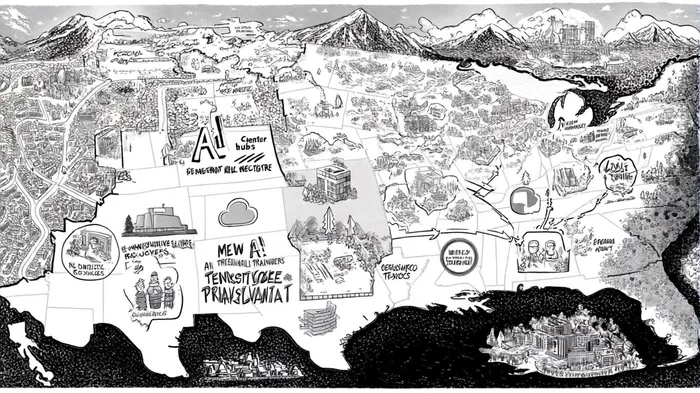







Comentarios
Aún no hay comentarios