
The S&P 500's 2026 Rally: Is This the Year of Cyclical Rotation and AI Realization?
The S&P 500's trajectory in 2026 is poised to reflect a unique confluence of macroeconomic tailwinds and technological transformation. With above-trend U.S. growth, easing monetary policy, and the accelerating integration of artificial intelligence (AI), investors are increasingly turning their attention to cyclical sectors and AI-driven industries as potential catalysts for the next phase of the bull market. This analysis explores how these forces are reshaping the investment landscape and identifies actionable themes for capitalizing on the opportunities ahead.
AI as a Catalyst for Productivity and Earnings Growth
Artificial intelligence has emerged as the defining investment theme of the 2020s, and its impact is set to intensify in 2026. According to a report by Goldman Sachs, AI hyperscalers are projected to invest over $527 billion in 2026 alone, a surge driven by the need to build computational infrastructure for next-generation models. This spending is creating a cascading effect across the value chain, particularly in semiconductors and data centers. For instance, NVIDIANVDA--, a leader in AI chip manufacturing, has already seen demand for its GPUs outstrip supply, while infrastructure players like Foxconn and Schneider Electric are benefiting from the need for servers and electrical systems.
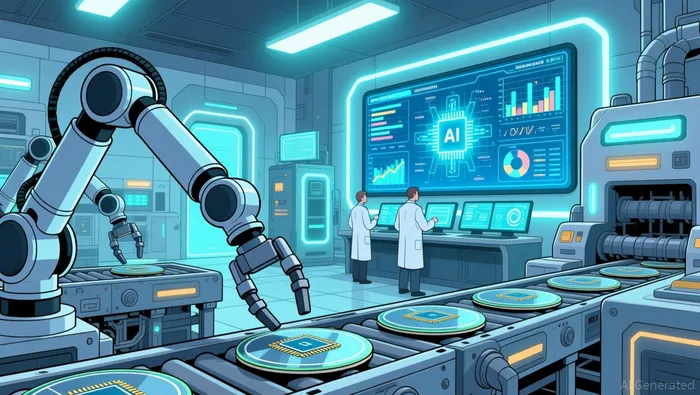
The AI infrastructure boom is not limited to tech giants. Smaller-cap companies in the semiconductor and data center equipment sectors are also gaining traction. By 2030, the data center infrastructure market is expected to reach $1 trillion, with AI-driven demand accounting for the lion's share of growth. Innovations such as AI-ready cooling systems and high-density computing architectures are further solidifying this trend, making these sub-sectors compelling long-term plays.
Cyclical Rotation: Industrials and Financials in the Spotlight
While AI has dominated headlines, cyclical sectors are beginning to attract renewed interest as the U.S. economy transitions into a phase of broad-based growth. Analysts at Oppenheimer note that industrials and financials are expected to contribute meaningfully to the S&P 500's performance in 2026, driven by monetary easing and fiscal stimulus. For industrials, AI adoption is unlocking productivity gains of 15-30% in areas like predictive maintenance, supply chain optimization, and quality control. Gartner predicts that by 2026, 40% of enterprise applications will integrate task-specific AI agents, further accelerating automation in manufacturing and logistics.
Financials, meanwhile, are leveraging domain-trained AI models to enhance efficiency and customer engagement. In 2026, banks and fintechs are deploying AI for hyper-personalized services, fraud detection, and real-time risk analytics. For example, Generali France's AI-powered voice assistant has resolved 30% of customer claims without human intervention, while quantum-enhanced fraud detection systems are reducing false positives by up to 40%. These advancements are not only improving operational margins but also creating valuation premiums for early adopters.
Actionable Investment Themes: Bridging AI and Cyclical Sectors
The intersection of AI and cyclical rotation offers a range of actionable opportunities. In industrials, investors can target companies specializing in AI-driven automation, such as those providing robotics for manufacturing or predictive analytics for supply chains. For financials, sub-sectors like payments processing and risk analytics are particularly attractive, given their reliance on AI for competitive differentiation.
Beyond traditional sectors, the AI infrastructure buildout itself presents a compelling case. Semiconductors remain a core beneficiary, but investors should also consider under-the-radar players in data center cooling, power distribution, and edge computing. These niches are less crowded and offer exposure to the same tailwinds as AI leaders without the valuation premiums.
Strategic Allocation: ETFs and Funds for a Balanced Approach
For investors seeking diversified exposure, actively managed ETFs and mutual funds are gaining traction. The Ark Next Generation Internet ETF (ARKW), for instance, focuses on companies positioned to benefit from cloud infrastructure and AI-driven innovation. Meanwhile, the Vanguard Dividend Appreciation ETF (VIG) offers a more conservative approach by including high-quality tech stocks with strong earnings growth and dividend histories, such as Broadcom and Microsoft according to Nasdaq analysis.
Cyclical rotations can also be accessed through sector-specific funds. The Schwab U.S. Broad Market ETF (SCHB) provides broad-based exposure to the S&P 500, while the iShares U.S. Financials ETF (IYF) targets financials poised to benefit from AI adoption and monetary easing. For international opportunities, funds with a value tilt in developed markets may offer alternative avenues for growth, as highlighted by Schwab's 2026 outlook.
Conclusion: A Dual-Track Strategy for 2026
The S&P 500's 2026 rally is likely to be characterized by a dual-track dynamic: AI-driven innovation in technology and infrastructure, coupled with a cyclical rebound in industrials and financials. While large-cap tech stocks will continue to dominate headlines, investors who diversify into AI-enabled cyclical sectors and infrastructure plays may capture both the growth and stability needed to navigate a K-shaped recovery. As always, balancing high-conviction bets with defensive strategies-such as dividend-focused funds or active ETFs-will be key to managing risk in an increasingly volatile market.





Comentarios
Aún no hay comentarios