
From $3B Party to $184M Reality: What Happened to Berachain?
Berachain’s total value locked (TVL) has dropped below $200 million as of January 2026. This represents a 94% decline from its peak of $3.5 billion in early 2025. The network is now facing a liquidity crisis, with major protocols like Infrared and Kodiak losing substantial deposits.
The decline is being driven by multiple factors. Protocol emissions have dwindled, and the market is bracing for a token unlock in February 2026. This unlock is expected to release 34% of the total BERA supply in a linear fashion, raising concerns about dilution.
Another significant trigger has been the controversy surrounding a refund clause secured by Nova Digital, a Brevan Howard division. This clause allows the firm to reclaim its $25 million investment at a fixed price of $3 per BERABERA-- token. With the token currently trading near $0.65, this clause has created a sense of betrayal among retail investors.
Why Did This Happen?
The BerachainBERA-- TVL decline is a result of both technical and governance-related issues. 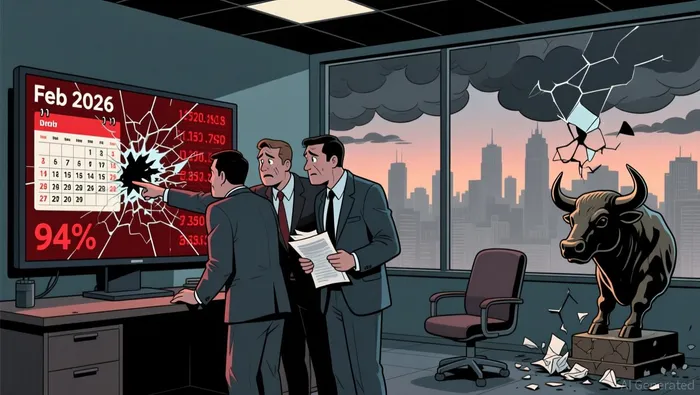 The protocol introduced a “Bepto” hard fork in late 2025 to stabilize block times and refine its Proof-of-Liquidity v2 engine. The goal was to attract more stable liquidity by redirecting block rewards toward BERA stakers. However, these upgrades have not been sufficient to reverse the broader trend.
The market has been front-running the expected token unlock. Investors are rotating capital to more stable chains like EthereumETH-- and SolanaSOL--, where yields are more predictable. The network has entered a “yield trap,” where declining BERA prices further reduce staking rewards, prompting more liquidity to leave the chain.
What Are Analysts Watching Next?
Analysts are closely monitoring the February 2026 token unlock. This event could either validate or deepen the network’s liquidity crisis. The unlock is expected to create significant on-chain sell pressure, potentially accelerating the TVL decline if not offset by new capital inflows.
Another key focus is the broader crypto market. Bitcoin and Ethereum ETFs have seen mixed inflows, with BitcoinBTC-- ETFs shedding $243 million in a single week due to a pullback in the BTCBTC-- price. This broader environment of cautious capital deployment is affecting all alternative chains, including Berachain.
The network’s ability to attract new, high-volume decentralized applications (dApps) will also be crucial. Currently, native projects like Infrared Finance are struggling to drive meaningful activity. Without new projects, Berachain remains in a “ghostchain” state with minimal on-chain activity and user engagement.
What’s the Outlook for 2026?
The path forward for Berachain remains highly uncertain. The development team is actively maintaining the protocol, but technical improvements alone may not be enough to restore investor confidence. The network is facing a dual challenge: resolving the VC refund controversy and attracting fresh liquidity.
The broader crypto market is also undergoing a period of consolidation. The market cap has cooled from $4.37 trillion in early October to nearly $3 trillion as of January 2026. Bitcoin has pulled back from a weekly high of $94,000 to over $92,000. This environment is shaping capital flows across the entire crypto ecosystem.
For Berachain to recover, it will need to demonstrate a clear path to sustainable TVL growth and rebuild trust with its community. Until then, the network remains in a precarious position, with a TVL of less than $200 million and a token price that has fallen far from its peak.






Comentarios
Aún no hay comentarios