
The F-35 Global Adoption and Defense Sector Growth: A Strategic Investment Analysis
The F-35 Lightning II has cemented its role as the linchpin of global airpower in 2025, driven by escalating geopolitical tensions and the urgent need for interoperable, next-generation capabilities. As nations grapple with regional security threats-from China's assertiveness in the Indo-Pacific to Russia's hybrid warfare tactics in Eastern Europe-the F-35's stealth, sensor fusion, and coalition compatibility have made it indispensable. However, the program's long-term viability faces headwinds, including production delays, political hesitations, and the rise of alternative platforms. This analysis examines the interplay of geopolitical demand, industrial consolidation, and technological challenges shaping the F-35's trajectory and the broader defense sector.
Geopolitical Demand: A Catalyst for F-35 Procurement
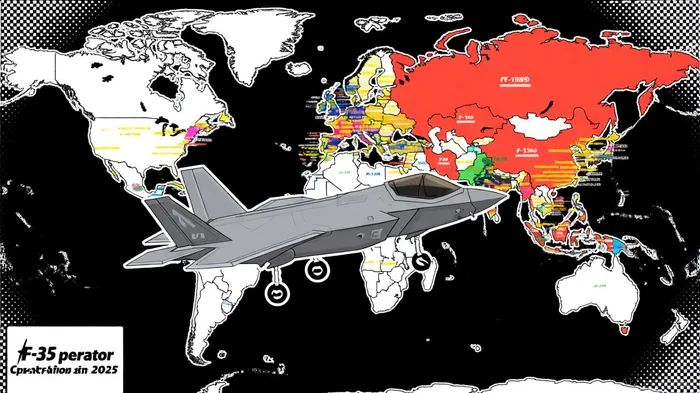
The F-35's adoption is inextricably tied to global security dynamics. In 2025, Japan, South Korea, and Australia have solidified their positions as top operators, with Japan acquiring 147 jets-including 42 F-35Bs for carrier operations-to counter China's military expansion, according to a GAO report. Similarly, Poland's procurement of 32 F-35As and Germany's 35-aircraft order reflect NATO's push to deter Russian aggression, the report added. Eastern Europe's shift toward U.S.-led defense systems underscores the F-35's role in reinforcing alliance cohesion.
Meanwhile, the Indo-Pacific remains a focal point. The U.S. has deployed F-35s to the Philippines, while the UK's carrier strike group conducted historic operations in the region, as reported in a TS2 article. These deployments highlight the jet's strategic value in projecting power across contested waters. According to a BoltFlight report, Denmark's recent $8.7 billion commitment to 16 additional F-35s-raising its total to 43-further illustrates the aircraft's appeal in Arctic and North Atlantic deterrence strategies.
Yet, not all nations are fully committed. Canada's review of its $14 billion F-35 contract, spurred by tensions with the U.S. under President Trump's second term, signals growing concerns over dependency on American technology, according to a Yahoo Finance report. Such hesitations, however, are tempered by the lack of viable alternatives. European platforms like the Eurofighter Typhoon and Dassault Rafale, while offering strategic autonomy, lag behind the F-35 in stealth and sensor integration, according to a BoltFlight analysis.
Industrial Consolidation and Supply Chain Resilience
The defense sector's industrial landscape is undergoing significant consolidation, with mergers and acquisitions reshaping competitive dynamics. For instance, the 2018 merger of Northrop GrummanNOC-- and Orbital ATK required regulatory concessions to maintain competition in the solid rocket motor market, the report noted. These trends reflect a broader industry effort to address supply chain vulnerabilities and talent shortages.
The F-35 program itself is a case study in industrial collaboration. Lockheed Martin's $2.9 billion contract with Pratt & Whitney for 141 F135 engines under Lot 18 underscores the jet's reliance on a global supply chain, as noted in that BoltFlight analysis. However, the program has faced persistent delays, with 2024 deliveries averaging 238 days late due to supply chain bottlenecks and software integration challenges, the GAO report observed. The Government Accountability Office (GAO) has also highlighted over 4,000 parts shortages in 2024, a problem detailed in the Yahoo Finance piece.
To mitigate these risks, defense firms are adopting Industry 5.0 principles and AI-driven maintenance solutions. For example, the U.S. Air Force's shortage of 1,800 maintenance personnel is being addressed through AI-powered scheduling tools, the GAO report said. These innovations, while costly, are critical for sustaining the F-35's production rate of 170–190 units in 2025, that BoltFlight report estimated.
Competitor Responses and Technological Challenges
The F-35's dominance is being challenged by emerging alternatives and sixth-generation concepts. European nations are increasingly favoring the Rafale and Typhoon for their sovereign industrial footprints, while India's Advanced Medium Combat Aircraft (AMCA) and South Korea's KF-21 project aim to reduce reliance on U.S. platforms, the BoltFlight analysis observed. However, these alternatives struggle to match the F-35's operational flexibility and coalition interoperability.
Longer-term, sixth-gen projects like the U.S.-led Next Generation Air Dominance (NGAD) and the European Future Combat Air System (FCAS) aim to integrate AI, unmanned-manned teaming, and directed energy weapons, the same analysis noted. Yet, these programs face technical hurdles and political fragmentation. For now, the F-35 remains the only viable option for nations seeking immediate air superiority.
Investment Implications and Future Outlook
The defense sector's growth from 2025 to 2030 is projected to reach $447.31 billion, driven by modernization efforts and geopolitical volatility, the Yahoo Finance report projects. While the U.S. DoD has cut F-35 procurement requests by up to 50% in 2026, that BoltFlight analysis argues international demand-particularly from NATO allies and Indo-Pacific partners-ensures the program's survival. Lockheed Martin's confidence in securing 190 deliveries in 2025, despite U.S. cuts, reflects this global momentum, the BoltFlight report added.
However, investors must weigh risks. The F-35's Block 4 upgrades, delayed to the mid-2030s, could erode its technological edge, the Yahoo Finance piece warns. Additionally, rising tariffs on critical components and labor shortages in the aerospace sector pose operational challenges, the GAO report cautions.
Conclusion
The F-35's global adoption is a testament to its strategic value in an era of fragmented alliances and asymmetric threats. While industrial consolidation and supply chain pressures persist, the jet's role in maintaining U.S. and allied air superiority remains unchallenged. For investors, the defense sector offers both opportunities and risks: robust growth in next-gen technologies and geopolitical demand, balanced against production delays and political uncertainties. As the F-35 program navigates these challenges, its ability to adapt will define the future of airpower-and the defense industry's trajectory for decades to come.





Comentarios
Aún no hay comentarios