
3 Market Predictions For May: Navigating Trade Tensions, Energy Risks, and Policy Crosscurrents
The global economy in May 2025 faces a pivotal crossroads, shaped by escalating trade conflicts, energy insecurity, and divergent monetary policies. Investors must navigate these headwinds with precision, focusing on sectors and strategies that can withstand—or even profit from—these trends. Below are three key predictions for May, supported by emerging data and geopolitical dynamics.
1. U.S.-China Trade Tensions Will Drive Sector Rotation
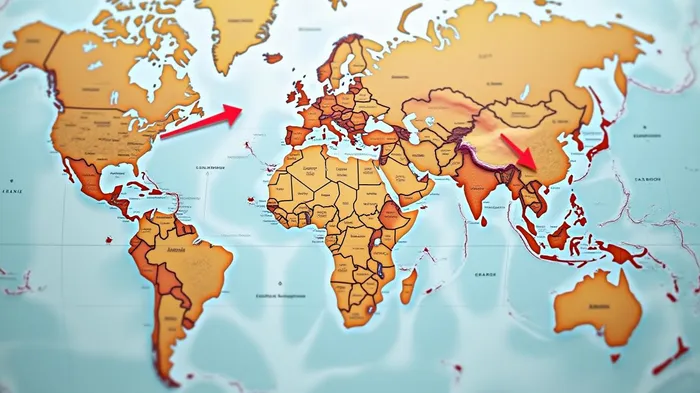
The U.S. and China are locked in a tariff war with no clear resolution, as tariffs on bilateral trade have now surpassed levels seen during the Great Depression. This has triggered a 10% reduction in global GDP growth forecasts for 2025, with tech and semiconductor sectors particularly exposed.
Investment Implication: Rotate into companies with diversified supply chains. Sectors like semiconductors (e.g., TSMCTSM--, Intel) and tech hardware (e.g., Apple, Dell) face near-term headwinds but could rebound if trade talks de-escalate. Meanwhile, “friendshored” industries—such as U.S.-Mexico automotive partnerships—offer safer bets.
2. Energy Volatility Will Persist Amid Geopolitical Risks
The Russia-Ukraine war continues to disrupt energy markets, with Middle East tensions and Taiwan Strait instability adding to uncertainty. Brent crude prices could spike to $90–$100 per barrel if Iranian or Saudi exports face disruptions, while natural gas prices in Europe remain volatile.
Investment Implication: Position for energy volatility with a mix of oil majors (e.g., ExxonMobil, Chevron) and renewable infrastructure stocks (e.g., NextEra Energy). Avoid overexposure to regions with supply chain dependencies (e.g., Asian semiconductor hubs reliant on Middle Eastern oil).
3. Central Banks Will Struggle to Balance Growth and Inflation
The Federal Reserve’s cautious approach—projected to keep rates at 4.5%–5% through mid-2025—contrasts with the ECB’s aggressive easing. Meanwhile, China’s PBoC is easing rates to combat deflation, creating a policy divergence that could destabilize global bond markets.
Investment Implication: Favor short-term Treasuries (e.g., iShares 1–3 Year Treasury Bond ETF) and high-quality corporate bonds over equities. Avoid sectors like real estate (e.g., homebuilders) that are rate-sensitive.
Conclusion: Prioritize Resilience in a Fractured Landscape
May 2025 is a month of heightened uncertainty, but data-driven strategies can mitigate risks. The 2.6% U.S. GDP growth forecast remains achievable if trade tensions ease, but inflation expectations at 4.3% (as of February) warn of persistent pressures. Investors should:
- Diversify geographically, favoring markets like India and Southeast Asia, which are less exposed to U.S.-China friction.
- Focus on defensive sectors, such as healthcare and utilities, which outperformed during past volatility.
- Monitor central bank communication—a Fed pause or ECB rate cut could trigger sector rotations.
The global economy is at a fork in the road: cooperation or fragmentation. Investors who prepare for both scenarios will thrive in this high-stakes environment.
Data sources: S&P Global, Federal Reserve Economic Data, International Monetary Fund projections.







Comentarios
Aún no hay comentarios