
The 3.1% Core CPI Conundrum: Navigating Inflationary Pressures in Fixed-Income and Real Asset Markets
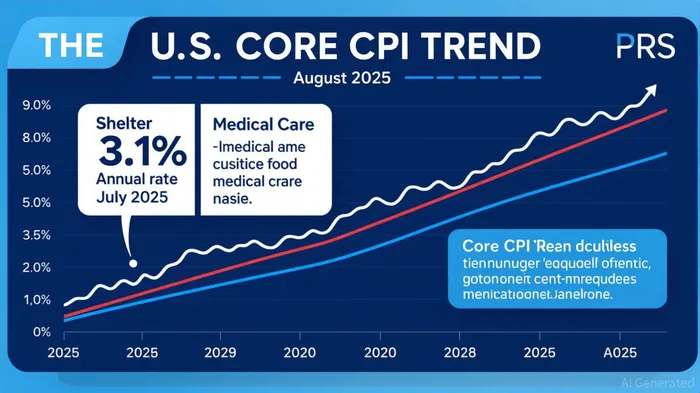
The U.S. core CPI, a critical barometer of inflation excluding volatile food and energy prices, has remained stubbornly elevated at 3.1% year-over-year for two consecutive months—July and August 2025. This persistence underscores the challenges facing policymakers and investors alike, as inflationary pressures continue to outpace the Federal Reserve's 2% target. According to a report by Reuters, the 0.3% monthly increase in core CPI in August 2025 followed a similar rise in July, signaling that underlying inflation remains firmly entrenched [1]. The New York Times notes that the Fed, while poised to implement a 0.25 percentage point rate cut at its next meeting, remains cautious about the broader economic implications of these figures [2].
Fixed-Income Markets: Yields Rise, Strategies Shift
The 3.1% core CPI figure has directly influenced fixed-income markets, where investors are recalibrating expectations for returns and risk. Historically, periods of elevated inflation have driven bond yields upward as investors demand compensation for eroding purchasing power. Data from Advisorperspectives indicates that the Federal Reserve's current rate range of 4.25–4.50% reflects a balancing act between curbing inflation and avoiding economic stagnation [3]. With core CPI exceeding market expectations of 3.0% in July, bond yields have edged higher, pressuring long-duration fixed-income instruments.
Investor behavior is also shifting. Shorter-duration bonds and inflation-protected securities like TIPS are gaining traction as tools to mitigate interest rate risk. Deloitte's Global Economic Outlook for 2025 highlights that services inflation—driven by categories like shelter and medical care—remains a drag on the pace of rate cuts, further incentivizing defensive strategies in fixed-income portfolios [4]. This dynamic suggests that liquidity and flexibility will remain priorities for bond investors in the near term.
Real Assets: A Hedge Against Persistent Inflation
Real asset allocations, particularly in real estate and commodities, are emerging as critical components of inflation-resilient portfolios. The core CPI data reveals that shelter costs rose 3.7% year-over-year in July 2025, while medical care expenses increased by 3.5% [5]. These trends align with broader structural shifts in supply chains and labor markets, which continue to exert upward pressure on prices.
For investors, real estate remains a compelling hedge against inflation. Commercial and residential property values often appreciate in tandem with inflation, particularly in sectors like multifamily housing and industrial real estate, where demand is driven by demographic and economic trends. Similarly, commodities—especially energy and base metals—are benefiting from inflationary tailwinds. The Deloitte report notes that tariffs and global supply chain adjustments are likely to amplify these pressures in the coming months, reinforcing the case for real assetRAAQ-- exposure [4].
Policy Uncertainty and Investor Implications
The Federal Reserve's response to the 3.1% core CPI underscores the delicate balance between inflation control and economic stability. While a 0.25 percentage point rate cut is anticipated, policymakers have emphasized that inflation remains “somewhat elevated,” according to the NY Times [2]. This uncertainty complicates forecasting for both fixed-income and real asset markets. Investors must navigate a landscape where monetary policy lags behind inflationary trends, necessitating agile portfolio adjustments.
For fixed-income investors, the emphasis on shorter-duration instruments and inflation-linked bonds is likely to persist. Meanwhile, real asset allocations should prioritize sectors with direct exposure to inflationary drivers, such as real estate tied to rising housing costs or commodities linked to energy and materials demand.
Conclusion
The 3.1% core CPI figure represents a pivotal moment for U.S. markets, highlighting the interplay between inflationary pressures, monetary policy, and investor behavior. As the Fed grapples with the dual mandate of price stability and maximum employment, investors must adopt strategies that balance risk mitigation with growth potential. In this environment, a diversified approach—combining defensive fixed-income instruments with inflation-hedging real assets—offers a pragmatic path forward.







Comentarios
Aún no hay comentarios