
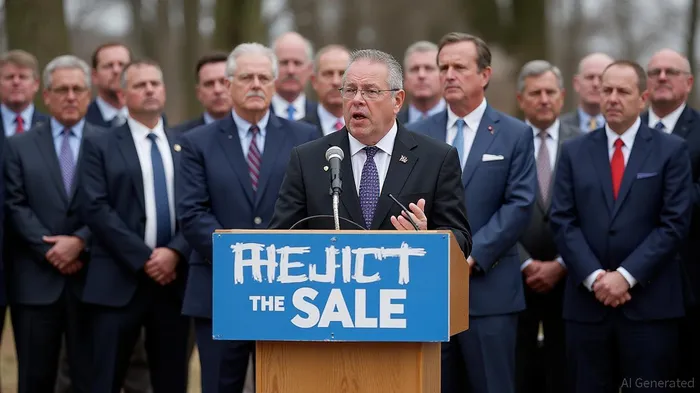
26 Municipal Leaders Unite to Oppose Aquarion Water Company Sale to RWA
PorAinvest
lunes, 25 de agosto de 2025, 4:26 pm ET2 min de lectura
ES--
The proposed sale, valued at $2.4 billion, would transfer Connecticut's largest water utility, serving about 722,000 people in 62 municipalities, from investor-owned Eversource to the Aquarion Water Authority, a quasi-public nonprofit entity created specifically for the acquisition [1]. The sale is opposed by local officials, consumer advocates, and environmental groups who are concerned about potential rate increases and the shift in regulatory oversight.
Municipal leaders have cited concerns over the governance structure, lack of public input, and potential rate increases. They argue that the quasi-public model could lead to higher water bills for consumers. Rochelle Kowalski, chief financial officer of the Regional Water Authority, previously stated that the quasi-public model would benefit consumers through access to lower-cost, tax-exempt debt financing [1].
The Connecticut Public Utilities Regulatory Authority (PURA) has until October 2025 to determine whether the transaction serves the public interest. The sale would be financed through tax-exempt bonds and is expected to close in late 2025 [1].
Attorney General William Tong has also urged PURA to reject the sale, warning that it could double household water bills while reducing consumer protections. Tong called the deal "a costly loser for Connecticut families" and characterized it as an attempt to circumvent state oversight [1].
In response, Eversource and Aquarion Water Authority have refuted claims about rate increases, stating that water rates will not double as a result of the sale. They argue that the new Aquarion Water Authority will operate alongside the existing South Central Connecticut Regional Water Authority, sharing executive leadership, board members, and operational resources [1].
The proposed sale comes as Eversource refocuses on its core electric and natural gas operations after losing about $200 million on offshore wind investments. Aquarion's application projects annual rate increases between 6.5% and 8.35% through 2035, with additional hikes expected every five years thereafter [1].
The municipal leaders' opposition highlights the complex dynamics at play in the proposed sale. While supporters argue that the quasi-public model could lead to lower costs for consumers, opponents remain concerned about the potential for higher rates, reduced oversight, and the transfer of local control to a politically unaccountable body.
References:
[1] https://hartfordbusiness.com/article/attorney-general-tong-opposes-2-4b-aquarion-sale-warning-of-water-rate-hikes/
26 Connecticut municipal leaders, including mayors and first selectmen, have opposed the proposed sale of Aquarion Water Company to the Regional Water Authority. They argue it would lead to higher water rates, eliminate independent oversight, and transfer control of local water systems to a politically unaccountable body. The leaders urge the Connecticut Public Utilities Regulatory Authority to reject the sale, citing concerns over the governance structure, lack of public input, and potential rate increases.
Connecticut municipal leaders have expressed strong opposition to the proposed sale of Aquarion Water Company to the Regional Water Authority (RWA). The leaders, including mayors and first selectmen from 26 municipalities, argue that the sale could lead to higher water rates, eliminate independent oversight, and transfer control of local water systems to a politically unaccountable body [1].The proposed sale, valued at $2.4 billion, would transfer Connecticut's largest water utility, serving about 722,000 people in 62 municipalities, from investor-owned Eversource to the Aquarion Water Authority, a quasi-public nonprofit entity created specifically for the acquisition [1]. The sale is opposed by local officials, consumer advocates, and environmental groups who are concerned about potential rate increases and the shift in regulatory oversight.
Municipal leaders have cited concerns over the governance structure, lack of public input, and potential rate increases. They argue that the quasi-public model could lead to higher water bills for consumers. Rochelle Kowalski, chief financial officer of the Regional Water Authority, previously stated that the quasi-public model would benefit consumers through access to lower-cost, tax-exempt debt financing [1].
The Connecticut Public Utilities Regulatory Authority (PURA) has until October 2025 to determine whether the transaction serves the public interest. The sale would be financed through tax-exempt bonds and is expected to close in late 2025 [1].
Attorney General William Tong has also urged PURA to reject the sale, warning that it could double household water bills while reducing consumer protections. Tong called the deal "a costly loser for Connecticut families" and characterized it as an attempt to circumvent state oversight [1].
In response, Eversource and Aquarion Water Authority have refuted claims about rate increases, stating that water rates will not double as a result of the sale. They argue that the new Aquarion Water Authority will operate alongside the existing South Central Connecticut Regional Water Authority, sharing executive leadership, board members, and operational resources [1].
The proposed sale comes as Eversource refocuses on its core electric and natural gas operations after losing about $200 million on offshore wind investments. Aquarion's application projects annual rate increases between 6.5% and 8.35% through 2035, with additional hikes expected every five years thereafter [1].
The municipal leaders' opposition highlights the complex dynamics at play in the proposed sale. While supporters argue that the quasi-public model could lead to lower costs for consumers, opponents remain concerned about the potential for higher rates, reduced oversight, and the transfer of local control to a politically unaccountable body.
References:
[1] https://hartfordbusiness.com/article/attorney-general-tong-opposes-2-4b-aquarion-sale-warning-of-water-rate-hikes/
Divulgación editorial y transparencia de la IA: Ainvest News utiliza tecnología avanzada de Modelos de Lenguaje Largo (LLM) para sintetizar y analizar datos de mercado en tiempo real. Para garantizar los más altos estándares de integridad, cada artículo se somete a un riguroso proceso de verificación con participación humana.
Mientras la IA asiste en el procesamiento de datos y la redacción inicial, un miembro editorial profesional de Ainvest revisa, verifica y aprueba de forma independiente todo el contenido para garantizar su precisión y cumplimiento con los estándares editoriales de Ainvest Fintech Inc. Esta supervisión humana está diseñada para mitigar las alucinaciones de la IA y garantizar el contexto financiero.
Advertencia sobre inversiones: Este contenido se proporciona únicamente con fines informativos y no constituye asesoramiento profesional de inversión, legal o financiero. Los mercados conllevan riesgos inherentes. Se recomienda a los usuarios que realicen una investigación independiente o consulten a un asesor financiero certificado antes de tomar cualquier decisión. Ainvest Fintech Inc. se exime de toda responsabilidad por las acciones tomadas con base en esta información. ¿Encontró un error? Reportar un problema


SOBRE NOSOTROS
Nuestra historiaAutores de noticiasBase de conocimientosPolítica de privacidadTérmino de usoDescargo de responsabilidad de corretaje de tercerosTérminos de uso de AIMEDivulgaciones de riesgos de AInvest AICarrerasCONTÁCTENOS
Email: support@ainvest.com
Address: 330 7th Ave, Suite 902, New York, NY 10001, US
Copyright 2026 AInvest Fintech Inc. All rights reserved.


Comentarios
Aún no hay comentarios