
24/7 Stock Markets via Blockchain: A Disruptive Path to Liquidity and Efficiency
The financial markets are on the cusp of a seismic shift, driven by blockchain technology and tokenization. Nasdaq's 2026 blockchain-based market infrastructure plans, coupled with innovations from platforms like Robinhood and Kraken, are redefining the boundaries of liquidity, settlement efficiency, and global accessibility. These developments signal a transition from the rigid, time-bound structures of traditional markets to a more fluid, decentralized ecosystem. For investors, this evolution represents both an opportunity to capitalize on enhanced market participation and a challenge to navigate the complexities of a rapidly evolving infrastructure.
Nasdaq's 5x23 Model: A Blueprint for Continuous Trading
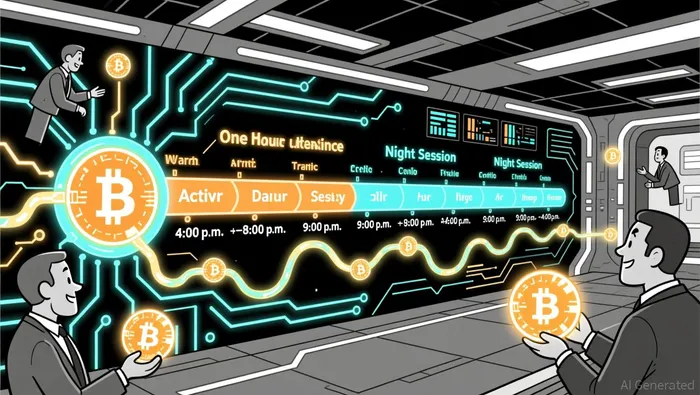
Nasdaq's proposed 5x23 trading model-which would extend U.S. equity and ETP trading hours to nearly 24 hours a day, five days a week-marks a pivotal step toward global market integration. Under this framework, the "Day Session" (4:00 a.m. to 8:00 p.m. Eastern Time) and "Night Session" (9:00 p.m. to 4:00 a.m.) would be separated by a one-hour maintenance window for clearing and settlement according to Nasdaq's plans. This model is not merely about extending hours; it is about leveraging blockchain to tokenize securities, enabling instant settlement and cross-collateralization.
The tokenization of stocks, facilitated by the Depository Trust & Clearing Corporation (DTCC), allows investors to trade securities in both traditional and tokenized forms. This dual approach reduces reliance on intermediaries, cuts transaction costs, and accelerates settlement from T+1 to near-instantaneous execution. For instance, Nasdaq's proposal ensures that tokenized securities retain the same CUSIP numbers and shareholder rights as their traditional counterparts, preserving regulatory compliance.
The U.S. Securities and Exchange Commission (SEC) has acknowledged the potential of this innovation, though it emphasizes the need for robust investor protections. As the SEC and CFTC work to align regulatory frameworks with 24/7 trading and digital assets, Nasdaq's initiative could catalyze a broader shift.
Robinhood and Kraken: Divergent Paths to Tokenization
While NasdaqNDAQ-- focuses on institutional-grade infrastructure, platforms like Robinhood and Kraken are democratizing access to tokenized assets, albeit through distinct models. Robinhood's approach centers on fractional ownership and 24/5 trading for European investors, using Ethereum's layer-two solution. Its tokenized stocks and ETFs function as derivatives, offering price exposure without shareholder rights. This model appeals to retail investors seeking flexibility but raises questions about the alignment of tokenized assets with traditional equity ownership.
In contrast, Kraken's xStocks are designed as 1:1 representations of real U.S. equities and ETFs, backed by third-party custodians. This approach prioritizes transparency and asset-backed value, addressing concerns about the speculative nature of tokenized derivatives. However, Kraken's model faces regulatory hurdles in certain regions, underscoring the fragmented landscape.
Robinhood's ambition to develop its own blockchain for tokenization further highlights the sector's innovation. By building a dedicated infrastructure, the platform aims to reduce reliance on external networks. Meanwhile, Kraken's emphasis on compliance and custody underscores the importance of balancing technological advancement with regulatory expectations.
Solving Real-World Limitations: Liquidity, Efficiency, and Accessibility
The convergence of blockchain and tokenization is addressing long-standing inefficiencies in traditional markets. For example, the tokenization of securities eliminates the need for intermediaries in settlement, reducing counterparty risk. This is particularly impactful for institutional investors, who can now leverage assets across portfolios in real time.
Moreover, 24/7 trading expands liquidity windows for global participants. Investors in Asia and Europe, who previously faced limited access to U.S. markets during non-trading hours, can now engage in continuous trading. This shift is not merely theoretical: industry forecasts suggest that tokenized assets, including stocks, could reach $35 trillion by 2030, driven by demand for liquidity.
However, challenges persist. Tokenized assets differ from traditional equities in critical ways-derivatives-based models lack shareholder rights, and interoperability between platforms remains a hurdle. Additionally, regulatory clarity is essential to prevent fragmentation and ensure investor confidence.
The Road Ahead: Innovation vs. Caution
As Nasdaq, Robinhood, and Kraken push the boundaries of market infrastructure, the financial sector must balance innovation with prudence. The tokenization of assets and 24/7 trading models promise to democratize access, reduce costs, and enhance liquidity, but they also require robust frameworks to address risks.
For investors, the key lies in understanding the nuances of tokenized assets. While platforms like Kraken offer asset-backed transparency, Robinhood's derivatives-based approach may appeal to those prioritizing flexibility over ownership rights. Meanwhile, Nasdaq's institutional-grade solutions set the stage for a future where blockchain underpins the entire trading lifecycle.
Conclusion
The rise of blockchain-based markets represents a paradigm shift in how assets are traded, settled, and accessed. Nasdaq's 5x23 model, coupled with the tokenization efforts of Robinhood and Kraken, is not just about technological novelty-it is about reimagining financial infrastructure to meet the demands of a globalized, digital-first economy. For investors, the challenge will be to navigate this transformation while harnessing its potential to unlock new levels of liquidity, efficiency, and market participation.





Comentarios
Aún no hay comentarios