
The 2026 Student Loan Tax Bomb: A Looming Fiscal Crisis for Borrowers and Markets
The One Big Beautiful Bill Act (OBBBA), signed into law in July 2025, has set the stage for a seismic shift in the U.S. student loan landscape. While the legislation aims to streamline repayment and curb excessive borrowing, its unintended consequences-particularly the so-called "tax bomb" for borrowers-threaten to destabilize both individual finances and broader markets. As 2026 approaches, the urgency for strategic action by borrowers and financial institutions has never been greater.
The Tax Bomb: A Fiscal Time Bomb for Borrowers
Starting January 1, 2026, borrowers who receive debt cancellation under Income-Driven Repayment (IDR) plans will face a dramatic tax liability. According to , forgiven debt will be treated as taxable income, potentially adding thousands of dollars to annual tax bills. For example, a married borrower with two dependents earning $40,000 annually could face a net loss of $10,295 in credits and additional taxes. Similarly, a single borrower earning the median salary of a bachelor's degree holder ($80,236) could pay an extra $11,010 in taxes. These figures underscore the disproportionate burden on middle- and lower-income borrowers, who are already financially strained.
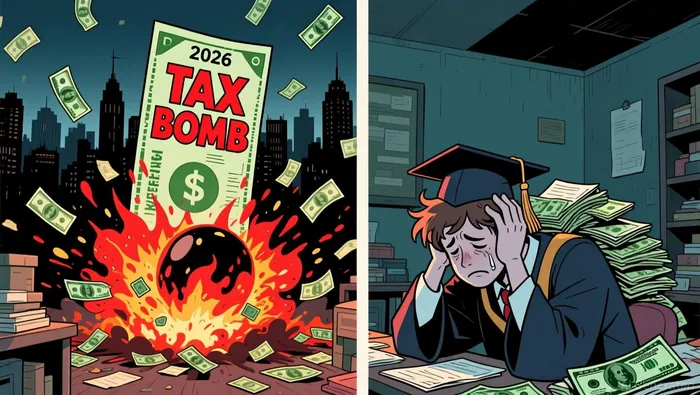
The OBBBA exacerbates this crisis by phasing out existing repayment plans like PAYE and ICR by July 2028, forcing borrowers to transition to the Repayment Assistance Plan (RAP), which extends forgiveness to 30 years but offers less flexibility. Meanwhile, stricter rules on payment pauses and deferments further limit borrowers' ability to manage financial hardships.
Immediate Strategic Actions for Borrowers
Borrowers must act swiftly to mitigate these risks. First, accelerating loan repayments before the tax bomb triggers could reduce the amount of forgiven debt subject to taxation. Second, refinancing with private lenders-though these loans lack income-driven repayment options-may offer lower interest rates for creditworthy borrowers. Third, exploring alternatives to IDR, such as employer-sponsored repayment assistance (up to $5,250 tax-free under OBBBA), could provide relief.
For those in professions like nursing, where graduate programs face reclassification and reduced federal aid, proactive planning is critical. Borrowers should also consider the tax implications of forgiveness under RAP, which could compound liabilities after 30 years of payments.
Investment Implications for Financial Institutions
The OBBBA's changes will reshape the financial sector. Financial institutions must prepare for a surge in demand for private student loans, which now fill the gap left by federal borrowing caps. However, these loans carry higher risks due to variable interest rates and lack of repayment flexibility. Banks and credit unions may see increased defaults, particularly among borrowers transitioning from IDR to RAP.
Additionally, the excise tax on wealthy college endowments, introduced under OBBBA, could reduce institutional revenue, indirectly affecting financial institutions that service these entities. Investment firms may need to adjust portfolios to account for the declining value of student loan assets, which have historically been considered low-risk.
Tax Advisory Sectors: Navigating Complexity
Tax advisors face a dual challenge: helping clients optimize deductions under OBBBA while managing the fallout from the tax bomb. The law expands employer contributions to student loan repayment (up to $5,250 tax-free) and allows deductions for student loan interest (up to $2,500 annually). Advisors should prioritize these strategies to reduce taxable income.
However, the complexity of new repayment structures-such as RAP's AGI-based payments and 30-year forgiveness-will require advanced compliance planning. As noted by Thomson Reuters, tax professionals must prepare for increased scrutiny of forgiven debt reporting, which could lead to disputes with the IRS.
Conclusion: A Call for Urgent Action
The 2026 student loan tax bomb is not a distant threat but an imminent crisis. Borrowers must act now to minimize exposure, while financial institutions and tax advisors must adapt to a rapidly evolving regulatory environment. The OBBBA's reforms, though well-intentioned, highlight the fragility of the U.S. student loan system. For markets, the stakes are high: mismanagement of these changes could trigger a wave of defaults, erode consumer confidence, and destabilize sectors reliant on student debt.
As the clock ticks toward 2026, the time for strategic action is now.





Comentarios
Aún no hay comentarios