
The 2026 Meme Coin Renaissance: Is This a Speculative Frenzy or a New Risk-On Cycle?
The memeMEME-- coin market has staged a dramatic comeback in early 2026, with its total market capitalization surging over 30% to $47 billion, driven by a confluence of retail investor enthusiasm, tax-driven trading strategies, and social media-fueled momentum according to market analysis. This resurgence raises a critical question: Is this a classic speculative frenzy, or does it signal a broader risk-on cycle in the crypto ecosystem? To answer this, we must dissect the interplay of market psychology, behavioral finance, and institutional dynamics shaping this rally.
The Psychology of FOMO and Tax Arbitrage
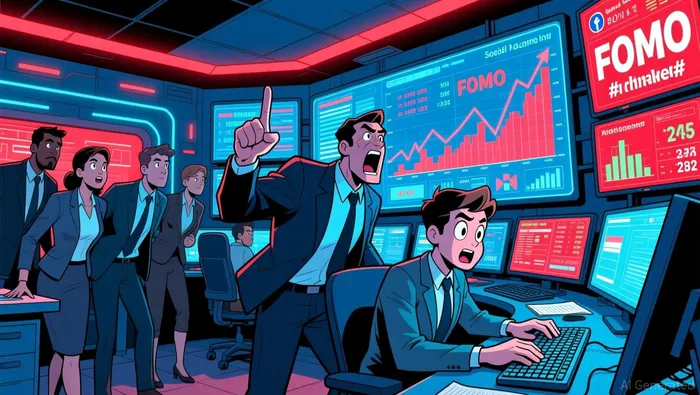
The 2026 meme coin rally is rooted in a potent mix of fear of missing out (FOMO) and tactical tax arbitrage. Retail investors, having retreated during the 2025 downturn, are now aggressively re-entering the market, spurred by social media hype and the desire to capitalize on year-end tax strategies. For instance, the IRS's wash sale rule allows investors to sell underperforming assets and repurchase them without triggering capital gains taxes, creating a "clean slate" for speculative bets. This mechanism has amplified early-year trading volumes, with 24-hour trading volume spiking to $8.83 billion.
Psychological indicators further underscore this shift. Santiment data reveals a sharp decline in fear and uncertainty metrics in late December 2025, followed by a rapid reversal to optimism in January 2026. Google Trends data corroborates this, showing a 40% increase in searches for "meme coin" since the start of the year. These patterns mirror historical speculative cycles, such as the 2021 memecoinMEME-- crash and the 17th-century Tulip Mania, where community-driven narratives and herd behavior drove asset prices to unsustainable levels.
Retail vs. Institutional Dynamics
While retail investors dominate meme coin trading, institutional participation remains a nuanced story. From 2021 to 2026, retail investors have consistently driven short-term volatility in meme coins, often reacting to social media sentiment and viral trends. In contrast, institutional investors have adopted a more strategic approach, favoring regulated crypto assets like BitcoinBTC-- and EthereumETH-- through ETFs and tokenized real-world assets (RWAs). For example, US spot crypto ETFs recorded a record $669 million inflow on January 2, 2026, led by BlackRock's IBIT.
However, institutional capital is not entirely absent from the meme coin sector. High-beta opportunities, such as presales of projects like Pepeto ($PEPETO), have attracted speculative capital seeking asymmetric upside potential. These investments, though not traditionally institutional in nature, reflect a broader risk-on appetite as macroeconomic uncertainty encourages investors to chase higher returns. Yet, unlike traditional institutional allocations, these bets lack the structural safeguards of regulated ETFs or venture capital funding, amplifying their speculative character.
Historical Parallels and Risk Cycles
The 2026 meme coin rally bears striking similarities to past speculative bubbles. In 2021, retail-driven hype around DogecoinDOGE-- and Shiba InuSHIB-- led to a 100%+ surge in market value, followed by a 90% collapse by mid-2022. Similarly, the 2026 rebound from a $35 billion low in late 2025 to $47 billion in early 2026 suggests a cyclical pattern of euphoria and correction. Behavioral finance theories, such as the "hot hand fallacy" and "herd behavior," help explain these dynamics. Retail investors, driven by social proof, often overestimate their ability to time the market, leading to crowded trades and eventual sell-offs.
Institutional investors, meanwhile, act as stabilizers in these cycles. During the 2025 downturn, while retail traders sold Bitcoin at all-time highs, institutions accumulated the asset during price dips. This divergence highlights the maturity of institutional crypto adoption, underpinned by clearer regulations (e.g., MiCA in Europe) and advanced custody infrastructure. However, the meme coin sector remains a niche where institutional caution persists, with most capital flows directed toward blue-chip cryptocurrencies rather than volatile meme tokens.
Is This a Frenzy or a New Cycle?
The 2026 meme coin resurgence is best characterized as a speculative frenzy with elements of a broader risk-on environment. While institutional investors are participating in crypto through regulated channels, their engagement with meme coins is minimal compared to their role in stabilizing the broader market. The rally is driven by retail psychology, tax arbitrage, and social media momentum-factors that historically precede sharp corrections.
That said, the broader crypto market's maturation cannot be ignored. Institutional adoption of ETFs, RWAs, and tokenization suggests a long-term trend toward legitimacy. However, meme coins remain a high-risk, high-reward segment where timing is critical. Early entrants benefit from FOMO-driven inflows, while latecomers risk becoming "bag holders" during inevitable pullbacks.
For investors, the key takeaway is to distinguish between the broader crypto risk-on cycle and the meme coin frenzy. While the former offers strategic diversification opportunities, the latter demands caution and a clear exit strategy. As the adage goes: "Bubbles don't pop-they are popped."






Comentarios
Aún no hay comentarios