
2026 Medicare: Three Structural Rules for Retirees
The 2026 Medicare updates establish a new, higher baseline for beneficiary costs. The changes are multi-faceted, raising premiums, deductibles, and coinsurance across both Part A and Part B, with the most significant financial impact falling on higher-income enrollees.
The standard monthly premium for Medicare Part B is rising to , . This hike is accompanied by a higher annual deductible, . For Part A, . These adjustments represent a clear, across-the-board cost increase for all beneficiaries, directly raising the out-of-pocket floor for essential medical services.
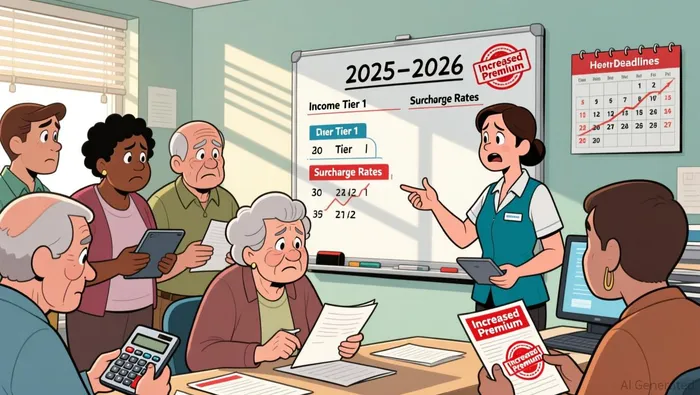
The mechanism of income-based adjustments ensures this burden is not shared equally. The Part B premium is means-tested, with higher-income beneficiaries paying a surcharge. For a couple with joint modified adjusted gross income over $342,000, . This creates a stark tiered system where the financial pressure is disproportionately high for those with the greatest ability to pay.
The bottom line is that these changes set a new, elevated cost floor for Medicare coverage. For the average beneficiary, the combination of a higher premium and deductible increases the baseline expense for accessing care. For higher-income individuals, the surcharge mechanism turns a standard premium increase into a substantial additional cost. This multi-pronged approach to cost-sharing will likely dampen the real purchasing power of Social Security COLAs for many seniors, adding a persistent layer of financial pressure to their healthcare budgets.
Rule 2: The Prescription Drug Revolution
The changes taking effect for Medicare in 2026 represent a fundamental shift in the program's approach to drug pricing and beneficiary financial protection. For the first time, Medicare is directly negotiating prices for a basket of high-cost medications, moving beyond its traditional role as a payer to an active market participant. This structural change is designed to lower costs at the point of sale and provide a new layer of financial security for millions of beneficiaries.
The most direct impact is on drug prices. Starting January 1, 2026, Medicare will implement negotiated prices for 10 high-cost drugs, including treatments for arthritis, blood clots, cancer, and diabetes. This move, mandated by the 2022 law, is expected to save beneficiaries an estimated . The savings are not theoretical; they are built into the contracts that all Medicare Advantage and stand-alone Part D plans must honor. This creates a new baseline for affordability, forcing drug manufacturers to accept lower prices for these specific medications.
Complementing this price control is a significant enhancement to the annual financial safety net. , . This cap, which applies automatically to all Part D enrollees regardless of income, ensures that once a beneficiary reaches this threshold, they pay nothing more for covered medications for the rest of the year. This provides crucial protection against catastrophic drug costs, especially for those managing chronic conditions.
A third pillar of this new framework is the automatic renewal of the Medicare Prescription Payment Plan. In 2025, beneficiaries could opt-in to spread large drug costs evenly over 12 months. For 2026, the program has been streamlined: those who participated in 2025 will be reenrolled automatically unless they opt out. This change reduces administrative friction and ensures continuity for those who rely on budgeting assistance, allowing them to manage large, lump-sum pharmacy bills more easily.
Together, these changes mark a clear departure from past policy. Medicare is no longer simply reimbursing costs; it is actively capping them, negotiating them, and smoothing their payment. This prescription drug revolution aims to make medications more accessible and protect beneficiaries from financial ruin, representing a structural recalibration of the program's relationship with the pharmaceutical industry.
Rule 3: New Care Management and Access Protections
The 2026 Medicare landscape is being reshaped by a new layer of operational complexity and consumer safeguards. These changes, aimed at controlling costs and enhancing protections, are testing the delicate balance between fiscal responsibility and patient access. The centerpiece is a that will begin in six states-Arizona, New Jersey, Ohio, Oklahoma, Texas, and Washington-starting in January. This marks a fundamental shift for Original Medicare, which has traditionally not required prior approvals. The program targets specific services and equipment deemed vulnerable to fraud or wasteful spending, with the stated goal of reducing unnecessary care and safeguarding taxpayer funds. Yet, it raises immediate concerns about potential access delays, a point echoed by critics who warn that prior authorization can burden providers and limit patient care.
Complementing this cost-control measure is a new consumer protection: a special enrollment period for Medicare Advantage enrollees. This three-month window allows beneficiaries to switch plans if inaccurate provider directory information led to their selection. It directly addresses a common frustration, offering a safety net for those who discover their doctors are not in-network after coverage begins. This change strengthens trust in the plan selection process, a critical factor as more seniors navigate the complex Medicare Advantage landscape.
The most significant structural change, however, is unfolding in the Part D drug benefit. As the Medicare Drug Price Negotiation Program begins, the Part D redesign introduces a . This mechanism is designed to manage costs as the government negotiates lower prices for a group of expensive drugs. It represents a new administrative layer, adding complexity to an already intricate benefit structure. The program's success will hinge on its ability to control spending without creating new access barriers for patients reliant on these newly negotiated medications.
Together, these initiatives signal a regulatory pivot. They introduce a more active, prescriptive role for Medicare in managing care and costs, moving beyond simple price caps. The prior authorization pilot is a direct experiment in care management, while the subsidy program is a sophisticated tool for budgeting the financial impact of drug negotiations. For patients and providers, this means navigating a more complex system with new requirements and potential delays. For policymakers, it is a high-stakes test of whether enhanced oversight and consumer protections can be implemented without undermining the timely delivery of care.







Comentarios
Aún no hay comentarios