
2026 Growth Playbook: Capturing Market Share in AI, Cybersecurity, and Global Electrification
The investment case for AI infrastructure is built on scale and durability. This is not a fleeting trend but a multi-year, capital-intensive cycle with a Total Addressable Market that has already reached staggering levels. In 2025 alone, AI-related capital expenditures across major hyperscalers are expected to exceed $360 billion. That figure alone signals a structural shift, not speculative excess. The commitment is backed by robust financial strength, with these giants funding their buildout through a combination of strong operating cash flow and long-duration debt issuance. This funding mechanism is a key signal of confidence, as evidenced by recent bond offerings from AmazonAMZN--, MetaMETA--, and Alphabet that traded near treasuries, backed by free cash flows in the tens of billions.
The structural nature of this investment is what makes it a durable growth theme. The cycle is multi-year because it involves building physical floors for the new economy-data centers, computing clusters, and the custom silicon that powers them. As one analysis notes, while the software layer of AI is a "chaotic war of attrition," the underlying infrastructure is far more stable. The physics of running models in steel and concrete does not change quickly. This creates a long runway for companies providing the essential components, from custom ASICs to advanced packaging and inspection equipment.
The early stage of enterprise adoption further underscores the durability of this cycle. While 98% of Fortune 500 companies experimented with generative AI, only a fraction have deployed at scale. This gap represents continued future market growth as AI becomes operationalized across businesses. For investors, the thesis is clear: the hyperscalers are making multi-year commitments to build out their AI capacity, and they are doing so with financial muscle. This creates a predictable, high-TAM environment for the infrastructure providers that will supply the bricks and mortar of the AI era.
Key Enabling Technologies and Market Dynamics
The growth story for AI infrastructure hinges on specific technological shifts and supply constraints that will directly impact profitability. The move away from standardized chips toward custom silicon is a prime example. As the software layer churns, the underlying hardware is becoming more specialized and efficient. Hyperscalers are designing their own ASICs to cut costs and improve power efficiency, a trend that creates a clear opportunity for specialized suppliers. Marvell TechnologyMRVL--, for instance, is a key beneficiary, providing the high-speed interconnect IP that allows these custom chips to communicate within a cluster. 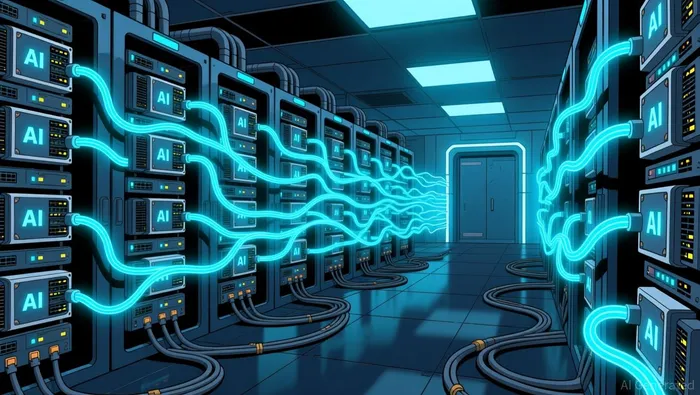 The 2026 catalyst here is the ramp to volume production for custom ASICs from Amazon and MicrosoftMSFT--, with management guiding for this revenue stream to grow 20% in fiscal 2027, or calendar 2026.
This shift is compounded by the physical demands of advanced computing. A finished silicon wafer is useless without sophisticated packaging, and AI chips require advanced 2.5D packaging to stitch memory and compute dies together. TSMC controls the majority of this capacity, but it is sold out. This creates a bottleneck and a strategic opportunity for independent alternatives like Amkor Technology, which is building capacity as a "China Hedge" for the semiconductor supply chain.
The most significant constraint, however, is power. The explosive growth in data center demand is driving a massive U.S. electrification transition. AI is a key driver of this surge, with data centers projected to account for a substantial portion of the nation's electricity demand growth. One analysis points to a 17% increase in U.S. electricity demand by 2030, a figure that underscores the scale of the infrastructure buildout required. This isn't just about more power; it's about a fundamental reconfiguration of the grid to handle concentrated, high-density loads. Companies enabling this transition-from power generation to grid modernization-are positioned for long-term growth.
These supply constraints, whether for semiconductor capacity or electrical power, create a powerful dynamic for pricing power. When demand is structural and supply is tight, the market rewards those who can deliver. This is evident in the bond markets, where hyperscalers are securing multi-billion dollar debt at favorable rates, signaling confidence in their ability to generate the cash flow needed to fund their capex. For infrastructure providers, the path to profitability is clear: align with these durable trends, fill critical supply gaps, and capture value as the physical floor of the AI economy is built.
Financial Impact and Scalability Assessment
The structural opportunity in AI infrastructure translates directly into a compelling financial setup for the right companies. The key is to assess them not by today's earnings, but by their ability to capture market share in a high-TAM, multi-year cycle. The business model's scalability is built on serving foundational needs that recur as the AI stack expands.
Take Quanta Services, a major infrastructure solutions provider specializing in power grid modernization. It serves the foundational needs of the AI stack by working with major utilities and renewables developers to build and maintain the electrical backbone. The company's addressable market is substantial and directly tied to the electrification transition. As data centers become the new industrial load, Quanta's work is not a one-time project but a recurring service as new facilities are built and existing grids are upgraded to handle the surge. This creates a predictable, scalable revenue stream that grows with the total number of data centers and the complexity of their power needs.
The valuation principle here is clear: focus on future growth, not current earnings. The primary driver is market share capture in a cycle where demand is structural and supply is constrained. This is evident in the bond markets, where hyperscalers are securing multi-billion dollar debt at favorable rates, signaling confidence in their ability to generate the cash flow needed to fund their capex. For infrastructure providers, the path to profitability is to align with these durable trends, fill critical supply gaps, and capture value as the physical floor of the AI economy is built.
This setup is mirrored in other segments. MarvellMRVL-- Technology, for instance, is positioned to benefit from the custom ASIC ramp, with management guiding for custom ASIC revenue to grow 20% in fiscal 2027. That growth is not a one-off; it's a recurring stream as hyperscalers deploy more of their own silicon. Similarly, Amkor Technology is building capacity as an independent alternative for advanced packaging, a bottleneck that will persist as AI chip complexity increases. Their models are scalable because they address essential, non-discretionary components of the infrastructure buildout.
In a market where global equities are forecast to climb on earnings growth, these companies represent a specific growth vector. Their financial impact will be measured by their ability to scale revenue in line with the multi-year AI capex cycle, rather than by short-term profit fluctuations. For the growth investor, the thesis is to identify the companies with the largest TAM exposure and the most scalable models to capture it.
Catalysts, Risks, and What to Watch
The growth thesis for AI infrastructure is clear, but its execution will be validated by specific near-term events. The primary catalyst for 2026 is the rollout of new hardware standards, particularly the shift to 1.6T networking. This isn't just an incremental upgrade; it's a foundational change that could disrupt existing supply chains. For companies like Marvell, which provides the high-speed interconnect IP for these new switches, the year is about crossing a critical threshold. Management has guided for custom ASIC revenue to grow 20% in fiscal 2027, a target that hinges on these new hardware platforms hitting volume production without hitches. Success here would move the revenue stream from design wins to a reliable cash flow generator.
A key risk to monitor is execution and cost control. The massive capital expenditure cycle requires flawless project management and supply chain resilience. While the bond markets signal confidence with favorable terms for hyperscalers, the pressure is now on the infrastructure providers to deliver at scale. Any missteps in managing complex build-outs or navigating supply constraints could erode margins and delay growth, testing the scalability of even the most promising models.
The most critical signal to watch for is a shift in demand. The cycle's peak is not marked by a single event, but by signs of saturation or a change in spending priorities. The early stage of enterprise adoption provides a long runway, but the market will need to see continued growth in the number of data centers and the complexity of their power needs. If signs emerge that hyperscalers are pausing or scaling back their multi-year commitments, it would signal the cycle's peak. For now, the evidence points to a durable build-out, but vigilance is required as the physical floor of the AI economy is constructed.





Comentarios
Aún no hay comentarios