
The 2026 Grid Resilience Trade: Why Utilities and Transmission Assets Are the New Core of AI-Driven Growth
The global energy landscape is undergoing a seismic shift. By 2026, electricity demand is projected to grow by 3.7%, driven by surging industrial activity, the proliferation of electric vehicles (EVs), and the insatiable appetite of AI data centers. China and India alone will account for 60% of this increase, with India's growth rate expected to hit 6.6% in 2026 according to IEA data. Meanwhile, the U.S. and EU face their own challenges: data centers are projected to consume a third of the 165% global power demand surge by 2030, while Europe's grid must adapt to a 1.5% annual growth rate amid decarbonization pressures as reported by IEA. These trends are not just reshaping energy consumption-they are redefining the investment landscape.
The AI-Grid Synergy: A New Era of Resilience
Utilities are no longer passive observers of demand; they are active participants in a high-stakes game of supply-side innovation. AI is emerging as the linchpin of grid resilience, enabling real-time optimization. For instance, Duke Energy's $190 billion decade-long investment plan includes AI-powered tools like AiDash, which uses satellite imagery and machine learning to mitigate wildfire risks in power-line corridors. Similarly, National Grid's partnership with Emerald AI has reduced peak demand energy usage by 25% through dynamic workload shifting. These projects are not isolated experiments-they are part of a broader trend.
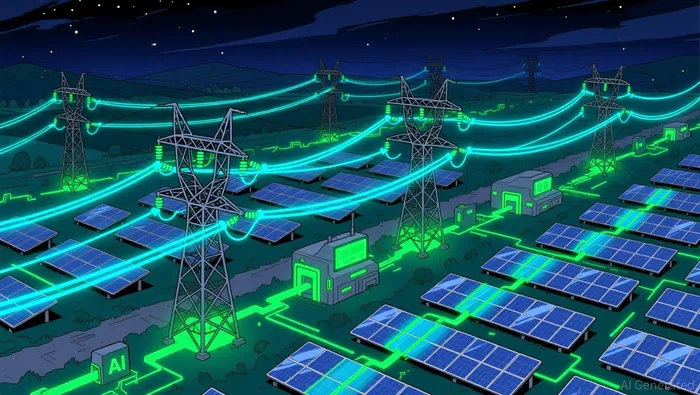 The U.S. Department of Energy (DOE) has already demonstrated the ROI of AI-driven grid modernization. Dynamic line rating technology, which leverages real-time weather data to optimize transmission capacity, has delivered cost savings for utilities like PPLPPL-- and Oncor. FERC's Order 1920 now mandates that transmission owners consider such technologies, signaling regulatory alignment with market needs. Meanwhile, AI's role in managing renewable integration-balancing intermittent solar and wind with virtual power plants (VPPs)-is becoming critical as renewables potentially overtake coal as the largest electricity source by 2025.





Comentarios
Aún no hay comentarios