
2026 ETF Investment Opportunities Amid AI, Commodity Booms, and Global Diversification
The 2026 investment landscape is shaped by a K-shaped recovery, where divergent economic outcomes between high-income households and small businesses, as well as large corporations and mid-sized firms, define market dynamics. This structural imbalance, driven by AI-led productivity gains and persistent inflationary pressures, demands a strategic approach to asset allocation. Investors must navigate concentrated growth in technology and commodities while hedging against systemic risks. Below, we analyze key opportunities in AI-driven ETFs, commodity booms, and global diversification strategies, contextualized within the K-shaped framework.
AI-Driven ETFs: Capitalizing on the Productivity Supercycle
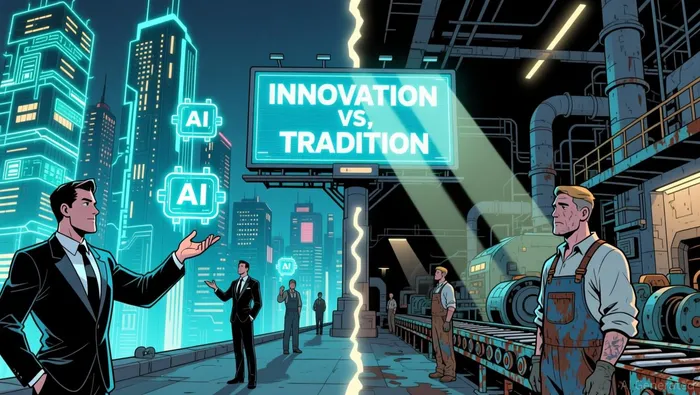
The AI revolution has become a cornerstone of the K-shaped recovery, with the top 10% of earners accounting for 50% of U.S. consumer spending. Major hyper-scalers like NvidiaNVDA-- have leveraged AI to drive capital expenditure (capex) growth, while smaller firms struggle with borrowing costs in a high-rate environment. For investors, ETFs focused on AI-related sectors-such as semiconductors and cloud computing-offer exposure to this concentrated growth. The First Trust Nasdaq Semiconductor ETF (FTXL) and WisdomTree Cloud Computing ETF (WCLD) are prime candidates, as they align with the AI supercycle's demand for advanced computing infrastructure.
However, risks loom. J.P. Morgan Global Research warns of a 35% probability of a U.S. and global recession in 2026, driven by sticky inflation and fragile labor markets. Overcapacity in AI infrastructure spending could also trigger corrections. Diversification within the AI sector-such as balancing growth-oriented tech ETFs with defensive utilities or healthcare funds-may mitigate these risks.
Commodity Booms: Diversification and Inflation Hedging
Commodities are gaining traction as a hedge against inflation and a source of diversification in a K-shaped economy. Gold has surged as central banks increase holdings for geopolitical hedging and dollar diversification. The iShares Physical Gold ETC and iShares Silver Trust (SLV) are positioned to benefit from structural deficits in precious metals, particularly as AI and electrification drive demand for industrial metals like copper and palladium.
Copper, dubbed "Dr. Copper," has nearly doubled in price over 18 months due to electrification trends, including AI data centers and EV infrastructure. The United States Copper ETF (CPER) and abrdn Physical Palladium Shares ETF (PALL) offer targeted exposure to these inelastic supply markets. Meanwhile, uranium faces underinvestment challenges, with demand rising from reactor expansions and small modular reactors. Investors should consider a basket of commodity ETFs to balance volatility while capturing sector-specific tailwinds.
Global Diversification: Navigating Uneven Growth
The K-shaped recovery's regional and sectoral disparities underscore the need for global diversification. Emerging markets, for example, present growth opportunities as AI-driven demand for raw materials and energy transitions create new economic corridors. The Vanguard FTSE Emerging Markets ETF and Vanguard FTSE All-World High Dividend Yield ETF provide broad exposure to equities in developing economies, while the Vanguard Global Aggregate Bond ETF balances portfolios with fixed-income assets.
Energy markets, however, are bifurcating: global LNG oversupply contrasts with localized energy shortages, particularly in natural gas and agricultural commodities. Investors should prioritize ETFs with regional specificity, such as those targeting energy transition metals or agricultural inputs, to capitalize on localized demand shocks.
Strategic Asset Allocation in a K-Shaped World
The K-shaped recovery's concentration of wealth and corporate dominance introduces vulnerabilities, including a sharper correction if financial assets lose value. A diversified portfolio must balance growth in AI and commodities with defensive assets. For instance, pairing high-beta tech ETFs with low-volatility bond funds can cushion against market shocks. Additionally, investors should monitor the Federal Reserve's stance on rate cuts, as inflation persistence may delay monetary easing.
Conclusion
The 2026 investment environment demands a nuanced approach to asset allocation. AI-driven ETFs offer growth potential but require hedging against overcapacity risks. Commodity booms, particularly in industrial metals and precious metals, provide diversification and inflation protection. Global diversification, especially in emerging markets and energy transition sectors, is critical to navigating the K-shaped recovery's structural imbalances. By aligning portfolios with these themes, investors can position themselves to capitalize on uneven growth while mitigating systemic risks.





Comentarios
Aún no hay comentarios