
The 2026 Commodity Downturn: Strategic Shifts for Investors in a Deflationary Commodity Market
Energy: A Sector in Structural Decline
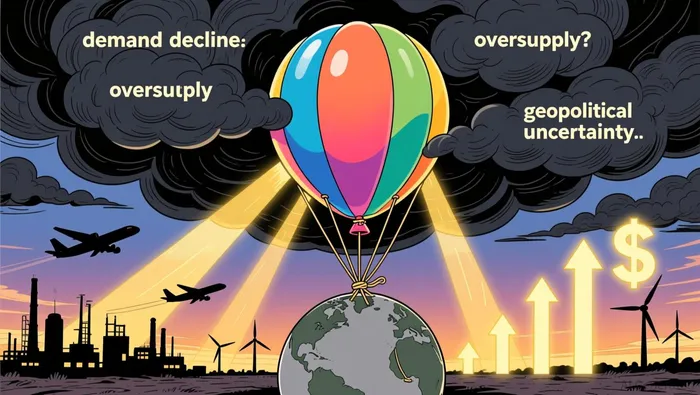
Energy prices are at the forefront of this downturn, with Brent crude forecast to average $60 per barrel in 2026-a 10% decline from 2025 levels. The drivers are clear: slowing global economic growth, a surge in renewable energy adoption, and the growing dominance of electric and hybrid vehicles. Oil producers, already grappling with a supply surplus, face further margin compression as demand growth stagnates. For investors, this signals a critical reallocation away from energy producers and into energy consumers.
Airlines, for instance, stand to gain significantly. With fuel costs accounting for up to 30% of operating expenses, lower oil prices directly improve profit margins. Similarly, manufacturers-particularly those in energy-intensive industries like steel and cement-will see reduced production costs, enhancing competitiveness in a weak global trade environment according to market analysis.
Agriculture: Winners and Cyclical Risks
Agricultural commodities present a mixed picture. Staple food prices, including corn, are expected to remain stable due to robust harvests and resilient demand from biofuel markets according to market projections. Corn users, such as ethanol producers and livestock farmers, will benefit from lower input costs, improving profit margins in a sector historically sensitive to price volatility.
However, higher-value agricultural products face cyclical risks. Soybean prices, for example, collapsed in 2025 due to record production and trade tensions, and while stabilization is anticipated, long-term gains remain uncertain according to analysts. Investors should prioritize sectors with inelastic demand-such as corn-based biofuels-while avoiding overexposed segments like specialty crops.
Metals and Minerals: Divergent Trajectories
Base metals, including copper and aluminum, are under pressure from weak industrial demand, particularly in China, where construction activity remains subdued according to market reports. Miners, already battered by falling prices, face further margin erosion. Conversely, natural gas and precious metals are expected to outperform. Gold, in particular, has emerged as a safe-haven asset, with prices surging over 40% in 2025 and projected to rise another 5% in 2026 amid geopolitical tensions and policy uncertainty.
This divergence underscores the importance of sector-specific positioning. While industrial metals may drag on portfolios, gold and silver offer both inflationary and deflationary hedges, making them compelling additions to diversified strategies.
Strategic Rebalancing: Contrarian Opportunities
The 2026 commodity downturn demands a contrarian approach. Investors should:
1. Overweight commodity consumers: Airlines, manufacturers, and corn users stand to benefit from lower input costs.
2. Underweight producers: Oil and mining firms face structural headwinds that may persist beyond 2026.
3. Reallocate to safe-haven assets: Gold's resilience in volatile markets positions it as a strategic hedge against both economic and geopolitical risks.
As the deflationary cycle deepens, the key to outperformance lies in anticipating shifts in demand and capitalizing on mispriced assets. The winners of this downturn are not the producers of commodities but the users-those who can transform lower costs into competitive advantages.







Comentarios
Aún no hay comentarios