
Is the 2026 Bull Market Built on a House of Cards?
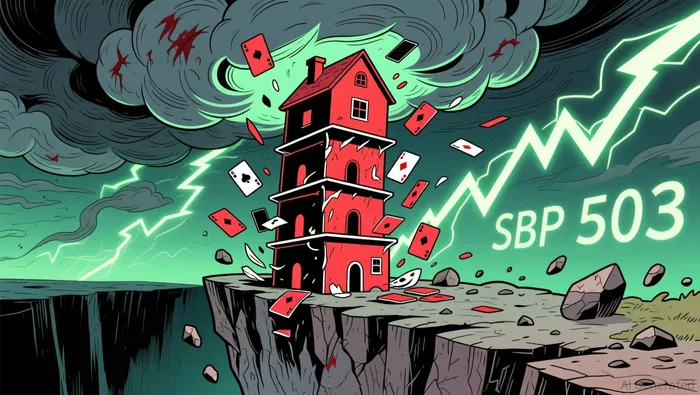
The S&P 500's 2026 bull market has been fueled by a potent mix of investor overconfidence and pro-cyclical forces, but beneath the surface lies a growing tension between stretched valuations and fragile macroeconomic underpinnings. As the market enters a new year, the question looms: Is this rally a durable foundation or a precarious house of cards?
Overvaluation: A Historical Warning
The market's valuation metrics paint a stark picture. As of December 2025, the S&P 500's trailing P/E ratio stood at 28.5, while the P/E10 (Shiller CAPE) ratio reached 39.8, a level last seen during the dot-com bubble and far above its historical average of 16.7. By January 2026, the CAPE ratio had climbed further to 40.48, signaling a market priced for perfection. These metrics suggest equities are trading at levels that historically precede periods of underperformance. For context, the P/E ratio was 90% above its modern-era average of 20.6 in September 2025, placing it 2.3 standard deviations above the mean-a textbook definition of overvaluation.
Such extremes are not new. In 2000 and 2007, similarly inflated valuations preceded market crashes. Yet today's investors seem to have learned little. The CAPE ratio's 7.33% annual increase in 2025 reflects a market more concerned with short-term gains than long-term sustainability.
Overconfidence: Echoes of the Past
Investor overconfidence has reached troubling levels. Institutional allocations to equities have returned to pre-2008 Financial Crisis proportions, with risk assets dominating portfolios despite rising geopolitical tensions and valuation warnings. This behavior mirrors the irrational exuberance of past bubbles, where optimism drowned out caution.
The market's current preference for defensive stocks-those with high dividend yields and AI-driven resilience-further underscores this overconfidence. Investors are betting on companies that can weather macroeconomic storms, yet they remain bullish on future earnings growth, expecting double-digit profit increases. This optimism ignores the reality of a slowing global economy and persistent inflation.
Pro-Cyclical Drivers: A Delicate Balancing Act
The bull market's endurance hinges on pro-cyclical factors. Global economic growth is projected to remain modest, with advanced economies expanding at 1.5% in 2026 and emerging markets at 4.1%. The U.S., a key driver of global demand, is expected to grow at 1.5% in 2026, supported by stable consumer spending and AI-related investments. Meanwhile, the Federal Reserve's accommodative monetary policy-keeping interest rates slightly elevated but not restrictive-has provided a tailwind for equities.
However, these tailwinds are not without risks. Inflation, though easing, remains above the Fed's 2% target, with the core PCE index projected at 2.6% by year-end 2026. The labor market, while resilient, is expected to soften, with unemployment potentially peaking at 4.5%. These trends suggest a fragile equilibrium, where any misstep could trigger a correction.
The House of Cards?
The 2026 bull market is indeed built on a precarious foundation. Overvaluation metrics, reminiscent of past bubbles, coexist with investor overconfidence and a reliance on pro-cyclical forces that may not hold. While the Fed's cautious approach and AI-driven growth offer temporary relief, they cannot offset the structural risks of a market priced for utopia.
History teaches that no bull market is immune to gravity. The question is not whether the current rally will end, but when-and how violently. For now, investors are dancing on a tightrope, blind to the cracks beneath their feet.







Comentarios
Aún no hay comentarios