
The 2025 Infrastructure Rebound: Strategic Plays in Concrete and Asphalt Markets
The global concrete and asphalt industries are experiencing a transformative rebound in 2025, driven by post-pandemic infrastructure recovery, sustainability mandates, and supply chain innovations. With the concrete market valued at $1.82 billion in 2024 and projected to grow at a 3.8% CAGR through 2030, according to a WEF report, and the asphalt market reaching $2.54 billion in 2025 with a 7.1% CAGR, according to an RMI press release, investors are increasingly turning to these sectors for resilient returns. This analysis explores the strategic opportunities emerging from decarbonization, supply chain optimization, and policy-driven demand, with a focus on leading companies and regional dynamics.
Post-Pandemic Demand Surge: Infrastructure and Sustainability Converge
The post-pandemic era has accelerated demand for infrastructure modernization, particularly in rapidly urbanizing regions like Asia Pacific. China and India, for instance, are spearheading large-scale projects, from smart cities to climate-resilient highways, which require advanced materials like air-purifying pervious concrete and warm mix asphalt, as noted in the RMI press release. These materials not only enhance durability but also align with global sustainability goals by reducing carbon footprints.
Government policies are amplifying this trend. The U.S. Concrete and Asphalt Innovation Act of 2025 allocates $15 million annually to support low-emission production technologies under the S.1067 bill, while the Inflation Reduction Act (IRA) and Infrastructure Investment & Jobs Act (IIJA) provide federal grants for permeable pavement projects, according to the RMI press release. For example, the City of Davis, California, secured a $24 million PROTECT grant to deploy cool pavement technologies, demonstrating how public funding is catalyzing market adoption (RMI press release).
Supply Chain Optimization: Innovation as a Competitive Edge
Supply chain resilience has become a critical focus for industry leaders. Companies like LafargeHolcim and Cemex are leveraging AI-driven R&D and automation to optimize production. LafargeHolcim's ECOPact low-carbon concrete now accounts for 31% of its ready-mix sales, up from 25% in 2024, while its OLYMPUS carbon capture project underscores its commitment to net-zero targets. CemexCX--, meanwhile, has integrated CarbonCure technology into its EcoFlow Permeable Concrete, reducing emissions by 18% since 2020.
Emerging players like Seratech and EcoMaterial Technologies are also disrupting the market with bio-based binders and decarbonized cement solutions. These innovations are supported by initiatives like the Sustainable Concrete Buyers Alliance (SCoBA), which aggregates demand for low-carbon materials through a "book and claim" system, enabling companies like Amazon and Meta to offset supply chain emissions (RMI press release).
Financial Performance and ROI: Leading Companies in Focus
The financial health of industry leaders further validates the sector's investment potential. Cemex reported a 38% year-over-year increase in net income for Q2 2025, driven by its Project Cutting Edge cost-saving initiatives and strong EMEA performance. Its Vertua sustainability portfolio now accounts for 63% of cement sales, with a €157 million EU Innovation Fund grant accelerating its Rüdersdorf net-zero plant.
LafargeHolcim similarly demonstrated robust growth, with recurring EBIT up 10.8% in H1 2025 and a free cash flow target of CHF 2 billion for the year. The company's focus on high-value, sustainable offerings-such as polymer-modified asphalt and recycled aggregates-has expanded its EBIT margin to 18.3%.
For U.S. Concrete, the integration of CarbonCure technology into its ready-mix operations aligns with industry-wide price trends, where average selling prices for ready-mixed concrete rose 6.0% annually from 2016 to 2024. While specific 2025 figures remain pending, its strategic partnerships with municipalities for green infrastructure projects position it to capitalize on IRA-driven demand (RMI press release).
Challenges and Opportunities Ahead
Despite the optimism, challenges persist. Permeable concrete, for instance, faces clogging risks from particulates, which can degrade performance over time, as highlighted in the WEF report. However, advancements in pore structure design and maintenance protocols are mitigating these issues, ensuring long-term viability.
Investors should also monitor regional dynamics. While Asia Pacific remains the growth engine, North America's NextGen Growth 2030 strategy and Europe's Value-Chain Decarbonization initiatives are creating diversified opportunities (WEF report).
Conclusion: Strategic Entry Points for Investors
The 2025 infrastructure rebound presents a unique window for investors to capitalize on the convergence of demand, sustainability, and supply chain innovation. Companies like Cemex, LafargeHolcim, and U.S. Concrete are not only delivering strong financial returns but also redefining industry standards through decarbonization and circular economy practices. As governments and corporations align with climate goals, the concrete and asphalt markets are poised to become cornerstones of the green economy.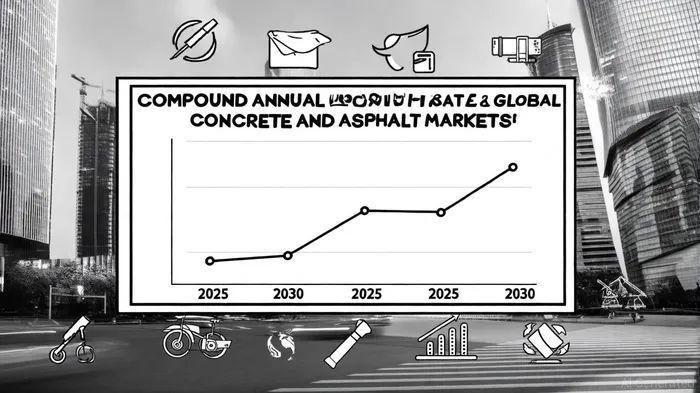





Comentarios
Aún no hay comentarios