
2025 Blockchain Infrastructure & Altcoin Momentum: Strategic Investment Playbook
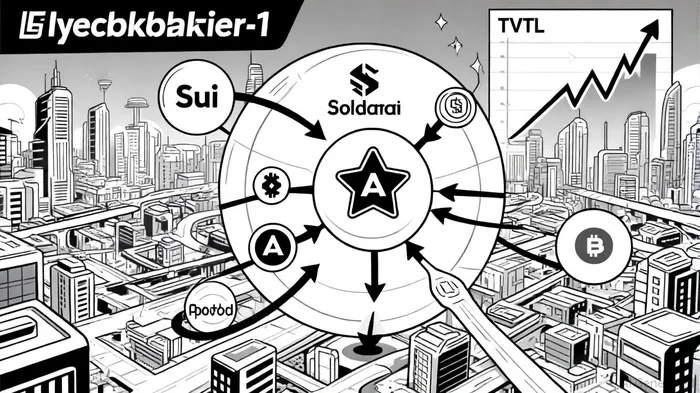
The blockchain landscape in 2025 is defined by two converging forces: infrastructure innovation and altcoin renaissance. As institutional capital floods the space and regulatory frameworks stabilize, layer-1 protocols are no longer just technical experiments—they're foundational assets for a decentralized future. This article dissects the most compelling layer-1 projects and altcoin candidates, offering a roadmap for investors seeking to capitalize on 2025's momentum.
The Layer-1 Arms Race: Scalability, Security, and Real-World Adoption
Layer-1 protocols are the bedrock of Web3, and 2025 has seen a surge in projects solving critical pain points like scalability, interoperability, and enterprise adoption.
Sui (SUI): The DeFi and Stablecoin Powerhouse
SuiSUI-- has emerged as a dominant force, processing 4.5 billion transactions and securing $1 billion in TVL[1]. Its modular architecture and focus on high-throughput DeFi applications have made it a stablecoin hub, with over $1.05 billion in stablecoins locked[3]. The native token's 237% annual surge underscores its growing utility and network effects.Apertum (APTM): Avalanche's High-Performance Subnet
Built within the AvalancheAVAX-- ecosystem, Apertum has processed 1.9 million transactions and is praised for its EVM compatibility and community-driven governance[3]. With Messari's endorsement and Avalanche's expanding institutional partnerships, APTM is a sleeper candidate for 2025's altcoin rally.Polkadot (DOT) and Near (NEAR): Interoperability and Sharding
Polkadot's 2025 upgrades have enhanced parachain auctions and staking efficiency[2], while Near's sharding upgrades have boosted transaction throughput to 10,000 TPS[2]. Both projects are critical for cross-chain use cases, particularly as enterprises demand seamless data and asset transfers.Solana (SOL): Hardware Integration and Derivatives Dominance
Solana's SAGA smartphone and the viral popularity of tokens like BONK have driven mainstream adoption[3]. The chain now hosts $12 billion in derivatives liquidity, with analysts projecting a $200 price target for SOLSOL-- by 2025[3].
Altcoin Momentum: Breakout Candidates and Institutional Tailwinds
While BitcoinBTC-- and EthereumETH-- remain benchmarks, altcoins are capturing market share through innovation and real-world utility.
Qubetics (TICS): Asset Tokenization's Rising Star
Qubetics has raised $13.2 million in its presale and is building a platform for tokenizing real-world assets (RWAs)[2]. Analysts forecast a $0.25 price by presale end and a $10–$15 range post-mainnet[4]. Its developer tools and focus on institutional-grade tokenization position it as a 2025 breakout.Mantra and Berachain: RWA and Liquidity-Driven Consensus
Mantra's partnerships with Google Cloud and UAE real estate firms[1] are accelerating RWA adoption, while Berachain's proof-of-liquidity model has attracted $180 million in funding[1]. Both projects are leveraging institutional trust to bridge crypto and traditional finance.Hedera (HBAR): DLT for Enterprise Use Cases
Though notNOT-- a blockchain, Hedera's hashgraph DLT is gaining traction in carbon credit tracking with automakers like Kia and Hyundai[3]. Its energy-efficient consensus and enterprise partnerships make it a unique layer-1 play.
Strategic Positioning: Where to Allocate Capital in 2025
The key to success lies in diversification across innovation vectors:
- High-Throughput Protocols: Sui, SolanaSOL--, and Apertum for DeFi and NFT scalability.
- Interoperability Leaders: PolkadotDOT-- and Near for cross-chain infrastructure.
- RWA Pioneers: MantraOM-- and Qubetics for tokenizing real-world assets.
- Wildcards: Projects like MAGACOIN FINANCE, which, despite speculative risks, could deliver 55x returns if adoption accelerates[3].
Conclusion: The 2025 Blockchain Inflection Point
The layer-1 race is no longer about theoretical potential—it's about real-world impact. Protocols that solve scalability, enable RWA tokenization, or integrate with enterprise systems are capturing market share and institutional capital. For investors, the priority is to back projects with clear use cases, growing TVL, and defensible moats. As CoinbaseCOIN-- Institutional notes, the crypto asset class is maturing[1], and 2025's winners will be those who build the rails for the next phase of Web3.





Comentarios
Aún no hay comentarios