
2025 Auto Sector Update: EV Slump, Tax Credit Loss, and What’s Next for Big Manufacturers
The automotive industry in 2025 is at a crossroads. While overall new-vehicle sales are expected to rise, the electric vehicle (EV) segment has faced a sharp decline. With the loss of a key federal EV tax credit and fewer affordable models, demand has softened, forcing automakers to rethink their strategies. For investors, the year has brought both surprises and cautionary tales — from traditional manufacturers thriving to EV leaders struggling to maintain momentum. The question now is what the near-term holds and how the sector can adapt to a rapidly changing market.
The slowdown in the EV sector is one of the most significant developments in 2025. According to Cox Automotive, U.S. EV sales are expected to drop nearly 40% in Q4 2025 compared to the same period in 2024. That’s a dramatic reversal for a market that once showed explosive growth. The expiration of the $7,500 federal tax credit played a major role in the decline, as did reduced consumer interest in higher-priced EV models. At the same time, internal combustion engine (ICE) vehicles have regained ground, especially in the $40,000 price range where ICE models now far outnumber EV options. 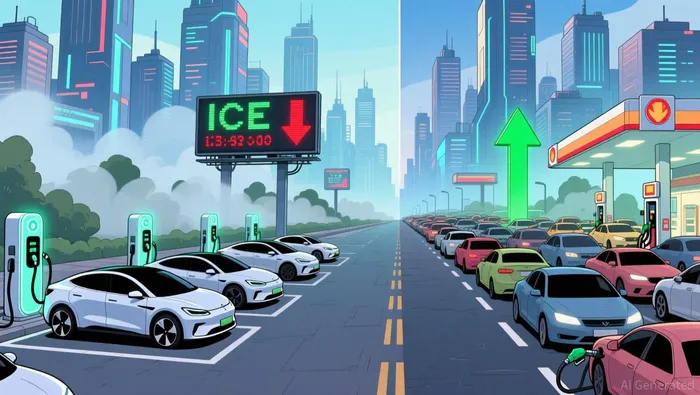 For now, affordability and consumer confidence remain key issues for the EV segment.
Even as the EV market stumbled, traditional automakers like General MotorsGM-- and FordF-- have shown resilience. GMGM-- is expected to finish the year as the top-selling automaker in the U.S. for the fourth year in a row, while Ford, despite announcing a major $19.5 billion charge related to its EV strategy, has managed to keep its overall financial performance intact. Ford's CEO attributed the decision to refocus on hybrids and plug-in vehicles to profitability and market demand. GM, meanwhile, has raised its adjusted earnings per share (EPS) guidance to $9.75 to $10.50 for the year, with adjusted automotive free cash flow projected between $10 billion and $11 billion according to Fosstone Elevator. These numbers show that while the EV transition is challenging, traditional automakers are adapting — often faster than expected.
Tesla, the electric vehicle pioneer, is not immune to the sector's struggles. Its U.S. sales are expected to fall by 8.9% in 2025, and Q4 sales dropped sharply compared to previous periods. The company faces a unique set of challenges, including the loss of the EV tax credit and limited product offerings below $40,000. For now, Tesla's growth seems to be slowing as it tries to maintain its market leadership in a tougher environment according to InsideEVs.
For investors, the auto sector in 2025 highlights the importance of flexibility and adaptability. While EVs were once the dominant narrative, the reality in 2025 shows a more nuanced picture. Traditional automakers are proving they can remain competitive even as they invest in electrification and hybrid technologies. At the same time, EV-focused companies are having to rethink their strategies. The key takeaway is that the auto industry is not just about which type of vehicle wins — it's about how companies balance innovation with profitability and consumer needs.
Looking ahead into 2026, the auto industry is likely to continue evolving. Production forecasts from S&P Global Mobility suggest a modest increase in North American and European output, with China showing strong export potential. For now, the industry is adjusting to new tax policies, shifting consumer preferences, and the reality that the EV revolution may not be as fast or as broad as once expected. Investors should watch how automakers balance their portfolios, how quickly the EV market stabilizes, and whether new technologies like AI-driven cost efficiencies or hybrid systems gain traction. The next year will be a test of how well the sector can adapt — and how quickly it can find a new normal.





Comentarios
Aún no hay comentarios