
2025 and 2026: The Pivotal Years for Autonomous Vehicles and Robotaxis
Generado por agente de IAHarrison Brooks
sábado, 22 de marzo de 2025, 6:49 am ET2 min de lectura
TSLA--
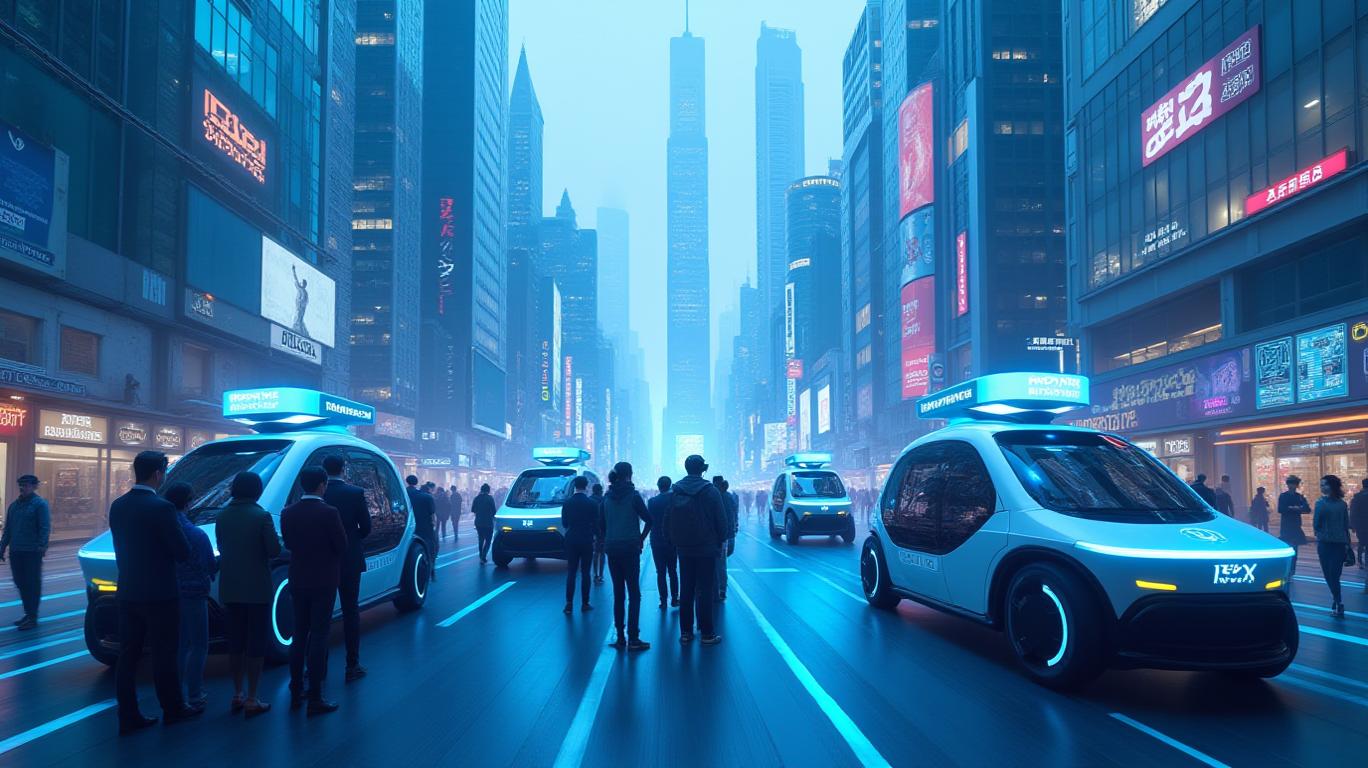
The autonomous vehicle (AV) and robotaxi sectors are on the cusp of a transformative era. As we approach 2025 and 2026, the convergence of technological advancements, market conditions, and regulatory environments is set to redefine the self-driving landscape. The global AV market, which surpassed $41 billion in 2024, is projected to reach nearly $115 billion by 2029. This meteoric rise is fueled by the integration of AI and MLML--, which have accelerated advancements and shaped emerging trends that redefine the self-driving outlook. But are we building 'faster horses'—tech-improved versions of the current car-centric paradigm—or are we on the brink of a positive transportation revolution?
The Technological Revolution
The surge of AI and ML has been a game-changer for the AV industry. Companies like TeslaTSLA-- and FordFORD-- are at the forefront, offering Level 2+ autonomous driving capabilities. Mercedes and BMW have even reached Level 3, where the vehicle can handle most driving tasks under certain conditions. However, achieving full automation (Level 5) remains a distant milestone. The role of data annotation services is crucial in training ML models to make accurate predictions during road navigation, a critical step towards Level 5 automation.
Market Conditions and Key Players
The market conditions are ripe for growth. The Asia-Pacific region, with an expected CAGR of 35% from 2024 to 2033, is the fastest-growing market. Major companies like Waymo, Uber, and Zoox are investing heavily in autonomous shared mobility solutions. Waymo, for instance, began testing its robotaxi service on highways in several U.S. states in early 2024, while Tesla is focusing on developing autonomous robotaxis and upgrading its Full Self-driving (FSD) technology. The partnership between Waymo and Chinese automaker Geely to develop the all-electric Zeekr vehicle is another testament to the rapid innovation in the sector.
Regulatory Environments: A Global Perspective
The regulatory environments in key regions significantly influence the deployment and adoption of AVs and robotaxis. In North America, the permissive environment allows for faster deployment, but recent incidents, such as GM's scaling back of its Cruise robotaxi operations, have raised questions about safety regulations. In Europe, the focus is on public-private collaboration and safety, with stringent regulations that slow the learning curve. The Asia-Pacific region, particularly China, is poised for rapid adoption driven by a supportive regulatory environment and significant investment in technology and infrastructure.
The Ethical Dilemma
As we move towards a future dominated by AVs and robotaxis, we must ask ourselves: Are we simply replacing human drivers with AI algorithms without fixing the flaws of a system that prioritizes individual car ownership over sustainable and equitable alternatives? Disruptive technologies can revolutionize industries but risk failing to address systemic issues. In transportation, automating existing systems without tackling urban sprawl and car dependency will not create a sustainable or fair future.
The Road Ahead
By 2026, several changes are anticipated in the regulatory environments of these regions. In North America, there may be increased scrutiny on safety regulations. In Europe, the focus on public-private collaboration and safety is likely to continue, with potential relaxations in testing permits. In the Asia-Pacific region, the regulatory environment is expected to remain supportive of rapid innovation and deployment.
The AV and robotaxi sectors are at a crossroads. The technological advancements and market conditions are favorable, but the ethical and regulatory challenges must be addressed. As we navigate this transformative era, it is crucial to ensure that the benefits of AVs and robotaxis are shared equitably and sustainably. The future of transportation is in our hands, and the choices we make today will define the self-driving outlook for generations to come.
The autonomous vehicle (AV) and robotaxi sectors are on the cusp of a transformative era. As we approach 2025 and 2026, the convergence of technological advancements, market conditions, and regulatory environments is set to redefine the self-driving landscape. The global AV market, which surpassed $41 billion in 2024, is projected to reach nearly $115 billion by 2029. This meteoric rise is fueled by the integration of AI and MLML--, which have accelerated advancements and shaped emerging trends that redefine the self-driving outlook. But are we building 'faster horses'—tech-improved versions of the current car-centric paradigm—or are we on the brink of a positive transportation revolution?
The Technological Revolution
The surge of AI and ML has been a game-changer for the AV industry. Companies like TeslaTSLA-- and FordFORD-- are at the forefront, offering Level 2+ autonomous driving capabilities. Mercedes and BMW have even reached Level 3, where the vehicle can handle most driving tasks under certain conditions. However, achieving full automation (Level 5) remains a distant milestone. The role of data annotation services is crucial in training ML models to make accurate predictions during road navigation, a critical step towards Level 5 automation.
Market Conditions and Key Players
The market conditions are ripe for growth. The Asia-Pacific region, with an expected CAGR of 35% from 2024 to 2033, is the fastest-growing market. Major companies like Waymo, Uber, and Zoox are investing heavily in autonomous shared mobility solutions. Waymo, for instance, began testing its robotaxi service on highways in several U.S. states in early 2024, while Tesla is focusing on developing autonomous robotaxis and upgrading its Full Self-driving (FSD) technology. The partnership between Waymo and Chinese automaker Geely to develop the all-electric Zeekr vehicle is another testament to the rapid innovation in the sector.
Regulatory Environments: A Global Perspective
The regulatory environments in key regions significantly influence the deployment and adoption of AVs and robotaxis. In North America, the permissive environment allows for faster deployment, but recent incidents, such as GM's scaling back of its Cruise robotaxi operations, have raised questions about safety regulations. In Europe, the focus is on public-private collaboration and safety, with stringent regulations that slow the learning curve. The Asia-Pacific region, particularly China, is poised for rapid adoption driven by a supportive regulatory environment and significant investment in technology and infrastructure.
The Ethical Dilemma
As we move towards a future dominated by AVs and robotaxis, we must ask ourselves: Are we simply replacing human drivers with AI algorithms without fixing the flaws of a system that prioritizes individual car ownership over sustainable and equitable alternatives? Disruptive technologies can revolutionize industries but risk failing to address systemic issues. In transportation, automating existing systems without tackling urban sprawl and car dependency will not create a sustainable or fair future.
The Road Ahead
By 2026, several changes are anticipated in the regulatory environments of these regions. In North America, there may be increased scrutiny on safety regulations. In Europe, the focus on public-private collaboration and safety is likely to continue, with potential relaxations in testing permits. In the Asia-Pacific region, the regulatory environment is expected to remain supportive of rapid innovation and deployment.
The AV and robotaxi sectors are at a crossroads. The technological advancements and market conditions are favorable, but the ethical and regulatory challenges must be addressed. As we navigate this transformative era, it is crucial to ensure that the benefits of AVs and robotaxis are shared equitably and sustainably. The future of transportation is in our hands, and the choices we make today will define the self-driving outlook for generations to come.

Divulgación editorial y transparencia de la IA: Ainvest News utiliza tecnología avanzada de Modelos de Lenguaje Largo (LLM) para sintetizar y analizar datos de mercado en tiempo real. Para garantizar los más altos estándares de integridad, cada artículo se somete a un riguroso proceso de verificación con participación humana.
Mientras la IA asiste en el procesamiento de datos y la redacción inicial, un miembro editorial profesional de Ainvest revisa, verifica y aprueba de forma independiente todo el contenido para garantizar su precisión y cumplimiento con los estándares editoriales de Ainvest Fintech Inc. Esta supervisión humana está diseñada para mitigar las alucinaciones de la IA y garantizar el contexto financiero.
Advertencia sobre inversiones: Este contenido se proporciona únicamente con fines informativos y no constituye asesoramiento profesional de inversión, legal o financiero. Los mercados conllevan riesgos inherentes. Se recomienda a los usuarios que realicen una investigación independiente o consulten a un asesor financiero certificado antes de tomar cualquier decisión. Ainvest Fintech Inc. se exime de toda responsabilidad por las acciones tomadas con base en esta información. ¿Encontró un error? Reportar un problema


SOBRE NOSOTROS
Nuestra historiaAutores de noticiasBase de conocimientosPolítica de privacidadTérmino de usoDescargo de responsabilidad de corretaje de tercerosTérminos de uso de AIMEDivulgaciones de riesgos de AInvest AICarrerasCONTÁCTENOS
Email: support@ainvest.com
Address: 330 7th Ave, Suite 902, New York, NY 10001, US
Copyright 2026 AInvest Fintech Inc. All rights reserved.


Comentarios
Aún no hay comentarios