
H-1B Crackdown Contradicts Trump's Admitted Need for Foreign Workers
President Donald Trump's administration has intensified scrutiny of the H-1B visa program, launching 175 investigations into alleged misuse, including underpayment and fake work sites, as part of a broader effort to prioritize American workers. This comes amid Trump's recent assertion that the U.S. lacks sufficient skilled talent to fill critical jobs, a statement that highlights a growing tension between his hardline immigration policies and the reality of labor market gaps.
The Department of Labor, under Secretary Lori Chavez-DeRemer, has emphasized that the probes aim to "protect American jobs" by targeting practices that depress wages and displace domestic workers. Investigations have uncovered cases where foreign workers with advanced degrees were paid less than stipulated in their job descriptions, a practice the agency says undermines fair competition. However, the administration's crackdown contrasts sharply with Trump's recent acknowledgment that American industries-particularly in technology and manufacturing-struggle to find qualified personnel.
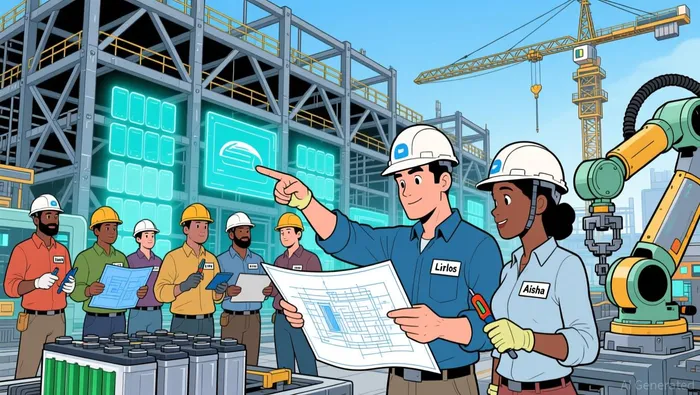 This contradiction has drawn attention to the role of foreign workers in filling critical roles. In a notable example, South Korean workers brought to the U.S. to construct an EV battery plant were arrested in a federal raid, sparking controversy over visa policies and labor practices. Hyundai's CEO, during an auto conference, cited a "skills gap" in the U.S. workforce, arguing that specialized construction expertise is often unavailable domestically. Trump himself acknowledged the need for foreign labor in certain sectors during a meeting with South Korean President Lee Jae Myung, stating that "at least at that initial phase" of complex projects, foreign workers are indispensable.
The administration's H-1B enforcement efforts, meanwhile, have drawn mixed reactions. While labor advocates praise the crackdown as a step toward safeguarding American jobs, critics argue it exacerbates shortages in fields like technology and healthcare. Apple and Meta's WhatsApp have reiterated their commitment to notifying users of spyware threats, including those linked to U.S. government contracts. These contracts, such as ICE's use of Paragon Solutions' Graphite spyware, have raised concerns about how surveillance tools might intersect with labor and immigration enforcement.
The debate extends beyond policy, with economic implications. Trump's recent proposal to distribute $2,000 "tariff dividends" to citizens-funded by import levies-has drawn comparisons to pandemic-era stimulus checks, though economists warn it could fuel inflation. Such measures, paired with H-1B restrictions, underscore a broader struggle to balance protectionist rhetoric with the realities of a globalized economy.
As the administration navigates these challenges, the outcome for industries reliant on foreign talent remains uncertain. With 175 H-1B investigations ongoing and international labor disputes simmering, the path forward will likely test the viability of Trump's dual priorities: shielding American workers while addressing acute labor shortages.
---







Comentarios
Aún no hay comentarios