
13 Civilians Killed in Pakistani Kashmir in 12 Hours, Says Disaster Authority
The escalating India-Pakistan conflict over Kashmir has reached a critical juncture, with recent clashes claiming 13 civilian lives in Pakistani-administered Azad Jammu & Kashmir (AJ&K) within 12 hours. This violence underscores a deepening humanitarian crisis and poses severe risks to regional stability, deterring investments and complicating economic recovery.
The Human Cost of Escalation
The disaster authority’s report of 13 civilian deaths in AJ&K—part of a broader pattern of cross-border artillery exchanges and drone strikes—reflects the human toll of a conflict that has displaced thousands since April 2025. Over 400 civilians have been injured or killed in AJ&K alone, while nearly 10,000 residents have fled border areas like Haveli and Forward Kahuta, straining already overwhelmed shelters in districts such as Bagh.
Economic Collapse and IMF Dilemmas
The conflict exacerbates Pakistan’s existing economic fragility. The International Monetary Fund (IMF) had approved a $1 billion disbursement in April 2025 as part of a $7 billion bailout package to stabilize Pakistan’s debt-ridden economy. However, **** reveal a precarious trajectory: the IMF has now delayed an additional $1.4 billion climate resilience fund due to geopolitical risks. Analysts warn that sustained military tensions could divert critical resources from infrastructure projects to defense spending, further destabilizing the economy.
Water Wars and Agricultural Ruin
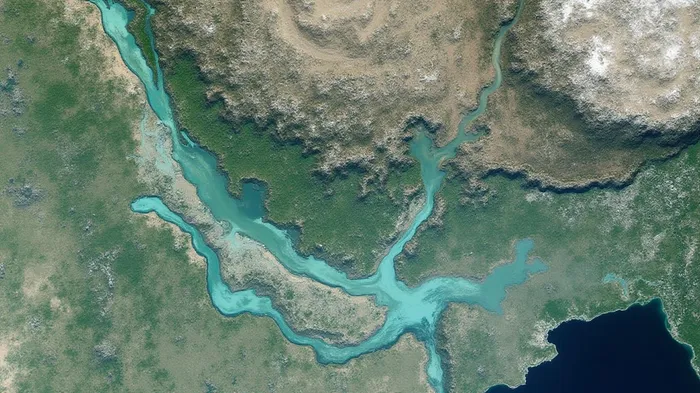
The suspension of the 1960 Indus WatersWAT-- Treaty has triggered environmental disasters. Unannounced water releases from India’s Uri Dam flooded Muzaffarabad in April, while dam closures at Baglihar and Kishanganga caused the Chenab River’s water levels to plummet, devastating agricultural livelihoods. Satellite data shows over 50,000 acres of farmland in Sialkot and Muzaffarabad rendered unusable due to water shortages. With Pakistan’s agricultural sector contributing 18% of GDP, these losses threaten food security and investor confidence in agribusiness ventures.
Geopolitical Risks and BRI Uncertainty
Pakistan’s reliance on China’s Belt and Road Initiative (BRI) for infrastructure projects—such as the China-Pakistan Economic Corridor (CPEC)—has been thrown into doubt. While Beijing has urged de-escalation, its $62 billion in BRI investments in Pakistan, including energy and transport projects in AJ&K, face heightened risks. A prolonged conflict could delay CPEC’s $30 billion expansion plans, which include hydropower and road networks critical to regional connectivity.
Investor Flight and Security Concerns
Cross-border violence has already triggered a flight of capital. The Karachi Stock Exchange (KSE) index fell 4.5% in May 2025 amid fears of military escalation, while Moody’s downgraded Pakistan’s outlook to “negative,” citing risks to foreign exchange reserves. The closure of Pakistan’s airspace in mid-May disrupted global aviation routes, further isolating the region and deterring tourism—a sector that employs 7 million Pakistanis.
Conclusion: A Precarious Balance
The loss of 13 lives in AJ&K within 12 hours is a stark reminder of the human and economic stakes in this conflict. With over 130 civilians killed since April 2025, the region’s displacement crisis and infrastructure damage have created a toxic environment for investors. The IMF’s delayed disbursements and Moody’s warnings highlight the macroeconomic toll: Pakistan’s GDP is projected to grow just 1.5% in 2025, down from a pre-crisis estimate of 3.2%.
Meanwhile, the Indus Waters Treaty’s collapse threatens to turn resource scarcity into a permanent crisis. Unless diplomatic channels—such as Iran’s proposed mediation—are revitalized, the region’s economy will remain hostage to military posturing. For investors, the calculus is clear: stability in Kashmir is not just a humanitarian imperative but a prerequisite for any meaningful economic revival.
As Pakistan’s finance minister noted, “The cost of conflict is measured in lost lives and stalled progress.” With each escalation, both are being paid in full.







Comentarios
Aún no hay comentarios