
The 10-Year Treasury Yield: Navigating Volatility Amid Trade Wars and Inflation
As of June 19, 2025, the U.S. 10-year Treasury yield stands at 4.30%, reflecting a precarious balancing act between persistent inflation, geopolitical tensions, and shifting Federal Reserve policies. While the yield's elevated level offers investors tangible income, its volatility—driven by trade wars, fiscal uncertainty, and policy whipsaws—demands a nuanced approach. This analysis explores how geopolitical risks and inflation dynamics are creating opportunities in Treasury markets while cautioning against complacency in the face of short-term turbulence.
Geopolitical Tensions: The New Normal for Treasury Markets
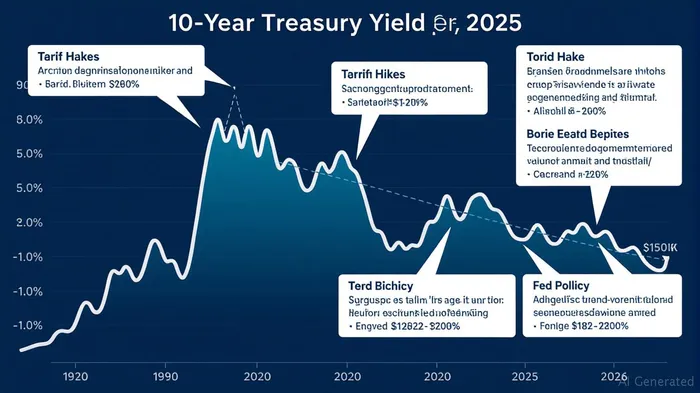
The U.S.-China trade war, now in its eighth year, has reached a critical juncture. New tariffs on $200 billion in Chinese imports, effective June 2025, have reignited inflationary pressures, complicating the Federal Reserve's efforts to stabilize prices. The 10-year breakeven inflation rate—a measure of inflation expectations—has held steady at 2.35%, but this masks deeper risks.
The data shows a clear correlation: every tariff increase since 2023 has coincided with a spike in Treasury yields as investors price in higher inflation and reduced global trade liquidity. Meanwhile, geopolitical flashpoints—such as U.S. naval drills in the South China Sea or Middle East conflicts—act as “risk-off” triggers, boosting Treasury demand as investors seek safety.
Inflation Expectations: Anchored, but Fragile
The Fed's June 2025 statement emphasized that inflation remains “somewhat elevated,” with the core PCE index at 3.1%. While the 2.35% breakeven rate suggests anchored expectations, this stability is fragile. Tariffs, supply chain bottlenecks, and energy price volatility could push inflation higher, forcing the Fed to delay rate cuts. Conversely, a de-escalation of trade wars or a breakthrough in U.S.-China negotiations might ease pressures, allowing yields to drift lower.
The gap between the Fed's rate hikes and inflation's stickiness highlights the central bank's dilemma: raising rates further risks stifling growth, while pausing risks a surge in inflation. This uncertainty creates whipsaw swings in Treasury yields, as seen in the 10-year yield's recent 26-basis-point range (4.25%–4.51%).
Opportunities Amid the Chaos
Despite the volatility, Treasury markets offer three distinct opportunities:
Short-Term Duration Exposure:
The 2-year Treasury yield, currently at 3.3%, offers a safer haven from geopolitical shocks. Pairing short-term maturities with TIPS (which adjust for inflation) creates a “barbell strategy” that balances income and inflation protection.Event-Driven Plays:
The Fed's September 2025 meeting looms large. If the central bank signals a rate cut—a 70% probability according to CME FedWatch—expect a rally in longer-dated Treasuries. Investors could buy the 10-year now, anticipating a drop in yields to 3.8%–4.0% by year-end.Alternatives for Liquidity:
High-yield savings accounts (e.g., Ally Bank at 4.5%) and commodities like gold (up 15% YTD) provide inflation-hedging alternatives to long-duration bonds.
Caution: Fiscal Risks and Liquidity Traps
The Treasury market's liquidity is thinning. The Fed's gradual reduction of Treasury sales to $5 billion/month has tightened supply, amplifying price swings. Meanwhile, the U.S. debt ceiling “X-date” in August 2025 introduces fiscal uncertainty. A default—or even brinkmanship—could trigger a rout in Treasury prices, particularly in long-dated bonds.
The debt-to-GDP ratio exceeds 120%, a level that historically pressures yields higher as investors demand compensation for fiscal risk. Avoiding long-dated Treasuries (e.g., 30-year bonds at 4.85%) until fiscal clarity emerges is prudent.
Conclusion: A Defensive, Dynamic Strategy
Investors should prioritize resilience in this environment. Shorten duration exposure, use TIPS to hedge inflation, and maintain a cash buffer for opportunistic buys during dips. Avoid long Treasuries until trade wars ease or the debt ceiling is resolved.
The 10-year Treasury yield's 4.30% offers a rare chance to lock in income, but success hinges on navigating geopolitical crosscurrents and Fed uncertainty. As always, stay agile—markets in 2025 reward those who prepare for the worst but hope for the best.
This analysis assumes no material changes to geopolitical or fiscal policies. Past performance is not indicative of future results.







Comentarios
Aún no hay comentarios