
The $1 Trillion Holiday: How Target and Costco Are Winning the 2025 Retail War
The 2025 holiday season marked a historic milestone in retail: total consumer spending surpassed $1 trillion for the first time, driven by a K-shaped economic recovery where high-income earners and value-conscious shoppers thrived while middle-market retailers faltered. In this polarized landscape, value-driven retailers like CostcoCOST-- and TargetTGT-- have carved out distinct advantages, leveraging their business models to outperform competitors. While Costco's membership-centric strategy and digital expansion have solidified its dominance, Target's resilience in the value segment-despite operational challenges-highlights the enduring appeal of price-sensitive retailing.
Costco's Membership Model: A K-Shaped Powerhouse
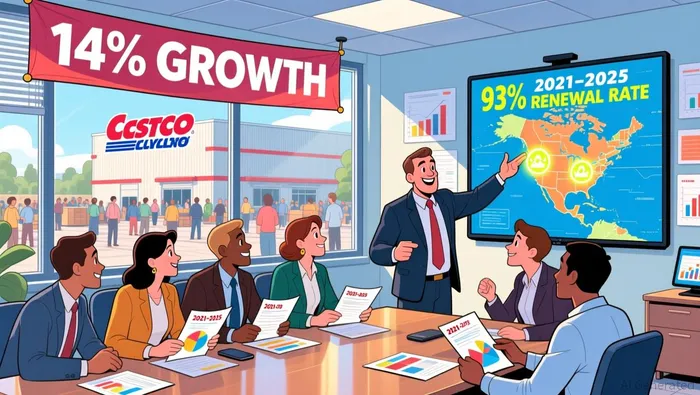
Costco's Q4 2025 performance underscored its dominance in the value-driven retail sector. Net sales surged to $84.4 billion, an 8% year-over-year increase, fueled by a 5.7% rise in comparable warehouse sales. The company's membership fees alone reached $1.72 billion for the quarter, up 14% from 2024, reflecting a 93% renewal rate in the U.S. and Canada. This loyalty stems from Costco's ability to offer bulk discounts and exclusive deals, appealing to both affluent shoppers seeking premium value and budget-conscious consumers maximizing savings.
 The retailer's strategic investments in e-commerce further amplified its success. Online sales grew 13.6% in 2025, a critical differentiator as consumers increasingly prioritize convenience and price transparency. Costco's early holiday openings for Executive Members and expanded digital offerings also enhanced customer retention, positioning it as a holiday shopping destination. With 28 new warehouses planned for 2025 and a 20.67% market share in the wholesale industry, Costco's global expansion and membership-driven model make it a prime beneficiary of the K-shaped recovery.
Target's Value Proposition: Navigating Challenges in a Fragmented Market
While Target's Q4 2025 results were less stellar-marked by inventory issues and staff shortages-the retailer remains a key player in the value segment. Its 8.12% market share in the wholesale industry and 4.07% in the broader retail sector reflect its ability to attract middle-income shoppers seeking curated affordability. Despite losing 0.18% of its market share between 2021 and 2024, Target's focus on private-label brands and limited-time offers continues to resonate with price-sensitive consumers.
The K-shaped recovery has, however, exposed vulnerabilities. As high-income shoppers gravitate toward premium-value retailers like Costco and Walmart, and budget-conscious buyers flock to Amazon and Aldi, Target's positioning in the middle of the spectrum has become increasingly precarious. Yet its recent investments in omnichannel logistics and partnerships with local suppliers may help it retain relevance. For instance, Target's emphasis on "small-batch" holiday items and AI-driven price comparisons align with the 2025 trend of consumers seeking the best deals with fewer purchases.
The K-Shaped Economy: A Tailwind for Value-Driven Retailers
The 2025 holiday season exemplifies a K-shaped recovery, where divergent spending patterns define retail success. High-income households, unburdened by inflation, and price-sensitive shoppers, prioritizing value, drove the $1 trillion spending surge. Meanwhile, middle-market retailers like Kohl's and traditional department stores saw declining sales as reported in market analysis. This dynamic favors Costco and Target, as both cater to segments that remain resilient despite macroeconomic headwinds.
Costco's membership model and Target's curated affordability represent two sides of the value-driven coin. Costco's strength lies in its ability to lock in long-term customer loyalty through exclusive benefits, while Target's agility in adapting to shifting consumer preferences-such as its focus on local partnerships and digital tools-ensures it remains competitive. However, the looming impact of tariffs in 2026 and Walmart's 50.77% dominance in the wholesale industry suggest that the retail war will intensify, requiring both retailers to innovate further.
Conclusion: A Divided Market, A Shared Advantage
In a K-shaped recovery, value-driven retailers like Costco and Target are uniquely positioned to outperform. Costco's membership-centric growth and digital expansion have made it a holiday season titan, while Target's focus on curated affordability ensures it remains a go-to destination for middle-income shoppers. For investors, the key takeaway is clear: the $1 trillion holiday season rewards retailers that can bridge the gap between premium value and budget-conscious spending. As the retail landscape continues to fragment, those who adapt to the K-shaped economy-like Costco and Target-will define the next era of retail success.







Comentarios
Aún no hay comentarios