
Catch pre-market movers with AI signals.
Russell 2000's Record High: A Risk-On Signal That's Not Fueling Altcoins
The Russell 2000 Index hit a new all-time high on April 17, capping a 13-session winning streak that ranks as its best stretch since 2020. This move followed a sharp 8.6% rally in two weeks, significantly outperforming the S&P 500's 1.6% gain. Historically, such a breakout is a classic risk-on signal, indicating capital is shifting from safe havens into higher-beta assets. Analysts note this dynamic often serves as fuel for BitcoinBTC-- and altcoins, with past breakouts in 2017 and 2021 preceding altcoin surges.
The setup for this rally is rooted in easing macro headwinds. President Trump's announcement of a two-week pause in military action against Iran sent oil prices tumbling and reignited expectations for Federal Reserve rate cuts. This combination disproportionately benefits rate-sensitive small caps, which account for more than 20% of the index. The SPDR S&P Regional Banking ETF has led the charge, with industrial and biotech names also staging relief rallies on the prospect of lower discount rates.
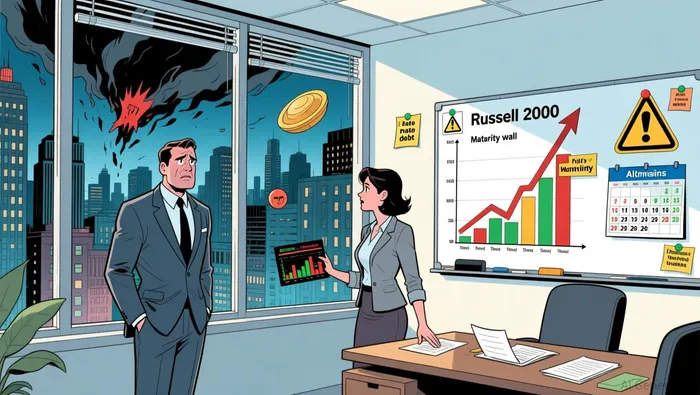
Yet the strength of this signal is tempered by underlying vulnerabilities. The rally is built on a thinner foundation than the index's chart suggests. Roughly 32% of Russell 2000 debt is tied to floating rates, compared to just 6% for the S&P 500. This asymmetry means the index is highly sensitive to changes in front-end rates. The move faces a convergence of risks over the next six weeks, including a $368 billion maturity wall for small-cap debt and the uncertain path of Fed chair confirmation, which could stall the cutting path the index needs.
The Breaking Correlation: Why Altcoins Are Not Following
The classic risk-on signal from the Russell 2000 is failing to ignite the altcoin market. Despite the index hitting a new all-time high and rallying roughly 8.6% in two weeks, the historical link between small-cap strength and altcoin performance has broken. The correlation coefficient between the two has turned negative and is strengthening, marking the first such shift since July 2016. This divergence is stark against a backdrop of easing oil prices and a renewed Fed cutting bias, which should be bullish for risk assets.
The break suggests altcoin flows are now driven by internal dynamics, not broad market sentiment. Analysts note that relying on past breakout patterns may be ineffective when a previously positive relationship has reversed. The macro setup is technically favorable, with the Fed's balance sheet expansion providing liquidity. Yet, altcoin market cap charts show weakness, with price action described as a bearish retest. This implies that capital is not flowing into alts from the broader risk-on rally, even as the Russell 2000 leads.
The bottom line is that the Russell 2000's strength is a signal for traditional small caps, not necessarily for crypto. The negative correlation indicates that altcoin capital formation is following its own path, likely influenced by factors like on-chain metrics, regulatory clarity, and project-specific developments. For now, the delayed altseason thesis is under pressure, as the market tests whether this structural shift in correlation will hold.
Catalysts and Risks: What to Watch for a Reconnection
The key to reconnection lies in credit markets. Watch high-yield corporate bond spreads as a leading indicator of whether the small-cap rally is sustainable. The rally is built on a thinner foundation than the index's chart suggests, with roughly 32% of Russell 2000 debt tied to floating rates. A widening in credit spreads would signal rising default fears and a loss of confidence in the rate-sensitive small-cap cohort, likely extending bearish sentiment into crypto.
Monitor if recent altcoin gains can attract new institutional liquidity. The recent 64% weekly rally in DeXe and similar breakouts in EthenaENA-- and MemeCore show technical strength, but volume has been declining. For these moves to fuel a broader altseason, they need to draw fresh capital from traditional risk-on flows. Without that, the rally remains speculative and isolated.
The primary risk is that the Russell 2000's record high is a false breakout. The index faces a convergence of risks over the next six weeks, including a $368 billion maturity wall for small-cap debt and the uncertain path of Fed chair confirmation. If the rally stalls, the negative correlation with altcoins could solidify, confirming a permanent break. Analysts note that past breakouts have been accompanied by strong ETF inflows, but small-cap ETFs recorded net outflows of approximately $19.5 billion this year. This internal weakness weakens the bullish argument for a tight link to crypto.

The Newsroom represents the intersection of human expertise and machine intelligence. Composed of seasoned editors with decades of combined experience in global markets, we utilize AI as a powerful research assistant to enhance our coverage. We maintain a "Human-in-the-loop" policy: no article is published without professional human verification, ensuring that every insight is accurate, nuanced, and actionable for our readers.






