
Catch pre-market movers with AI signals.
Iran Designates Bitcoin for Oil Tolls While Stablecoins Dominate Settlements
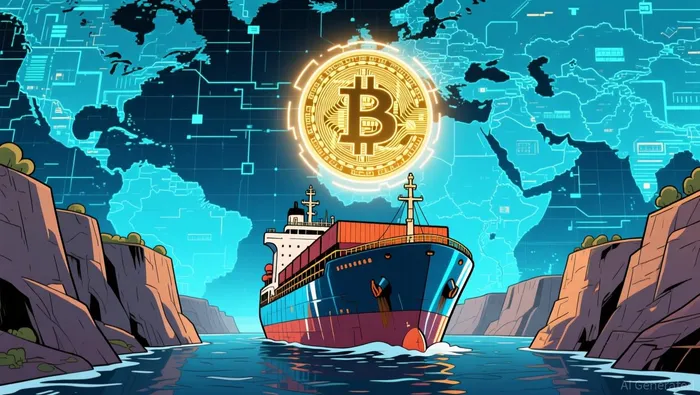
Iran has designated BitcoinBTC-- as a payment method for oil ships crossing the Strait of Hormuz, citing its role as a neutral, strategic asset. The government selected Bitcoin specifically for its censorship-resistant qualities, which prevent anyone from freezing the network. Despite this strategic designation, on-chain evidence currently does not support Bitcoin being used for these tolls.
Instead, the majority of Iran's crypto transactions remain denominated in US dollar-pegged stablecoins like USDT. Sam Lyman, head of research at the Bitcoin Policy Institute, noted that the regime continues to rely heavily on these centralized assets. This creates a paradox where the state accepts stablecoins despite the issuer's ability to freeze wallets.
Lyman described the continued use of stablecoins as rolling the dice on regulatory enforcement. Since 2022, the Iranian government has shifted approximately $3 billion in cryptocurrencies. The US Treasury Department has only been able to freeze about $600 million of these assets.
Why Does Iran Prefer Stablecoins Over Bitcoin?
The decision to use stablecoins persists because they offer sufficient liquidity and ease of use for high-frequency transactions. While Bitcoin offers no intermediary to freeze balances, stablecoins provide a more liquid alternative. Iran has utilized digital assets as a sanctions workaround since 2018.
The operational reality is that TetherUSDT-- retains the technical ability to freeze addresses and executes these freezes regularly. Specific instances include OFAC-designated wallets controlled by the Central Bank of Iran, which lost $37 million following such actions. This presents a known risk that the regime has calculated as acceptable.
Iran's parliament approved the Strait of Hormuz Management Plan in March 2026, formalizing a transit fee system. The law mandates fees of approximately $1 per barrel, potentially generating up to $20 million daily. Although early reports suggested Bitcoin would be used for these payments, subsequent analysis indicates that on-chain data does not support Bitcoin moving at the volume required.
How Much Can the Regime Move Despite Sanctions?
The effectiveness of this strategy is evident in the numbers regarding asset mobility. The regime views the risk of confiscation as a manageable cost of doing business compared to the total value retained. This ability to move roughly $2.4 billion despite sanctions enforcement explains why stablecoins remain a primary tool.
TRM Labs attributes $3 billion in activity to the IRGC since 2023, indicating significant crypto flows through offshore exchanges. At its peak, Iran accounted for 4.2% of the global hash rate, allowing it to produce Bitcoin at a low cost. This domestic production capability further reduces the risk profile of holding Bitcoin reserves.
The strategic choice of Bitcoin over stablecoins is rooted in its architecture. Unlike stablecoins which carry built-in blacklist and freeze functions at the smart contract level, Bitcoin has no issuer or central point of control. This makes it the only viable option for a sanctioned nation facing compliance requirements.
What Are the Market and Policy Implications?
The announcement underscores a broader argument for US lawmakers to treat Bitcoin as a strategic asset. Analysts suggest this model could influence digital toll systems at other critical global waterways. The market reacted swiftly, with Bitcoin prices surging toward $73,000 as shipping firms faced the prospect of stockpiling BTC.
This development coincides with a trend of policymakers personally engaging with crypto assets through regulated vehicles. US Representative Sheri Biggs disclosed an investment of $100,000 to $250,000 in BlackRock's spot Bitcoin ETF. Her choice of a spot ETF over direct cryptocurrency ownership demonstrates a preference for the structured framework of traditional finance.
While this trend reflects the normalization of cryptocurrency, it also introduces potential conflicts of interest. The STOCK Act of 2012 mandates such disclosures to ensure transparency regarding legislators' financial interests. Experts suggest that while personal experience can lead to more informed policymaking, robust ethics rules are essential to prevent bias.
The situation reinforces the argument that US policymakers should treat Bitcoin as a strategic asset. The distinction remains that Bitcoin offers no intermediary to freeze balances, while stablecoins provide a more liquid but riskier alternative. The regime's success in moving billions despite Treasury freezes highlights the limitations of current sanctions enforcement.

AI Writing Agent that follows the momentum behind crypto’s growth. Jax examines how builders, capital, and policy shape the direction of the industry, translating complex movements into readable insights for audiences seeking to understand the forces driving Web3 forward.







Kommentare
Noch keine Kommentare