
Catch pre-market movers with AI signals.
Fed Holds Rates Steady Amid Record 8-4 Dissent Over Inflation and Geopolitical Risks
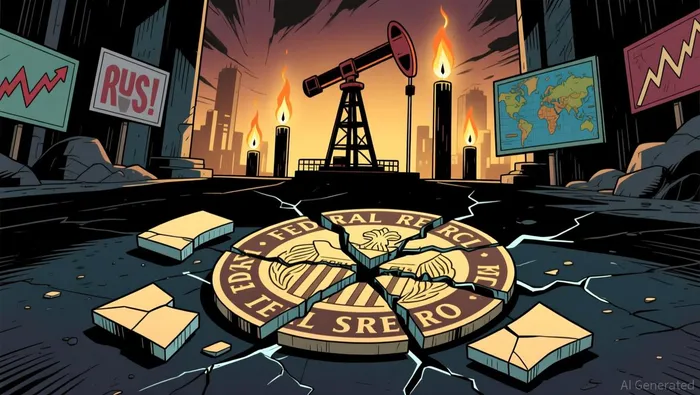
The Federal Reserve held benchmark interest rates steady at 3.5%-3.75% in an 8-4 vote, marking the most divided decision since October 1992.
Three regional presidents dissented against the statement's easing bias, arguing that persistent inflation and geopolitical energy shocks make further rate cuts premature.
Governor Stephen Miran dissented in favor of a quarter-point rate cut, highlighting a deep split among policymakers regarding the appropriate monetary policy stance.
The decision occurs as Kevin Warsh clears a major legislative hurdle to succeed Jerome Powell, with markets pricing in a continued pause at the June meeting.
The Federal Open Market Committee (FOMC) maintained the federal funds rate at its current level, but the internal discord revealed significant uncertainty regarding the path of monetary policy. The vote was driven by conflicting views on how to interpret incoming economic data amidst escalating global tensions. Chair Jerome Powell acknowledged the division, signaling a shift toward a more neutral policy stance as the central bank navigates a complex economic landscape.
Why Did Three Fed Presidents Dissent Against the Easing Bias?
Three regional Federal Reserve presidents—Neel Kashkari of Minneapolis, Beth Hammack of Cleveland, and Lorie Logan of Dallas—objected to the language in the policy statement that implied a likelihood of future rate cuts. They argued that the phrase "extent and timing of additional adjustments" created an inappropriate easing bias given the current economic conditions.
The dissenters cited persistent inflation and soaring global energy prices as primary reasons for their opposition. Oil prices reached near $120 a barrel due to fears of an extended blockade of the Strait of Hormuz, driven by the ongoing conflict in Iran. This geopolitical shock has exacerbated inflationary pressures, with the Personal Consumption Expenditures (PCE) price index rising at a 3.5% annual rate in March.
Kashkari emphasized that the next rate change could be either a cut or a hike depending on how the economy evolves, rather than signaling a bias toward easing. Hammack described the forward guidance as a clear easing bias that no longer reflects the outlook, while Logan expressed concern about the prolonged nature of inflation above the 2% target according to market analysis.
How Does the Leadership Transition Impact Monetary Policy?
The divided vote coincides with a significant leadership transition at the Federal Reserve. Kevin Warsh, President Donald Trump's nominee to succeed Jerome Powell, has advanced through the Senate Banking Committee with a 13-11 vote. Warsh's nomination now moves to the full Senate, with confirmation expected in the coming weeks.
The path to confirmation cleared after the Department of Justice dropped a criminal investigation into Powell, which had previously been used to block the nomination. Powell's term as chair ends on May 15, but he has indicated he will remain on the Board of Governors to ensure a smooth transition.
Warsh, a former Fed governor known for his hawkish stance in the past, has recently expressed support for lower interest rates. However, his confirmation has drawn criticism from Democrats who warn of potential risks to Fed independence if he aligns too closely with political pressures.
What Are Market Expectations for the June Rate Decision?
Financial markets have largely priced in a continuation of the current monetary policy stance. CME FedWatch data indicates a 94.9% probability that the Federal Reserve will maintain interest rates unchanged at its June meeting. This high probability reflects investor expectations of a pause as policymakers assess the impact of geopolitical risks on inflation and growth.
Chicago Fed President Austan Goolsbee recently warned that recent inflation data constitutes "bad news," urging caution before implementing further rate cuts. He highlighted that price pressures are emerging in service sectors typically insulated from external shocks, complicating the Fed's ability to offer clear forward guidance.
The combination of sticky inflation, energy price volatility, and internal Fed division suggests that policymakers will proceed with caution in the coming months. Investors are now reassessing their expectations for rate cuts, with the focus shifting to subsequent meetings where a more definitive policy trajectory may emerge.
The Fed's decision to hold rates steady underscores the challenges of balancing inflation control with economic stability in an era of heightened geopolitical uncertainty. As the central bank prepares for a new leadership era, the path forward remains fraught with risks and divergent views among policymakers.

Blending traditional trading wisdom with cutting-edge cryptocurrency insights.







Kommentare
Noch keine Kommentare