
Catch pre-market movers with AI signals.
Bittensor TAO Plunges As Covenant AI Exits Amid Centralization Claims
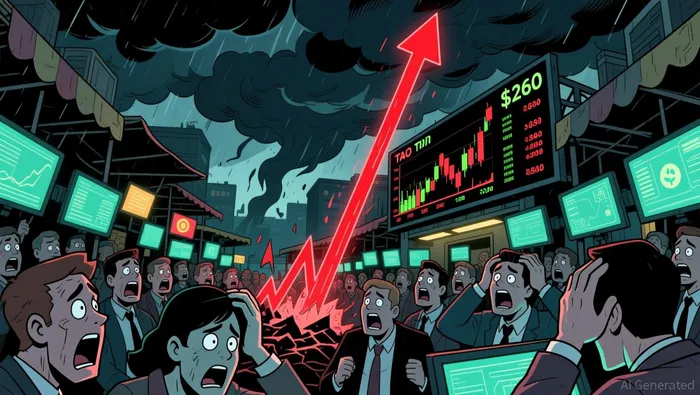
Bittensor's native token TAO has experienced a sharp decline, trading around $260 to $277 following the abrupt departure of Covenant AI. The largest subnet in the ecosystem exited after a public feud between its founder and Bittensor's leadership exposed deep governance fractures. This event has forced investors to reassess the network's stability as a decentralized infrastructure.
The collapse was precipitated by an open letter accusing BittensorTAO-- founder Jacob Steeves of centralizing control over network upgrades. On-chain data indicates that 38 of 41 upgrades from 2023 to 2026 were processed through infrastructure controlled solely by Steeves. This revelation contradicts the project's promise of a permissionless market and triggered a significant panic sell-off.
Covenant AI had previously driven a 90% surge in TAO's price by deploying a 72B parameter mega-model. The team's exit dismantles the primary narrative that sustained the token's rally, leaving the market exposed to the risks of relying on a single high-performing entity. The incident highlights a structural vulnerability where value is heavily concentrated in specific teams rather than distributed infrastructure.
What Are The Governance Risks Exposed By The Departure?
The departure of Covenant AI underscores a critical flaw in Bittensor's value proposition regarding decentralization. While the network claims to host over 125 subnets, nearly half of the recent price surge was attributed to the performance of this single team. This concentration means that success and failure are tightly coupled, creating significant downside risk when key figures leave.
Allegations of authoritarian control by co-founder Jacob Steeves led to the suspension of Covenant's subnet emissions. This action effectively cut off the team's income stream during an internal dispute, forcing their withdrawal from the network. A whistleblower website released on-chain evidence supporting claims that other committee members signed off on upgrades within minutes without public discussion.
The incident has raised material risks for institutional investors and the pending Grayscale ETF filing. The market has now priced in the risk that the ecosystem's growth is dependent on a few star teams rather than a robust, independent decentralized infrastructure. This shift in sentiment suggests that the project's narrative-driven rallies may be fragile without broad-based participation.
How Is The Market Reacting To The Centralization Allegations?
Market reaction to the news was immediate and severe, with the token testing critical support levels as investors weighed unresolved governance trust issues. TAO fell between 15% and 25% in value, wiping out hundreds of millions in market capitalization in a short period. The drop was accompanied by a trading volume spike to $1.53 billion, signaling significant redistribution activity among holders.
The 19.9% decline against BitcoinBTC-- is particularly revealing, suggesting risk-off sentiment is disproportionately affecting speculative AI tokens. When altcoins underperform BTC during market stress, it typically indicates capital rotating toward perceived safety within crypto markets. The decentralized AI sector faces a fundamental valuation challenge as the pathway for blockchain-based AI networks to capture value remains unproven at scale.
Analysis of on-chain data reveals that the correction is driven by high beta volatility and operational sell-side pressure from validators. Approximately 9.61 million TAO are in circulation, with regular sell-side flow estimated at 1-2% of circulating supply monthly from operational participants alone. The current data suggests a distribution phase rather than accumulation, with tactical patience advised before establishing new long positions.
What Measures Are Proposed To Ensure Future Stability?
In response to the crisis, Bittensor leadership has proposed a new Locked Stake mechanism designed to tetherUSDT-- subnet ownership to long-term commitment. This protocol feature would require subnet owners to lock their token holdings for a defined period, aiming to prevent the kind of sudden exits that destabilized the market. The proposal seeks to address the structural flaws that allowed Covenant AI to exit abruptly.
TAO Institute has also launched to provide institutional-grade due diligence tools and a Subnet Risk Index across four dimensions. These dimensions include Emission Viability, Market Structure, Economic Sustainability, and Governance & Operations. Independent research coverage is critical for institutional capital to trust new asset classes, and the institute's analyst team covers active subnets similarly to how sell-side desks cover equities.
The market's response indicates that investors view the project's value as inextricably linked to the Covenant team. With the team's departure and the subsequent selling of their holdings, the primary driver of TAO's recent rally has vanished. The incident highlights the risks inherent in projects where a small number of subnets or teams dominate the ecosystem's narrative and value creation.
The crisis has accelerated the need for standardized risk frameworks as capital shifts from crypto-native participants to include funds, public companies, and family offices. Network fundamentals, such as validator count and subnet activity, matter more than short-term price for assessing long-term viability. The path from the current valuation to sustainable value accrual requires execution milestones the market isn't yet pricing in.
According to Weex, the person who helped TAO rise by 90% has now single-handedly crashed the price again. Facebook's CoinGecko post notes TAO is now trading around $260 after its recent drop of over 20%. Bittensor's TAO plummets as Covenant AI exits and centralization claims are made. MEXC's coverage reports on the full scope of the market's reaction to the centralization allegations.

Blending traditional trading wisdom with cutting-edge cryptocurrency insights.







Kommentare
Noch keine Kommentare