
Catch pre-market movers with AI signals.
Bittensor TAO Faces Governance Crisis As Covenant AI Exits Amid Institutional Buying
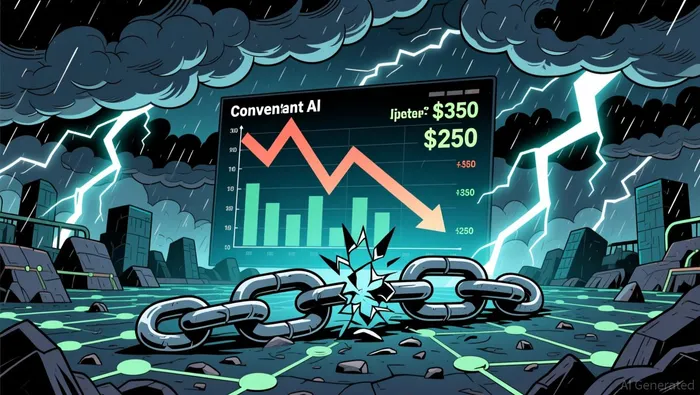
Bittensor's native token TAOTAO-- retreated from recent highs near $350 to approximately $250 following a governance dispute and significant token sales by key ecosystem figures according to AInvest. The sell-off was accelerated by Covenant AI's abrupt exit from the network after its founder unilaterally suspended token rewards as reported. This event exposed deep structural tensions between capital-intensive developers and decentralized governance within the network according to MEXC.
The crisis spurred the BIT-0011 proposal for locked stake mechanisms, which allows subnet founders to lock alpha tokens according to AInvest. This mechanism aims to align founder incentives with long-term network health by making it costly to exit positions abruptly as detailed. The convergence of these events highlights a critical inflection point where technical achievements are being weighed against governance fragility . according to MEXC
Despite the volatility, the ecosystem is seeing a parallel push toward institutional maturity with the launch of the TAO Institute research platform according to AInvest. This new initiative introduces the Subnet Risk Index, an open-source framework designed to evaluate the 128 active subnets using professional-grade scoring as reported. Analysts highlight structural tensions between capital-heavy developers and decentralized governance, with 45% odds of a $300 rebound if reforms stabilize the network according to MEXC.
How Did Covenant AI Exit Impact Network Stability?
Covenant AI's departure dismantled TAO's price surge narrative by revealing that 38 of 41 upgrades were processed through infrastructure controlled solely by founder Jacob Steeves according to AInvest. This revelation contradicts the project's promise of a permissionless market and triggered a significant panic sell-off as documented. Covenant AI had previously driven a 90% surge in TAO's price by deploying a 72B parameter mega-model, but their exit dismantles the primary narrative that sustained the token's rally according to MEXC.
Allegations of authoritarian control led to the suspension of Covenant's subnet emissions, effectively cutting off the team's income stream during an internal dispute according to AInvest. The incident has raised material risks for institutional investors and the pending Grayscale ETF filing, as the market has now priced in the risk that the ecosystem's growth is dependent on a few star teams as reported. On-chain data indicates that 38 of 41 upgrades from 2023 to 2026 were processed through infrastructure controlled solely by Steeves according to MEXC.
What Is The Institutional Response To The Crash?
Grayscale raised its TAO allocation inside its AI-focused fund from 31% to 43% on April 7, making it the largest holding in the fund according to AInvest. This move occurred days after a subnet developer, Covenant AI, departed the project and sold roughly $10 million worth of TAO, causing a 20% price drop as reported. The gap between institutional confidence and short-term panic highlights the current market dynamic according to MEXC.
Grayscale's adjustment of its AI fund to 43% TAO coincided with an amended ETF filing with the SEC, signaling strong institutional positioning ahead of potential regulatory clarity according to AInvest. This allocation increase landed alongside an amended ETF filing with the SEC five days prior, reflecting a strategic shift in institutional capital allocation as documented. TAO's first halving in December 2025 reduced daily emissions by half, enhancing scarcity and attracting institutional investment like Grayscale's 43% fund allocation according to MEXC.
Institutional momentum is accelerating alongside this technical recovery, with Grayscale increasing its TAO allocation to 43.06% in its AI-focused fund according to AInvest. Both Grayscale and Bitwise have filed for spot TAO ETFs on NYSE Arca, with the SEC expected to issue a decision in August 2026 as reported. Historical patterns indicate significant price movements often precede such approvals according to MEXC.
What Are The Proposed Solutions For Governance Risks?
In response, BittensorTAO-- leadership has proposed a new Locked Stake mechanism designed to tetherUSDT-- subnet ownership to long-term commitment according to AInvest. This protocol feature would require subnet owners to lock their token holdings for a defined period, aiming to prevent the kind of sudden exits that destabilized the market as detailed. The convergence of these events highlights a critical inflection point where technical achievements are being weighed against governance fragility according to MEXC.
Future protocol stability is being reinforced by the upcoming BIT-0011 upgrade, known as the Conviction Mechanism according to AInvest. This update requires subnet founders and stakers to lock alpha tokens to accrue conviction scores, aligning long-term incentives with network security as reported. The network's operational depth remains robust, with active subnets like Chutes AI and TargonCompute driving significant emissions and revenue according to MEXC.
The network demonstrated resilience after Covenant AI's exit caused a 38% token drop, as community miners restored operations using open-source tools according to AInvest. Approximately 70% of TAO tokens remained staked, reflecting continued participant commitment despite over $70 million in spot outflows as documented. The 70% staking lock significantly limits floating supply, meaning any renewed buying pressure could move prices rapidly according to MEXC.
Analysts project TAO could reach between $363 and $724 by late 2026, contingent on network recovery following the developer exit according to AInvest. A return to April highs near $334 would represent a 35% gain, while the structural scarcity from the halving and institutional backing suggests potential for long-term appreciation as reported. The $218–$240 price range has emerged as a key support level, bolstered by recent funding secured by GeneralTensor, a partner in the ecosystem according to MEXC.

Blending traditional trading wisdom with cutting-edge cryptocurrency insights.







Kommentare
Noch keine Kommentare