



Trump Deploys U.S. Insurance Shield to Protect Hormuz Oil Lifeline as War Threatens Global Energy Supply
 4min read
 Oil markets jolted this week as the U.S.-Israel assault led to concerns around energy supplies. President Donald Trump announced that the United States would step in to insure ships traveling through the Strait of Hormuz, one of the world’s most critical energy chokepoints. The move comes as escalating conflict with Iran has disrupted shipping in the region, forcing insurers to withdraw coverage and leaving dozens of tankers stranded. Trump said the U.S. International Development Finance Corporation (DFC) would begin offering political risk insurance for ships transiting the Gulf and, if necessary, the U.S. Navy would escort vessels through the waterway to ensure energy continues flowing to global markets.
“Effective immediately, I have ordered the United States Development Finance Corporation to provide political risk insurance and guarantees for the financial security of all maritime trade, especially energy, traveling through the Gulf,” Trump said in a statement. “If necessary, the United States Navy will begin escorting tankers through the Strait of Hormuz.” Treasury Secretary Scott Bessent confirmed the plan in a television interview, saying Washington is preparing additional measures to stabilize shipping routes in the region as tensions with Iran escalate.
The announcement briefly calmed markets that had been rattled by fears of a major energy shock. Oil prices had surged earlier in the week as reports emerged that Iran was effectively blocking traffic through the strait, but crude pared gains after the White House intervention. Brent crude settled near $81 per barrel, up roughly 5% on the day, while U.S. crude has climbed about 11% this week and nearly 30% since the start of the year.
At the center of the crisis is the Strait of Hormuz, a narrow 21-mile-wide passage between Iran and Oman that connects the Persian Gulf with the Indian Ocean. The strait handles roughly one-fifth of the world’s oil supply, making it one of the most strategically important maritime routes on the planet. Tankers carrying crude from Saudi Arabia, Iraq, Kuwait, the United Arab Emirates, and Iran itself must pass through this corridor, along with ships transporting liquefied natural gas from Qatar. Any disruption to the strait has the potential to ripple through global energy markets within hours.
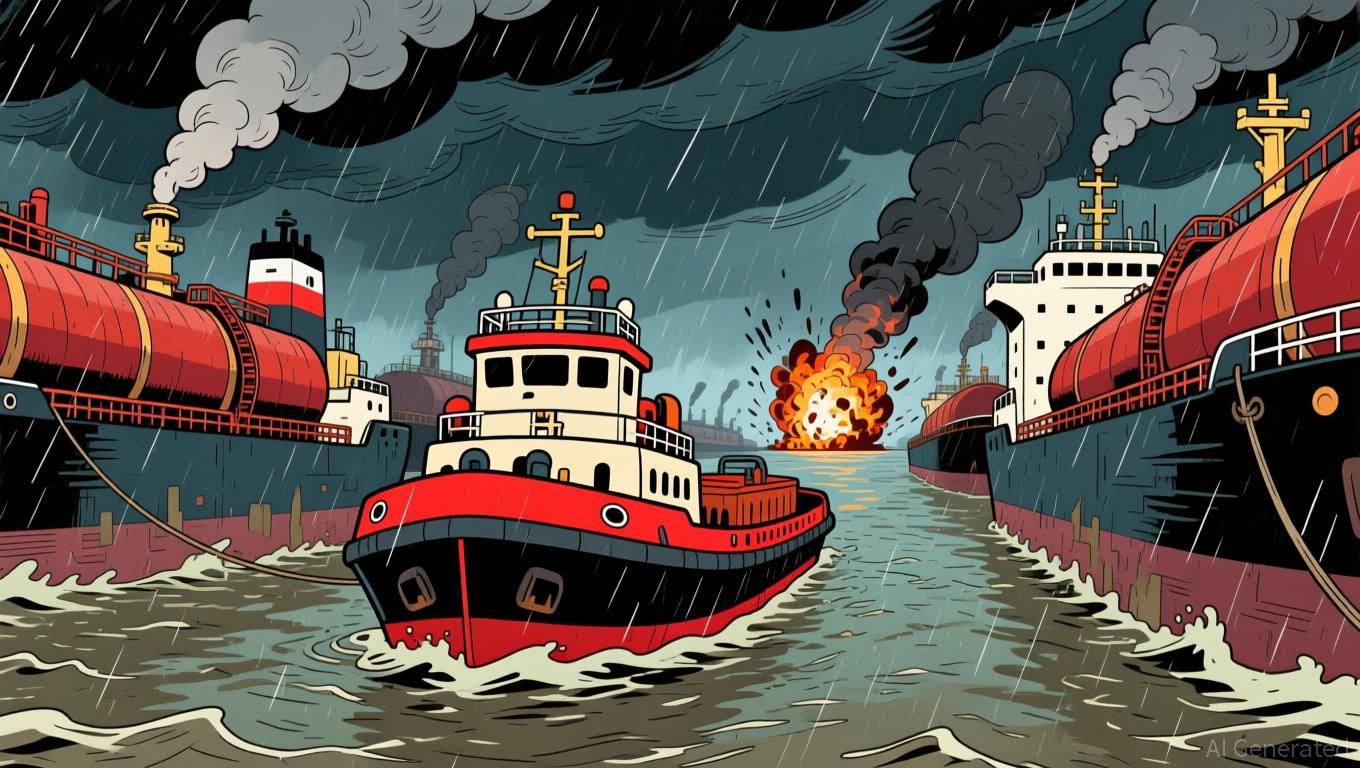
The current crisis escalated after Iran responded to U.S. and Israeli strikes with attacks targeting commercial shipping and regional infrastructure. Several tankers have been struck by drones or projectiles in recent days, leaving at least one vessel ablaze and causing multiple casualties. According to ship-tracking data, roughly 150 vessels—including oil and LNG carriers—have been forced to anchor near the waterway as companies reassess the safety of sending ships through the area.
The immediate problem for the global energy system is not just military risk but insurance. Marine insurers provide war-risk coverage for ships traveling through conflict zones, and that coverage is essential for vessels to operate legally and financially. In recent days, several major marine insurers—including Gard, Skuld, NorthStandard, the London P&I Club, and the American Club—have canceled or suspended war-risk coverage for ships traveling through the Persian Gulf and Strait of Hormuz.
Without insurance, shipowners are effectively unable to move cargo. Tankers carrying billions of dollars in oil cannot enter high-risk areas without coverage because financiers, ports, and cargo buyers require insurance protection. As a result, many ships are remaining idle despite soaring demand for energy shipments.
Even when coverage is available, costs have surged dramatically. War-risk premiums have jumped from around 0.2% of a ship’s value last week to as much as 1% today. For a very large crude carrier valued at $100 million or more, that translates into hundreds of thousands of dollars in additional cost for a single voyage.
The sudden spike in insurance costs has already begun pushing shipping rates higher. Spot freight rates for tankers carrying Middle Eastern crude to Asia have climbed sharply, with the key TD3C route nearly tripling since the start of the year. Industry analysts warn that rates could climb even further if the conflict continues or if insurers remain unwilling to provide coverage.
This is where the DFC enters the picture. The U.S. International Development Finance Corporation is a federal development finance agency created in 2019 through the BUILD Act by merging the Overseas Private Investment Corporation with several USAID financial programs. Its traditional role is to mobilize private investment in developing countries by providing loans, loan guarantees, direct equity investments, and political risk insurance for projects ranging from infrastructure to energy.
Political risk insurance is one of the DFC’s key tools. The agency typically uses this coverage to protect companies investing in unstable regions against risks such as expropriation, political violence, or government interference. By extending that capability to shipping companies operating in the Persian Gulf, the Trump administration is attempting to replace the private insurance capacity that has rapidly disappeared.
However, some analysts question whether the DFC has the scale or legal authority to fully insure global maritime traffic through the strait. William Henagan, a research fellow at the Council on Foreign Relations, warned that political risk insurance in a war zone can be extremely expensive and difficult for a government-backed insurer to absorb.
Shipowners themselves are also cautious. One European tanker operator told reporters that even if the U.S. provides insurance, many companies would still maintain private coverage because abandoning mainstream insurers could expose them to additional financial risks.
Still, the policy highlights how critical the Strait of Hormuz is for the global economy. Any prolonged disruption could push oil prices significantly higher. Some commodity strategists have warned that if the strait were closed for an extended period, crude prices could surge above $100 per barrel.
Higher energy prices would ripple quickly through global economies. Europe and Asia are particularly vulnerable because they rely heavily on Middle Eastern energy imports. The United States is somewhat insulated thanks to domestic shale production, but American consumers would still feel the impact at the gasoline pump if crude prices continue climbing.
That political reality is one reason the White House moved quickly to intervene. Rising fuel costs could weigh heavily on U.S. households and potentially become a major issue in upcoming midterm elections. Historically, spikes in gasoline prices have often translated into political pressure on incumbent administrations.
For now, markets are watching closely to see whether the DFC insurance plan stabilizes shipping through the Gulf. If tankers begin moving again and insurers return to the market, oil prices may ease. But if attacks on vessels continue or Iran attempts a sustained blockade, the Strait of Hormuz could become the next major flashpoint for the global energy system—and one with immediate consequences for economies and consumers worldwide.