



Autozi's 10-for-1 Reverse Split Hides Deepening Liquidity Crisis and Reliance on Lifeline Funding
 3min read
 The immediate catalyst is clear. On February 27, 2026, Autozi's board approved a 10-for-1 share consolidation, effective March 23. This is a tactical move to regain compliance with Nasdaq's minimum bid price rule, Marketplace Rule 5550(a)(2). The company's stock has languished, trading near $0.61 with a market cap around $27.59 million. The reverse split aims to boost the per-share price to meet the exchange's listing requirements.
This is not the first time. The company executed a 50-for-1 consolidation just months earlier, in December 2025, for the same compliance reason. The pattern is telling: a series of aggressive capital structure maneuvers to keep the stock listed. The latest move slashes the outstanding share count from 44,891,221 to approximately 4,489,123 post-split.
The setup is straightforward. This is a compliance fix, not a fundamental business turnaround. The reverse split mechanically raises the stock price but does nothing to alter the company's underlying financials or growth trajectory. It's a stopgap measure to avoid delisting, a common but often distressing signal for small-cap stocks.
Financial Distress: Growth Without Profitability or Cash Flow
The growth story is undeniable, but it masks deep operational weakness. For the six months ended March 2025, Autozi's revenue surged 65.9% year-over-year to US$79.9 million. This expansion was driven by a strategic pivot toward auto parts and accessories, which now accounts for nearly all sales. Yet this top-line acceleration has not translated into financial health. The company's operating loss widened to US$8.1 million, more than triple the prior-year figure, and the net loss was US$5.3 million.
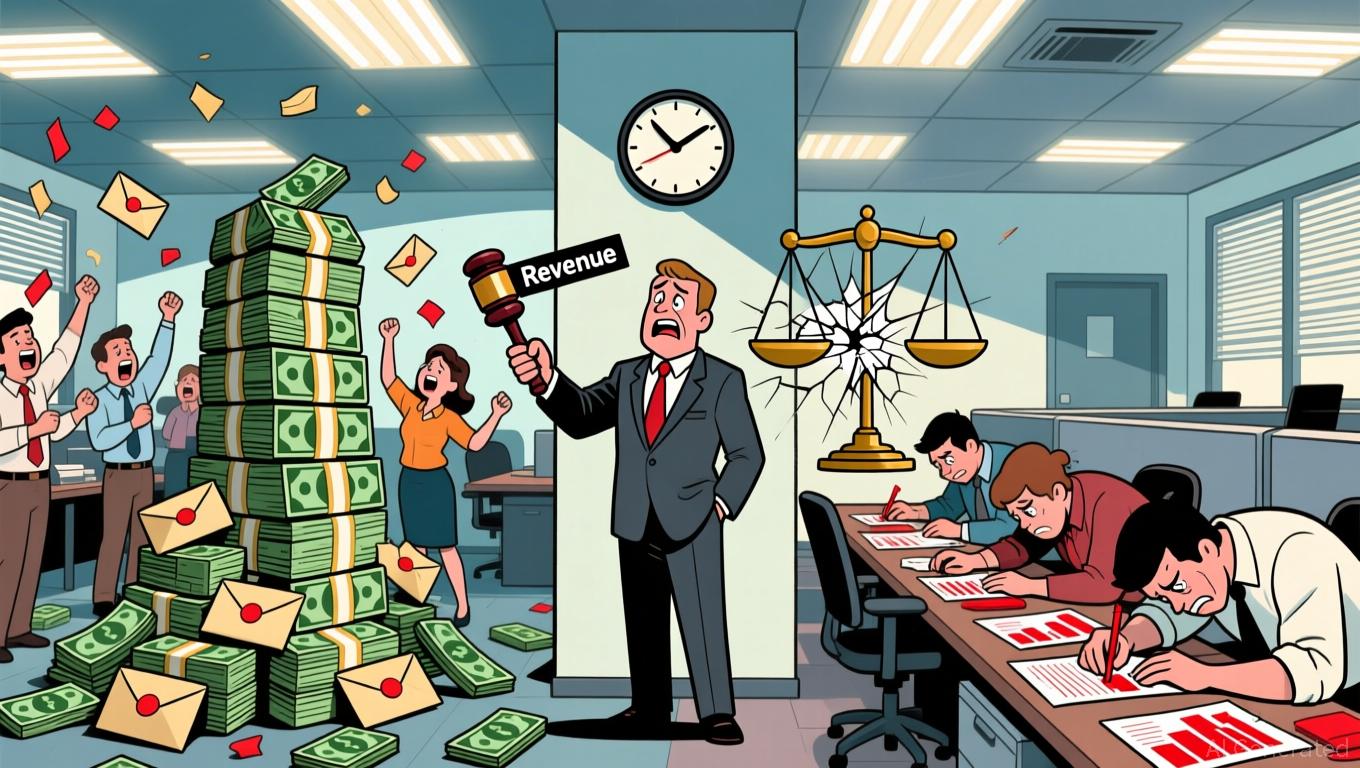
The real red flag is earnings quality. The company reported a net loss of $16.6 million for the full fiscal year 2025, but its operating cash flow was -$4.7 million. This stark divergence-where the cash burn is less severe than the net loss-indicates that the reported losses are heavily inflated by non-cash accounting charges like share-based compensation and financing expenses. In other words, the company is burning cash, but the accounting loss is even worse, suggesting the business model is not generating sustainable economic value.
This poor cash conversion is a fundamental vulnerability. With a cash balance of just $268,000 as of the last annual report, the company has minimal war chest to fund operations or its aggressive reverse split. The high-growth narrative is thus built on a fragile foundation of negative cash flow and widening losses. The low valuation is not arbitrary; it is a market assessment of a company growing rapidly but failing to convert that growth into profitability or, critically, cash.
Capital Structure Instability: A Pattern of Liquidity Crises
The reverse split is not an isolated fix but part of a recurring liquidity crisis. In February, shareholders approved a board mandate for a potential share consolidation of up to 5,000-for-1, with the exact ratio to be chosen within two years. This unprecedented authority signals ongoing instability and a lack of confidence in the company's ability to maintain a compliant share price without extreme measures.
The capital injections underscore the severity. A controlling shareholder has already delivered an initial $7 million capital injection to support operations. More dramatically, the same shareholder, alongside co-investors, has proposed an additional ~$110 million at $1.30 per share. While this would provide substantial liquidity, the scale of the proposed funding-over nine times the company's current market cap-highlights how precarious its financial position has become.
The company's total assets are a mere $12.0 million. This tiny scale makes it exceptionally vulnerable to any operational misstep or funding gap. The proposed $110 million round is not a typical equity raise; it's a lifeline for a company whose existing capital structure is already in distress.
The bottom line is clear. The reverse split is a symptom of a deeper liquidity crisis. The company is repeatedly turning to its controlling shareholder for capital and seeking extreme measures to stay listed. With minimal assets and a history of widening losses, its capital structure is fundamentally unstable. The market is pricing in a high risk of further dilution or failure to secure the necessary funding.
Catalysts & Risks: The Near-Term Setup
The immediate catalyst is the execution of the 10-for-1 reverse split. The company is now in the post-split period, with trading resuming on March 23. The key test is whether this mechanical price boost stabilizes the share above the $1 threshold required by Nasdaq. A successful pop could provide a temporary reprieve, but it would do nothing to address the underlying cash burn. The market's reaction will be a direct read on whether investors see this as a credible compliance fix or merely a cosmetic delay of a more serious problem.
The critical risk is the company's ability to secure the proposed funding. The $7 million injection provides near-term operational support, but it is a fraction of what is needed. The proposed ~$110 million round at $1.30 per share is the lifeline. If this fails to close, Autozi will be left entirely reliant on the $7 million and its already-minimal cash of just $268,000. Given the company's history of aggressive capital raises and its tiny asset base of $12.0 million, the market will scrutinize any delay or setback in this funding process as a major red flag.
The next earnings report will be the definitive watchpoint. Investors must see if the company's operating cash flow trend improves. The current operating cash flow of -$4.7 million against a net loss of -$16.6 million shows a severe earnings quality problem. A continued negative cash flow would confirm that the business model is not generating sustainable economic value, regardless of top-line growth. This would validate the market's low valuation and increase pressure for further dilution.
The bottom line is a high-risk test of survival. The reverse split is a tactical move, not a strategic solution. The company's fate hinges on two near-term events: the market's reaction to the split and the successful closure of the proposed $110 million funding round. With minimal cash reserves and a history of widening losses, Autozi is operating on a knife's edge. The setup offers no clear path to stability; it is a binary event where failure to secure the next round of capital would likely lead to a deeper liquidity crisis.