
Tron’s 60% Fee Cut: A Strategic Move for Long-Term Growth and TRX’s Bullish Outlook


 Aime Summary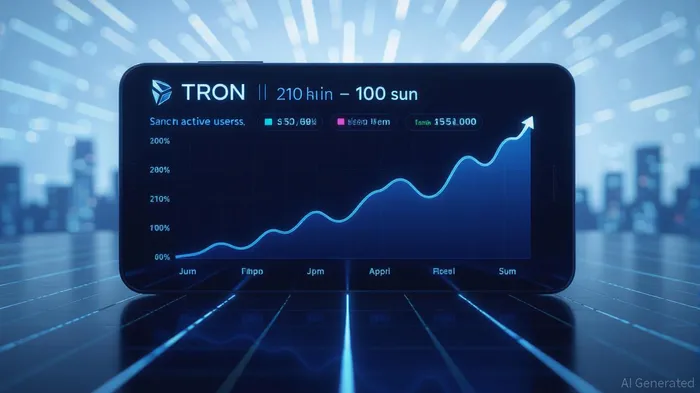
The TronTRON-- network’s 60% fee reduction, implemented on August 29, 2025, represents a bold recalibration of its economic model. By slashing energy unit costs from 210 sun to 100 sun, the blockchain has positioned itself as one of the most cost-effective platforms for stablecoin transfers, microtransactions, and decentralized application (dApp) interactions [1]. This move, approved by 17 of 27 Super Representatives, aims to address rising user costs and counter competition from rivals like EthereumETH-- and SolanaSOL--, which charge $0.58–$2.47 and $0.00025 per transaction, respectively [2]. The fee cut is not merely a short-term fix but a calculated strategy to drive mass adoption, particularly in emerging markets where high fees have historically stifled participation [3].
The economic implications of this decision are nuanced. While the fee reduction risks short-term inflation—potentially increasing TRX supply by 66 million tokens due to reduced burning—proponents argue that the long-term benefits of higher transaction volumes will outweigh these costs [4]. Historical precedents, such as a 50% fee cut in 2024 that spurred a 50% drop in energy costs and a surge in smart contract deployments, suggest that Tron’s ecosystem can adapt to such shifts [5]. The network’s dynamic fee model, introduced in February 2025, further insulates it from volatility, having stabilized costs despite a 110% surge in TRX’s price in 2024 [6].
Critics, however, highlight the immediate bearish sentiment in derivatives markets, with $64 million in short positions versus $15.9 million in longs [7]. Yet, this skepticism may underestimate Tron’s ability to leverage its dominance in stablecoin activity. With over 53% of Tether’s (USDT) supply issued on Tron, the network’s fee cut is expected to solidify its role as the go-to infrastructure for low-cost, high-volume transactions [8]. Analysts project daily active addresses could surpass 3.5 million within months, driven by a 45% increase in user adoption [9].
The strategic calculus extends beyond user growth. By reducing barriers for developers, Tron has already seen a surge in new contract deployments, with 3,000–5,000 contracts added daily post-fee cut [10]. This developer activity, combined with quarterly fee reviews to adjust for TRX price fluctuations and network usage, ensures the model remains adaptable [11]. While the short-term dip in TRX’s price—4% post-announcement—reflects market caution, the long-term trajectory hinges on whether increased transaction volumes can offset inflationary pressures through higher token burns [12].
In a competitive landscape where Tether’s sister company Bitfinex is launching a free USDT blockchain, Tron’s fee cut is a defensive and offensive maneuver. It not only retains existing users but also attracts new ones by making the network accessible to those priced out by Ethereum’s gas fees [13]. The success of this strategy will depend on execution: Can Tron sustain user growth while balancing supply dynamics? The answer may determine whether TRX becomes a cornerstone of the next bull market.
Source:
[1] TRON's 60% Network Fee Cut: A Strategic Move to Drive Adoption and Long-Term Growth [https://www.ainvest.com/news/tron-60-network-fee-cut-strategic-move-drive-adoption-long-term-2508/47]
[2] Tron's Fee-Cut Proposal Could Increase User Adoption by 45% [https://coincentral.com/trons-fee-cut-proposal-could-increase-user-adoption-by-45/]
[3] TRON Slashes Network Fees by 60% to Boost Adoption [https://www.cointrust.com/market-news/tron-slashes-network-fees-by-60-to-boost-adoption]
[4] Tron proposes 50% fee cut - Can TRX handle the inflation risk? [https://ambcrypto.com/tron-proposes-50-fee-cut-can-trx-handle-the-inflation-risk/]
[5] Tron's Strategic Fee Management as a Catalyst for Sustained Growth in 2025 Bull Market [https://www.ainvest.com/news/tron-strategic-fee-management-catalyst-sustained-growth-2025-bull-market-2508/]
[6] TRON's Path to a New All-Time High and Fee-Driven Network Growth [https://www.ainvest.com/news/tron-path-time-high-fee-driven-network-growth-2508/]
[7] TRX Price at Risk as Justin Sun Moves to Cut Tron Network Fees by 60% [https://www.coinspeaker.com/trx-price-at-risk-as-justin-sun-moves-to-cut-tron-network-fees-by-60/]
[8] Tron Cuts Network Fees By 60% To Strengthen Position In Stablecoin Ecosystem [https://www.mitrade.com/insights/news/live-news/article-3-1081967-20250830]
[9] TRON Statistics 2025: Users, DeFi, Stablecoins & More [https://coinlaw.io/tron-statistics/]
[10] A Strategic Move to Catalyze Adoption and Drive TRX Value [https://www.ainvest.com/news/tron-60-network-fee-cut-strategic-move-catalyze-adoption-drive-trx-2508/]
[11] Tron's Fee Cut Signals Bigger Push for Mass Adoption and DApp Growth [https://www.ainvest.com/news/tron-fee-cut-signals-bigger-push-mass-adoption-dapp-growth-2508/]
[12] TRON's 60% Fee Cut: Strategic Move or Short-Term Risk? [https://www.bitget.com/news/detail/12560604940357]
[13] Tron votes to lower network fees by 60% as competitors circle [https://finance.yahoo.com/news/tron-votes-lower-network-fees-135655570.html]

Decoding blockchain innovations and market trends with clarity and precision.
Latest Articles
Stay ahead of the market.
Get curated U.S. market news, insights and key dates delivered to your inbox.
AInvest
PRO
AInvest
PRO



Comments
No comments yet