
The Fed's September Rate Cut: A Strategic Opportunity for Equity and Fixed Income Markets


 Aime Summary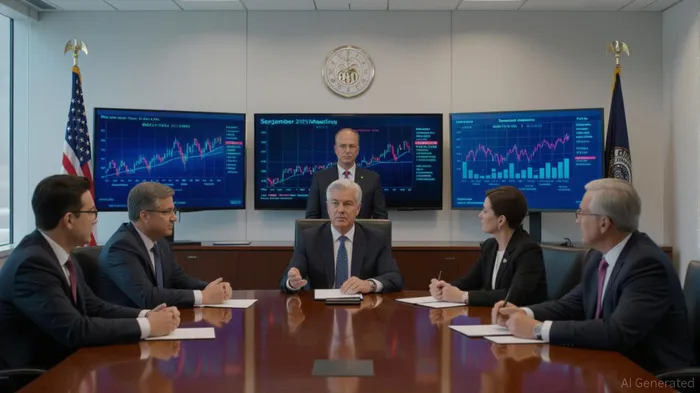
The Federal Reserve’s anticipated 25-basis-point rate cut in September 2025 represents a pivotal moment in monetary policy, balancing the risks of a cooling labor market against persistent inflation. With market expectations pricing in an 82% probability of the cut [4], and Federal Reserve Governor Christopher Waller explicitly endorsing the move [2], the decision reflects a strategic pivot toward easing. Yet, the path forward remains fraught with uncertainty, as skeptics like Morgan StanleyMS-- argue the case for a cut is “modest” given robust GDP growth and inflation above the 2% target [3].
Timing and Magnitude: A Delicate Balancing Act
The FOMC’s September 16–17 meeting [1] will determine whether the Fed acts to preempt further labor market deterioration. Chair Jerome Powell’s Jackson Hole remarks, which hinted at the need to “adjust policy” [2], have amplified market expectations. However, the magnitudeMAGH-- of the cut—25 basis points—suggests a cautious approach, consistent with the Fed’s historical preference for incremental adjustments. J.P. Morgan analysts project two to three additional cuts by year-end, targeting a terminal rate of 3.25–3.5% by early 2026 [5], but these forecasts hinge on evolving data, including the inflationary impact of new tariffs and employment trends.
Sectoral Implications for Equities: Growth and Cyclical Plays
A rate cut is likely to reshape equity market dynamics. Growth-oriented sectors such as technology and small-caps are poised to benefit from lower discount rates, which amplify the present value of future earnings [2]. Beyond these, industrials could see a revival as lower borrowing costs spur capital expenditures and infrastructure spending [5]. Financials may also gain, though net interest margins could narrow if the yield curve remains inverted. Housing and construction sectors are additional beneficiaries, with mortgage rates expected to decline, stimulating demand for new home construction [5].
International equities, particularly in Japan and emerging markets, could also attract inflows. Weaker U.S. dollar dynamics and divergent monetary policies abroad create a favorable backdrop for foreign assets [2]. However, investors must remain cautious: Morgan Stanley’s 50-50 probability assessment [3] underscores the risk that economic resilience could delay further easing, limiting the duration of sectoral outperformance.
Fixed Income: Duration and Curve Strategies
For fixed income investors, the rate-cutting cycle presents opportunities in intermediate-duration bonds, which typically outperform in low-rate environments [2]. Yield curve steepener strategies—betting on a steeper curve as short-term rates fall—could also generate alpha, though the effectiveness depends on the pace of Fed action. Caution is warranted, however, as the Fed’s communication remains ambiguous. Powell’s emphasis on “evolving data” [6] suggests that subsequent cuts may be contingent on inflation and labor market developments, complicating yield curve predictions.
Skepticism and Strategic Considerations
While the market has largely priced in the September cut, the Fed’s internal debate highlights the risks of overcommitting to a single policy path. Morgan Stanley’s skepticism [3] is rooted in the U.S. economy’s resilience—GDP growth remains above trend, and financial conditions are stable. Investors should avoid overexposure to sectors that assume aggressive easing, instead adopting a flexible approach. For equities, a diversified portfolio emphasizing growth and cyclical sectors is prudent. In fixed income, laddered duration and active curve positioning can mitigate risks from policy uncertainty.
Conclusion
The Fed’s September rate cut is a strategic opportunity, but one that demands nuance. For equities, the move favors growth and cyclical sectors, while fixed income offers duration and curve strategies. Yet, the Fed’s cautious stance and the economy’s resilience mean that the full impact of monetary easing may unfold gradually. Investors must remain agile, balancing optimism with vigilance as the Fed navigates the delicate interplay between inflation and growth.
Source:
[1] The Fed - Meeting calendars and information [https://www.federalreserve.gov/monetarypolicy/fomccalendars.htm]
[2] The Fed's Pivotal Rate-Cutting Path: Strategic Implications [https://www.ainvest.com/news/fed-pivotal-rate-cutting-path-strategic-implications-equity-fixed-income-markets-2508/]
[3] Fed Rate Cut? Not So Fast [https://www.morganstanley.com/insights/articles/fed-rate-cut-september-2025-forecast]
[4] Markets are sure the Fed will cut in September, but the path from there is much murkier [https://www.cnbc.com/2025/08/25/markets-are-sure-the-fed-will-cut-in-september-but-the-path-from-there-is-much-murkier.html]
[5] What's The Fed's Next Move? | J.P. Morgan Research [https://www.jpmorganJPM--.com/insights/global-research/economy/fed-rate-cuts]
[6] Powell Signals Possible Fed Rate Cut in September - Money [https://money.com/fed-rate-cut-september-experts-predict/]

Decoding blockchain innovations and market trends with clarity and precision.
Latest Articles
Stay ahead of the market.
Get curated U.S. market news, insights and key dates delivered to your inbox.
AInvest
PRO
AInvest
PRO



Comments
No comments yet