
Bitcoin as a Premium Asset in High-Value Transactions: The Rise of Crypto in Luxury Real Estate


 Aime Summary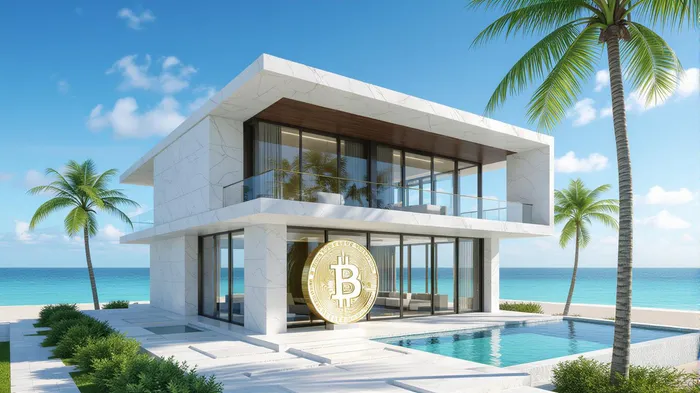
The integration of BitcoinBTC-- into high-value real estate transactions is no longer a fringe experiment but a strategic move by institutional players and high-net-worth individuals. Grant Cardone’s recent listing of a $43 million Miami mansion for 400 Bitcoin—equivalent to approximately $43 million at current prices—has ignited a broader conversation about cryptocurrency’s role in premium asset markets [1]. This transaction, facilitated through blockchain-based platform Propy, marks a pivotal moment in the normalization of Bitcoin as a medium for luxury property deals [5].
The Cardone Model: Real Estate Meets Bitcoin
Cardone’s approach is emblematic of a hybrid strategy that combines real estate’s tangible value with Bitcoin’s speculative upside. By selling his 13,000-square-foot Golden Beach estate for Bitcoin, he not only positions the cryptocurrency as a viable alternative to fiat but also creates a self-reinforcing cycle: the property’s cash flow can be reinvested into Bitcoin, amplifying potential returns [3]. This model, which Cardone has applied to a $72 million Florida multifamily property by injecting $15 million in Bitcoin, aims to generate a 12–15% internal rate of return from real estate while benefiting from Bitcoin’s price appreciation [4].
The implications are significant. For institutional investors, such transactions reduce counterparty risk by leveraging blockchain’s transparency and immutability. For regulators, however, the challenge lies in enforcing anti-money laundering (AML) and know-your-customer (KYC) protocols in a decentralized framework [2].
Institutional Confidence: The $9.485M WBTC Purchase
The recent $9.485 million investment in Wrapped Bitcoin (WBTC) by a smart money entity further underscores institutional confidence in Bitcoin’s utility. On July 26, 2025, a whale acquired 80.2623 WBTC at an average price of $118,174, signaling a shift from bearish to bullish sentiment [2]. This move, analyzed by figures like AI Auntie, highlights Bitcoin’s growing role in decentralized finance (DeFi) ecosystems, where liquidity and cross-chain interoperability are critical [2].
Such large-scale purchases by institutional actors validate Bitcoin as a store of value and a hedge against macroeconomic uncertainty. As JPMorganJPM-- notes, declining volatility and corporate treasury buying are key drivers of Bitcoin’s fair value estimate of $126,000 by year-end [1].
Price Projections and Macro Drivers
Peter Brandt’s bullish forecast for Bitcoin—projecting a peak of $125,000 to $145,000 by September 2025—aligns with these trends. Brandt’s analysis, rooted in historical cycles and technical indicators, emphasizes Bitcoin’s alignment with institutional adoption and regulatory tailwinds [4]. The inclusion of Bitcoin in 401(k) plans and the 2024 halving event are additional catalysts, as they expand access and reinforce scarcity-driven value [1].
The Road Ahead
While volatility remains a concern, the convergence of real estate and Bitcoin is reshaping asset allocation strategies. Cardone’s hybrid funds, which plan to go public by early 2026, could further legitimize this model, attracting a new wave of investors seeking diversification [3]. Meanwhile, the success of WBTC in DeFi ecosystems suggests that Bitcoin’s utility extends beyond speculation, offering tangible use cases in collateralized lending and cross-border transactions [2].
For investors, the message is clear: Bitcoin is no longer a speculative asset but a premium instrument in high-value transactions. As regulatory frameworks adapt and institutional participation deepens, the line between traditional finance and crypto will blur—creating opportunities for those who embrace the convergence early.
Source:
[1] Real estate giant Grant Cardone is selling his Miami mansion... [https://www.thestreet.com/crypto/markets/real-estate-giant-grant-cardone-is-selling-his-miami-mansion]
[2] Whale Targets WBTC with $9.485 Million Investment [https://coincu.com/markets/whale-wbtc-9-485-million-investment/]
[3] Grant Cardone Is Buying Real Estate With Bitcoin [https://www.nasdaq.com/articles/grant-cardone-buying-real-estate-bitcoin-should-you]
[4] Legendary Trader Peter Brandt Just Mapped Bitcoin's Next Peak—And It Could Hit $145K by September [https://finance.yahoo.com/news/legendary-trader-peter-brandt-just-010107426.html]

Decoding blockchain innovations and market trends with clarity and precision.
Latest Articles
Stay ahead of the market.
Get curated U.S. market news, insights and key dates delivered to your inbox.


AInvest
PRO
AInvest
PRO



Comments
No comments yet